


A striking new 4D LED billboard installation in Hollywood is drawing attention for its dramatic use of real water effects. Created as part of an out-of-home campaign for Percy Jackson and the Olympians, the display combines a large-format LED screen with a functioning waterfall, blurring the line between digital content and the physical environment.
As the on-screen action unfolds, water cascades and mist bursts are triggered in sync with the visuals. The result is an outdoor advertising installation that feels less like a billboard and more like a live spectacle, capturing the attention of passers-by and online viewers alike.
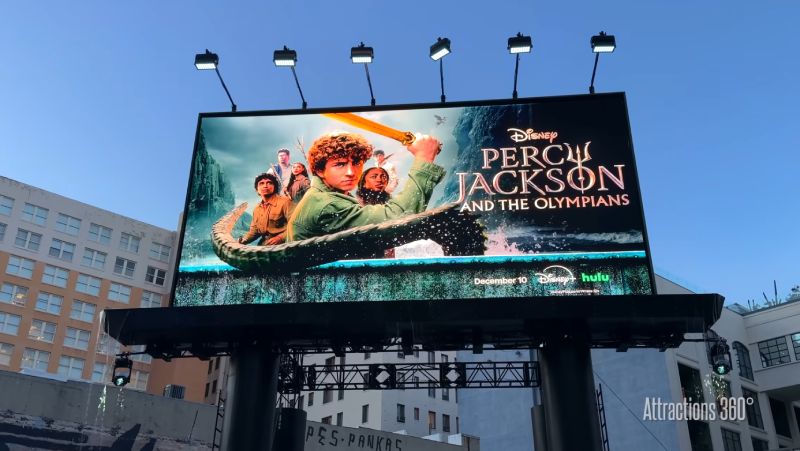
According to footage shared online, the LED display is mounted on a structure approximately eight metres above a pool. A water trough positioned in front of the screen releases waves of water that spill downward as the video plays. Mist nozzles add another layer of movement, enhancing the illusion of depth.
One of the most eye-catching moments occurs when a sea monster’s tentacle appears to strike the screen. At that exact moment, water splashes outward from the trough, making it appear as though the digital creature has physically impacted the billboard. The water then falls into the pool below, where it is collected and pumped back up for recirculation.
The installation is located in Hollywood and is used to promote the second season of the fantasy series, which is adapted from The Sea of Monsters. The campaign demonstrates how carefully timed physical effects can amplify the storytelling power of LED displays in outdoor settings.
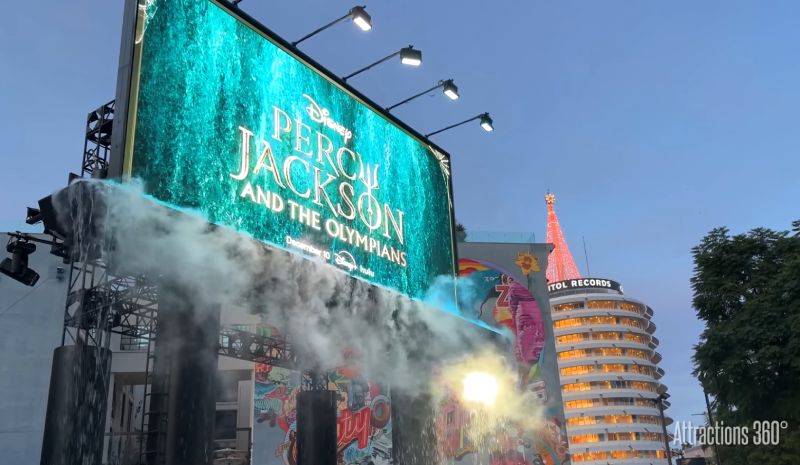
What sets this project apart from conventional LED billboards is the integration of real-world elements. Rather than relying solely on brightness or resolution, the 4D LED billboard uses motion, sound, and water to create a multi-sensory experience.
This approach increases dwell time and encourages viewers to stop, watch, and record the display. In an era where outdoor advertising often competes with mobile screens, such physical interaction helps LED billboards regain attention in busy urban environments.
Importantly, the success of this installation is not only about creative content. It also depends on the stability, waterproofing, and visibility of the LED display itself, which must perform reliably despite constant exposure to water and changing outdoor conditions.
While still uncommon, projects like this highlight a growing interest in 4D LED billboard concepts. Advertisers and agencies are increasingly exploring ways to extend LED displays beyond flat visuals by incorporating physical effects such as water, wind, or mechanical motion.
For the LED display industry, this trend points to new technical requirements. Displays used in 4D applications must deliver high brightness and contrast while maintaining long-term durability. At the same time, system integration and content synchronisation become just as critical as pixel performance.
As immersive DOOH campaigns gain momentum, more cities may see similar installations that turn LED screens into interactive landmarks rather than passive advertising surfaces.
This Hollywood installation offers a clear example of how a 4D LED billboard can transform a standard outdoor campaign into a shared public experience. By combining LED technology with physical effects, the project demonstrates how storytelling, engineering, and urban media can converge.
For industry observers, it serves as a reminder that the most impactful LED displays are not always defined by specifications alone, but by how creatively they engage the real world around them.

