


When it comes to digital era, out-of-home advertising is being gradually replaced by more advanced digital technology, mostly are LEDs and LCDs, especially where high dynamic and vivid video contents are required. That is the digital out of home advertising, DOOH for short.
For years of development, DOOH advertising become more versatile since display technologies continues to evolve, and offer more possibility for commercial advertising, especially with the fast developing LED display technology. Here in this article, let’s explore into the sector of DOOH advertising together.
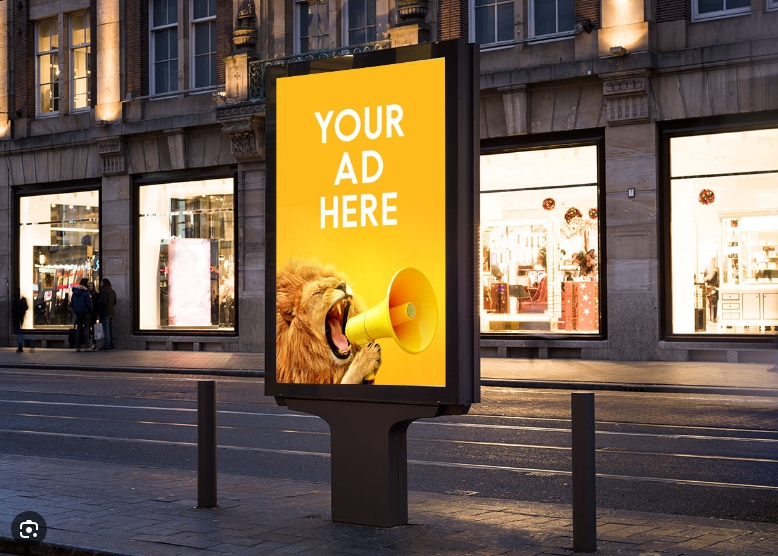
DOOH advertising outdoor LED poster
Jump to:
What is digital out-of-home (DOOH) advertising?
Why digital out-of-home (DOOH) becomes a buzzword?
What can digital out-of-home bring to us?
Real world DOOH cases that inspire us
DOOH market size forecast – a CAGR of 10%+ in the near future
Digital Out-of-Home (DOOH) refers to digital advertising or content displayed on digital screens located in public spaces, typically outdoors or in high-traffic areas. DOOH encompasses a wide range of digital signage and displays, such as billboards, transit displays, street furniture displays, and digital screens in shopping malls, airports, and stadiums.
Unlike traditional static billboards or signage, DOOH leverages digital technology to deliver dynamic and interactive content. It enables advertisers to display targeted and dynamic ads, deliver real-time information, and engage with viewers in more interactive ways.
In recent years, Digital Out of Home (DOOH) becomes a buzzword due to its growing importance and popularity in the advertising industry. Here are several reasons explaining this phenomenon:
Firstly, DOOH represents a significant shift from traditional out-of-home advertising methods, such as billboards and posters, to digital formats. This shift allows for more dynamic, engaging, and personalized content, which can captivate audiences and drive higher engagement rates.
Secondly, the rise of smart cities and the Internet of Things (IoT) has facilitated the proliferation of digital screens in public spaces. These screens provide an ideal platform for DOOH advertising, enabling brands to reach a wider audience with targeted messages.
Moreover, DOOH offers advanced targeting capabilities. Using data analytics and consumer insights, advertisers can tailor their messages to specific demographics, locations, and times of day, ensuring that their content is relevant and impactful.
Additionally, DOOH advertising can be measured and optimized in real-time. Advertisers can use metrics such as impression counts, engagement rates, and conversion rates to assess the effectiveness of their campaigns and make data-driven decisions to improve performance.
Finally, DOOH’s integration with other digital channels, such as mobile and social media, creates a seamless and immersive advertising experience for consumers. This cross-channel approach amplifies the reach and impact of DOOH campaigns, making them an increasingly attractive option for brands.
In summary, DOOH’s evolution, advanced targeting capabilities, measurability, and integration with other digital channels have contributed to its rise as a buzzword in the advertising industry. As technology continues to advance and consumer behavior evolves, DOOH is poised to play an even more prominent role in shaping the future of outdoor advertising.
Digital Out-of-Home (DOOH) advertising offers several key advantages over traditional static out-of-home (OOH) advertising formats. Here are some of the key advantages of DOOH:
DOOH allows for dynamic and interactive content, including videos, animations, and real-time updates. This enables advertisers to create more engaging and captivating advertisements that can capture the attention of viewers and leave a lasting impression.
DOOH provides precise targeting capabilities based on factors such as location, time of day, weather conditions, and audience demographics. Advertisers can deliver contextually relevant messages to specific audiences, increasing the effectiveness of their campaigns and optimizing their advertising spend.
DOOH screens can be updated remotely and in real-time, allowing advertisers to quickly change and adapt their creative content. This flexibility enables timely promotions, the ability to respond to current events or market conditions, and the opportunity to optimize campaigns based on real-time data and insights.
DOOH offers robust measurement and analytics capabilities. Advertisers can track metrics such as impressions, engagement rates, audience demographics, and even dwell time. This data allows for better campaign performance evaluation, optimization, and data-driven decision-making.
DOOH can be integrated with other digital technologies such as mobile devices, social media, or location-based services. This allows for interactive experiences, personalized messaging, and cross-channel campaigns, enhancing audience engagement and campaign effectiveness.
DOOH provides the ability to target specific audience segments in different locations or environments. It allows advertisers to tailor their messaging based on the characteristics and preferences of the audience in each particular location, leading to more relevant and impactful advertising.
The dynamic and visually appealing nature of DOOH can make it more attention-grabbing and memorable compared to static signage. The combination of motion, sound, and interactive elements can create a more immersive and memorable brand experience for viewers.
Despite the initial investment in hardware and infrastructure, DOOH can be cost-effective in the long run. The ability to deliver targeted messages, optimize campaigns in real-time, and measure performance can contribute to higher returns on investment (ROI) compared to traditional out-of-home advertising.
These advantages make DOOH an attractive advertising medium for brands and advertisers looking to enhance their reach, target specific audiences, and deliver engaging and impactful campaigns.
Digital Out-of-Home (DOOH) advertising has a wide range of applications in various industries. Here are some common applications of DOOH:
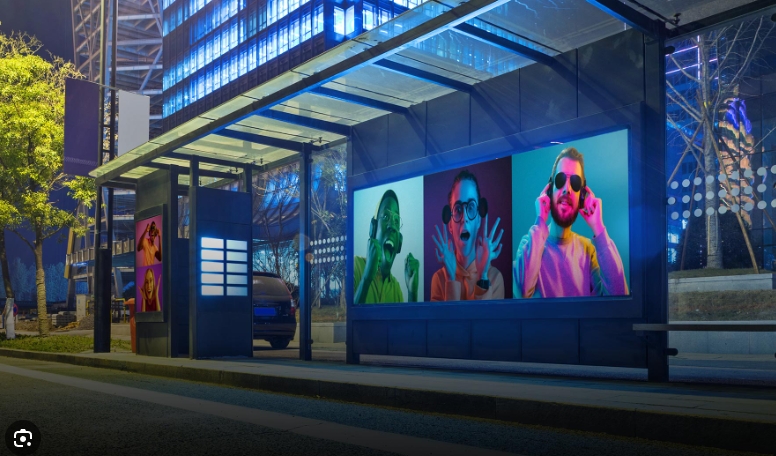
DOOH Advertising at bus stop
DOOH is extensively used in retail environments and shopping centers. Digital screens can be placed in store windows, entrances, or throughout the shopping center to display promotional offers, product information, and engaging content. DOOH can also be integrated with mobile technologies for interactive experiences, such as QR codes or NFC tags.
DOOH screens can be found in airports, train stations, bus terminals, and subway stations. They provide real-time travel information, flight or train schedules, way finding assistance, and targeted advertising. DOOH in transportation hubs can also serve as a platform for sponsored content, travel-related promotions, and relevant announcements.
DOOH has transformed traditional outdoor advertising and billboards by replacing static displays with dynamic digital screens. Digital billboards can display multiple ads in rotation, deliver real-time content, and adapt to changing conditions. This allows for more targeted and contextually relevant advertising campaigns.
DOOH is commonly used in sports stadiums, arenas, and concert venues to engage and entertain the audience. Digital screens can display live game highlights, player stats, interactive games, and sponsor advertisements. DOOH can also be integrated with social media platforms to encourage audience participation and real-time interactions.
DOOH is deployed in various digital signage networks across public spaces, including malls, hotels, corporate offices, and healthcare facilities. These networks offer a platform for information dissemination, advertising, wayfinding, and brand messaging. Content can be remotely managed and scheduled, allowing for efficient and timely updates.
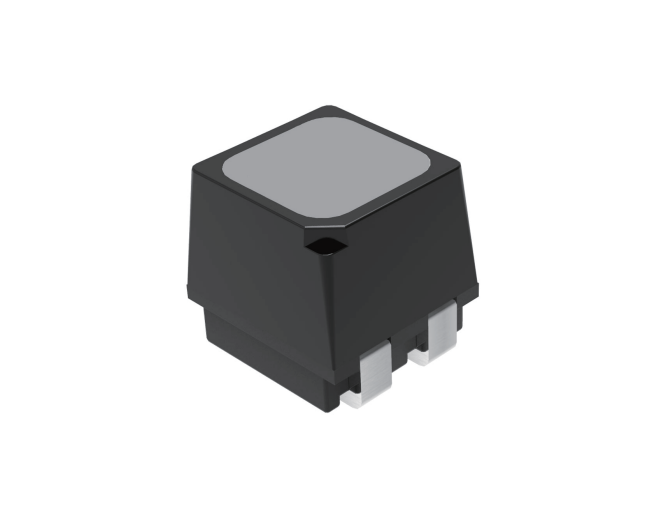
Kinglight SMD1515 LED – Kinglight provides a wide variety of LEDs for DOOH advertising LED screens
DOOH screens are integrated into street furniture like bus shelters, kiosks, and information panels. They provide transportation updates, local news, weather information, and advertising opportunities. DOOH in transit environments can target commuters with relevant ads, promoting products, services, or local businesses.
DOOH screens are used in events, trade shows, and exhibitions to display event schedules, interactive maps, exhibitor information, and sponsor advertisements. They enhance attendee engagement, facilitate navigation, and provide real-time updates.
The applications of DOOH are diverse and continue to evolve as technology advances. The flexibility, interactivity, and real-time capabilities of DOOH make it a powerful medium for delivering targeted, engaging, and contextually relevant content in public spaces across various industries.
Still not sure what benefits we can get from DOOH advertsing? These real world DOOH cases may give you inspiration.

English football club Stock County sees 25% revenue increase with DOOH upgrade.
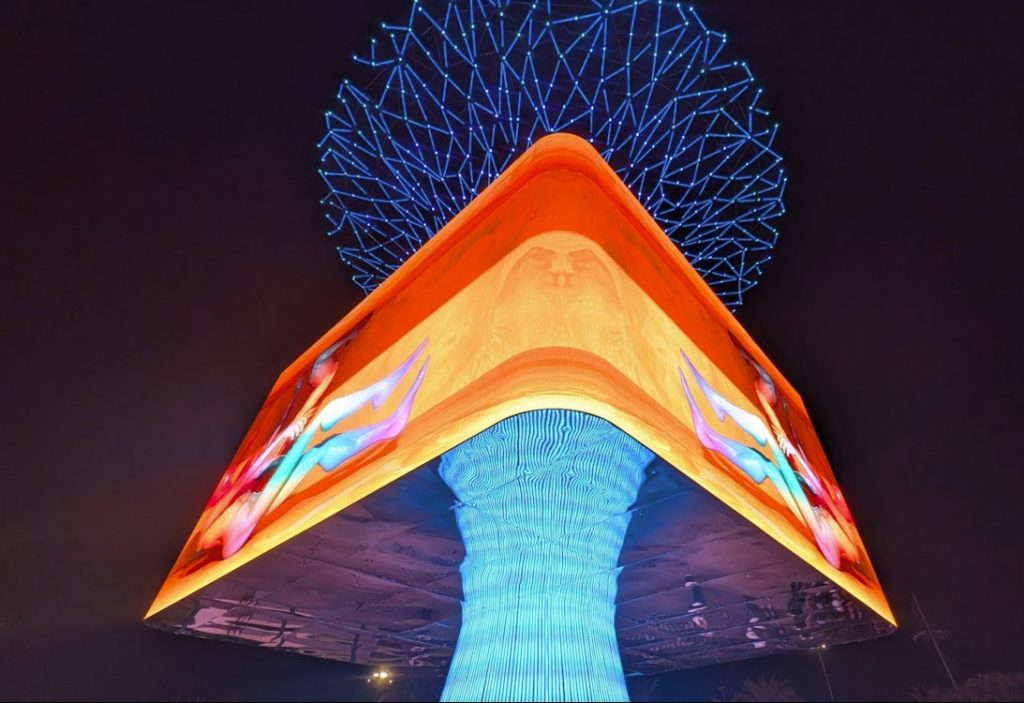
India’s newly installed 12K LED social tree becomes a new DOOH landmark.
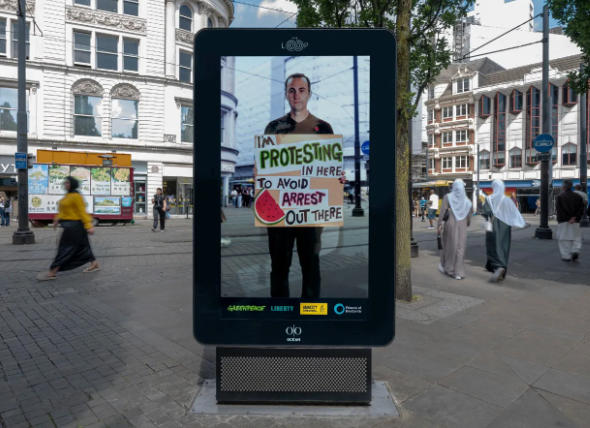
DOOH protest in England says: “They can’t arrest this billboard”
See? That’s the magic of DOOH, either for commercial, or for social, or even political. And even creative ideas that you never imaged before!
DOOH market has been experiencing significant growth. It’s important to note that market sizes can vary based on geographic regions, industry reports, and market research sources. Below are information over DOOH market size from different research sources.
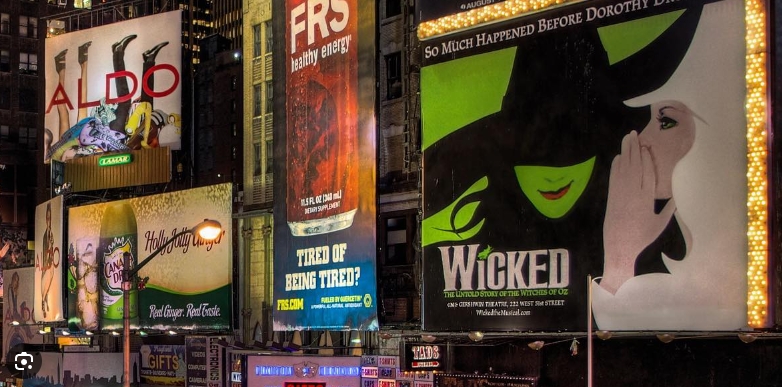
DOOH Advertising at shopping center
According to a report by Grand View Research over the digital out- of-home advertising (2025 -2030) , the global DOOH market was estimated at USD 20.74 billion in 2024 and is expected to reach USD 39.12 billion by 2030, growing at a CAGR of 10.7% from 2025 to 2030. The increasing adoption of digital signage, advancements in display technologies, and the demand for targeted and interactive advertising are some of the key factors driving the growth of the DOOH market.
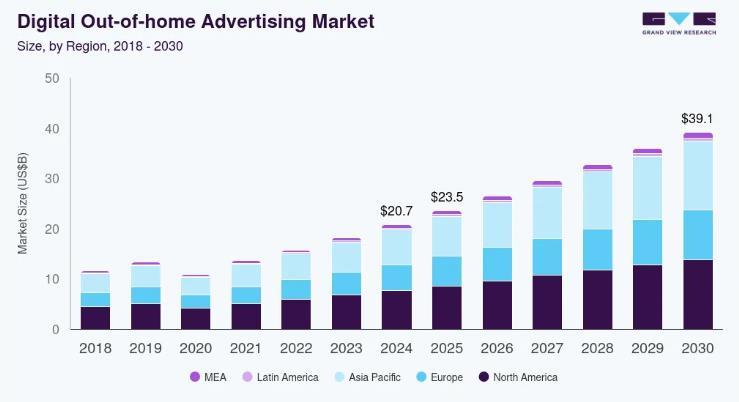
Grandview Research DOOH market value 2018 – 2030
According to Straits Research, the global DOOH market was valued at USD 27.53 billion in 2024, and was projected to grow from USD 31.16 billion in 2025 to reach USD 84.03 billion by 2033, growing at a CAGR of 13.20% during the forecast period 2025 – 2033.
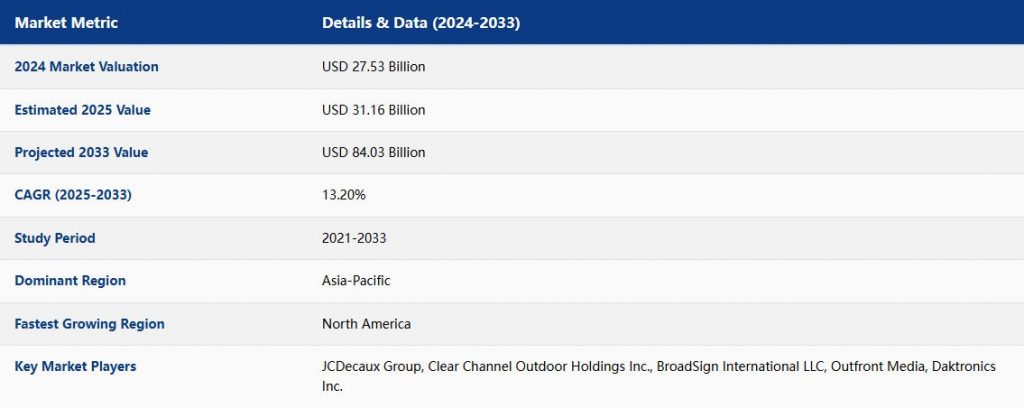
Straits Research DOOH market metric 2024-2033
According to Fortune Business Insights, the global digital out-of-home advertising market size was valued at USD 20.17 billion in 2025, and is projected to grow from USD 22.51 billion in 2026 to USD 56.1 billion by 2034, exhibiting a CAGR of 12.09% during the forecast period.
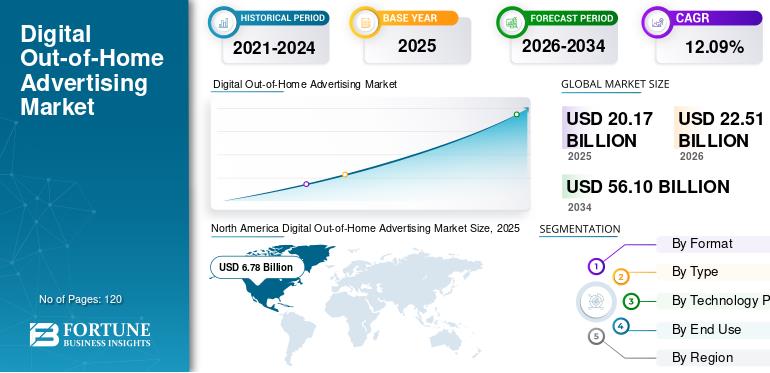
Fortune Business Insights – digital out of home advertising market
According to Zion Market Research, the global digital out of home market size was worth around USD 21.94 Billion in 2024 and is predicted to grow to around USD 81.46 Billion by 2034 with a CAGR of around 12.8% between 2025 and 2034.
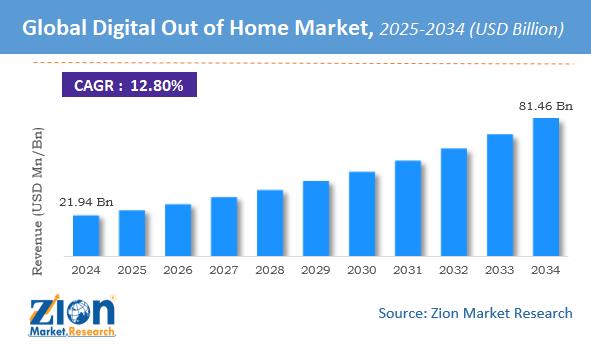
Zion Market Research – global digital out of home market 2025 -2034
From the above statistics provided by research agencies, there is a strong believe in DOOH advertising due to global demand for more engaging digital LED screens advertising and the DOOH market size is expected a steady growth rate of over 10% per year in the coming years.

