


The MicroLED market is entering a critical phase of commercialisation in 2025–2026. After more than a decade of research and development, the technology is shifting from laboratory prototypes toward real products. This transition will shape the trajectory of global display technologies and create fresh opportunities across consumer electronics, automotive systems, and emerging augmented-reality devices.

According to recent industry reports, 2025 marks the first meaningful production stage for MicroLED displays as high-volume facilities start operation in Taiwan and China. Manufacturers such as ENNOSTAR, HC SemiTek, Sanan Optoelectronics, and AU Optronics are ramping capacity with commercial products including smartwatches with true MicroLED screens. (GlobeNewswire)
Analysts at Technavio estimate that the MicroLED display market will grow rapidly between 2025 and 2030, with a compound annual growth rate (CAGR) exceeding 50%. This growth is driven by rising adoption in wearables, augmented reality (AR), and premium consumer displays. (Technavio)
Market research also highlights strong uptake in energy-efficient and high brightness applications. In the wider Mini LED + MicroLED segment, global valuation could grow from roughly $33.7 billion in 2025 to over $48 billion in 2026, showcasing robust demand momentum.
Three main categories are driving expansion in the MicroLED market:
These segments collectively contribute to an expanding addressable market opportunity for manufacturers, system integrators, and material suppliers.
Despite rapid growth projections, the industry faces serious obstacles before large-scale adoption can take hold.
MicroLED production is intrinsically complex because each display may contain millions of microscopic LEDs that must be placed with nanometer precision. This leads to high costs and low yields in early factories. Many manufacturers still struggle to achieve the placement accuracy and defect-free yields needed for consumer economics. (researchandmarkets.com) Research reports note that producing an efficient full-color MicroLED display involves expensive capital equipment and tight process control. (intelmarketresearch.com)
Specialised materials such as gallium nitride (GaN) substrates are critical yet limited, and supply chain bottlenecks can slow production. Many parts of the value chain—epitaxy, mass transfer tools, inspection systems—are still under development or require scaling.
There are no widely adopted industry standards for MicroLED displays yet. This complicates integration, increases engineering costs, and makes interoperability difficult across product ecosystems. (intelmarketresearch.com)
Even with these challenges, the MicroLED market presents several compelling opportunities:
MicroLED’s very high brightness and energy efficiency make it a leading technology for future AR glasses and head-mounted displays. While technical challenges like material efficiency remain, industry activity—such as funding rounds and high-brightness prototypes—suggests strong long-term commitment. (researchandmarkets.com)
High-luminosity displays for automotive safety interfaces are becoming viable as MicroLED technology improves. Premium vehicle manufacturers may adopt these systems first, creating an important revenue stream. (researchandmarkets.com)
Joint ventures between semiconductor companies and display brands help mitigate risk and concentrate expertise. Global alliances can shorten time-to-market by pooling technical know-how and manufacturing assets.
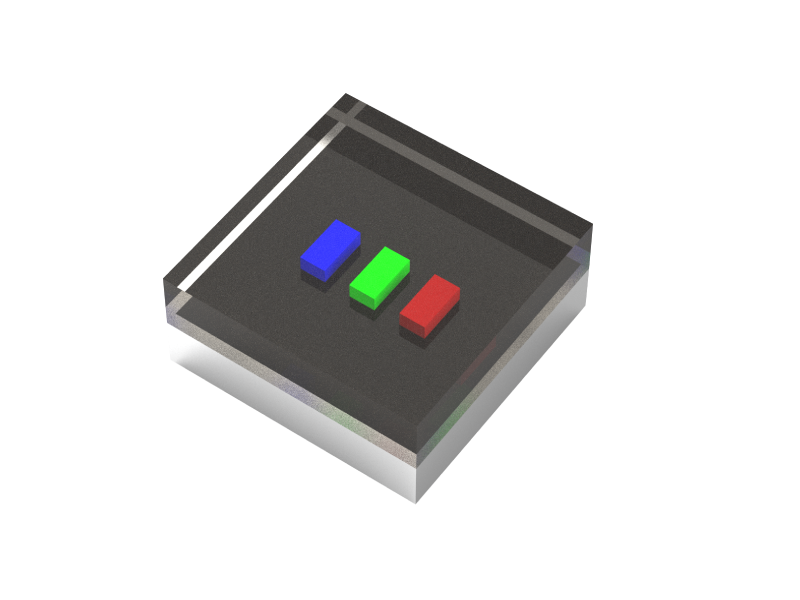
The next few years will be decisive for the MicroLED market. If manufacturers can improve production yields, reduce costs, and solidify supply chains, mainstream adoption could follow as prices fall. Early commercial successes in smartwatches and professional displays may pave the way for broader use in consumer TVs and portable devices.
Conversely, if these barriers persist, MicroLED may remain confined to premium or specialised applications for longer than current forecasts suggest. Long lead times in automotive qualification and AR product development mean that some high-volume applications could shift into the late 2020s. (researchandmarkets.com)
The MicroLED market stands at a pivotal inflection point in 2026. Strong growth forecasts and expanding application areas underline the transformative potential of the technology. At the same time, manufacturing complexity, supply chain limits, and cost pressures remain real hurdles that the industry must overcome. For investors, engineers, and product planners alike, the coming three to five years will determine whether MicroLED transitions from a promising innovation to a mainstream display technology.

