


A sphere LED display is a creative LED screen designed to present images and videos across a spherical surface. Unlike a conventional flat LED screen, it allows audiences to view content from multiple directions. This makes it an attractive choice for shopping malls, museums, exhibitions, entertainment venues and public spaces.
With its distinctive shape and 360-degree viewing experience, a spherical LED display can turn an ordinary advertising screen into a visual centerpiece. However, building one requires more than simply arranging LED panels into a ball. Its structural design, panel configuration, pixel distribution and content mapping all affect the final display quality.
This guide explains how sphere LED displays work, explores their main structural designs and applications, and outlines the key factors to consider when planning a project.

A sphere LED display, also called a spherical LED display, LED ball screen or LED video ball, is an LED display system with a spherical viewing surface. It uses multiple LED panels arranged around a supporting structure to form a three-dimensional display.
Unlike a flat LED screen, which mainly faces one direction, a sphere LED display presents visual content across its curved surface. Audiences can watch animations, videos and graphics from different positions around the sphere.
The display can be designed in different diameters and pixel pitches to suit various applications. Small spherical screens may be used as decorative displays in commercial spaces. Larger installations can serve as visual landmarks in shopping malls, exhibition halls and public venues.
A sphere LED display differs from other creative LED formats in several ways:
These features make spherical LED displays suitable for projects where visual impact and audience engagement are important.
A sphere LED display combines LED panels, a supporting structure, an electrical system and a display control system. Each part has a specific role in creating a continuous spherical image.
The supporting structure provides the foundation for the entire display. It determines the sphere’s diameter, shape and mechanical stability.
Steel and aluminum structures are commonly considered for different project requirements. The material and framework design depend on the display’s size, weight, installation environment and support method.
For example, a small sphere LED display may use a base for floor installation. A larger display may require a dedicated steel framework and professionally engineered suspension or support points.
The structure must also provide suitable mounting positions for the LED panels. Accurate positioning is important because even small alignment errors can create uneven surfaces or visible gaps.
Unlike a conventional flat LED wall, a spherical screen cannot rely on identical rectangular panels across its entire surface.
The panels must follow the sphere’s curvature. Depending on the design, manufacturers may use flexible LED panels, custom-shaped panels or smaller segmented panels to form the spherical surface.
The number and shape of these panels affect several aspects of the final display:
A well-designed panel arrangement helps create a more consistent spherical appearance. It also reduces visible discontinuities between adjacent display sections.
The electrical system supplies power to the LED panels, while the control system processes and distributes image signals.
A typical system includes power supplies, receiving cards, signal connections and LED display controllers. The exact configuration depends on the sphere’s diameter, resolution and panel layout.
Because the screen covers a three-dimensional surface, signal routing and power distribution require careful planning. The design should also consider heat dissipation, cable management and access for future maintenance.
Content mapping is one of the most important aspects of spherical LED display technology.
A standard video is usually created for a rectangular screen. However, a spherical display has a curved surface with different viewing directions and pixel positions.
Therefore, the content must be adapted to the sphere’s actual pixel layout. Mapping software and display controllers distribute the image data to the corresponding LED panels.
For example, an image created for a flat screen may appear stretched or distorted when displayed directly on a sphere. Proper spherical mapping adjusts the content so that it looks more natural on the curved surface.
The process generally involves:
Content creators should work with the confirmed display geometry and pixel map before producing the final video. This helps reduce distortion and avoids unnecessary content revisions.
Sphere LED displays can be built using different panel configurations. The choice depends on the required diameter, pixel pitch, surface curvature and installation conditions.
Flexible LED panels can bend to follow curved supporting structures. They are useful when a project requires a relatively continuous spherical surface.
Their flexibility allows designers to create different curved shapes without relying entirely on rigid, flat panels.
However, the bending capability of each panel has limits. Its bending radius, installation method and mechanical properties must match the sphere’s design.

Segmented designs use multiple smaller panels with specific shapes to form a spherical surface.
Depending on the engineering approach, these panels may be triangular, trapezoidal or other custom geometries. They are arranged in sections and connected to the supporting framework.
This approach allows manufacturers to control the panel layout and adapt it to different sphere diameters.
One example is SFERiX, a spherical LED screen construction approach developed by Ukrainian companies Front Pictures and EKTA. It uses standardized triangular LED panels to simplify the assembly of spherical displays.
The number of panel types, their dimensions and their connection methods all influence the final surface quality.
Some creative projects use transparent or open-structure LED designs to create a lighter visual appearance.
Instead of forming a completely solid display surface, these designs leave spaces between LED elements or display sections. This allows part of the surrounding environment to remain visible.
Such configurations can be considered for decorative installations, exhibition spaces and architectural applications.
However, transparency and image quality involve different design requirements. The spacing between LED elements affects the display’s visual continuity and viewing experience.
A sphere LED display offers several advantages over conventional flat displays. Its distinctive geometry creates new possibilities for visual communication.
The most recognizable feature is its spherical viewing surface.
Audiences can view the display from different directions without relying on a single front-facing position. This makes it particularly suitable for central locations in shopping malls, museums and exhibition halls.
However, the actual viewing experience depends on the sphere’s size, installation height, pixel pitch and content design.
Sphere LED displays can be designed in different diameters to match the available installation space.
Small LED spheres can serve as decorative displays or interactive visual installations. Larger versions can become major architectural or entertainment features.
Their supporting structures and panel arrangements can also be customized according to project requirements.
A well-designed spherical LED display creates a continuous visual surface across multiple panels.
Accurate panel alignment, consistent pixel distribution and proper content mapping all contribute to the final result.
Although the spherical surface introduces more complex connections than a flat LED wall, careful engineering can minimize visible gaps and image discontinuities.
Sphere LED displays can be designed for both indoor and outdoor environments.
Indoor installations often prioritize fine pixel pitch, color reproduction and comfortable viewing at relatively short distances.
Outdoor installations require additional attention to brightness, weather protection, temperature management and structural safety.
The specifications should always match the actual installation environment.
The distinctive appearance of a spherical screen makes it suitable for applications that require more than conventional rectangular advertising.
Shopping malls often use sphere LED displays as visual attractions in central atriums and large public areas.
They can present brand advertisements, promotional videos, seasonal animations and product campaigns. Their unusual shape helps attract attention from different floors and viewing directions.
Museums and science centers can use spherical LED displays to present geographical, astronomical and scientific information.
For example, a digital globe can show weather systems, ocean currents, planetary movements and global environmental changes.
The spherical format provides a natural way to visualize information related to the Earth and other celestial objects.
At exhibitions and trade shows, a sphere LED display can serve as a central visual feature.
Brands can use it to present product animations, corporate identities and creative advertising content. It can also be integrated with stage lighting, sound systems and other audiovisual equipment.
Its unusual shape helps exhibition spaces stand out in crowded event environments.
Concerts, theaters and entertainment venues increasingly use creative LED structures to enhance the visual experience.
A spherical LED display can be installed above a stage or in a central performance area. It can show synchronized animations and visual effects from multiple directions.
Its content can also be coordinated with lighting, music and other stage elements.
Large spherical LED displays can become recognizable landmarks in public spaces.
They can present artistic animations, public information and commercial advertisements. Outdoor installations require particular attention to structural engineering, weather resistance and maintenance access.
The Las Vegas Sphere is a prominent example of how a spherical building can integrate large-scale LED technology into its exterior architecture.
A successful sphere LED display project requires coordination between structural engineering, LED display technology and content production.
The following factors should be considered before selecting a design.
The sphere’s diameter determines its overall visual scale and influences the supporting structure, display area and installation requirements.
Before deciding on the size, project planners should evaluate:
A large sphere may create a stronger visual impact, but it also requires more space and more complex structural support.
Pixel pitch refers to the distance between the centers of two adjacent pixels. It directly affects the display’s pixel density and image detail.
A smaller pixel pitch provides higher pixel density and can improve image clarity at close viewing distances. A larger pixel pitch may be suitable for installations viewed from farther away.
For a spherical LED display, pixel pitch should be considered together with the sphere’s diameter and viewing distance.
The design should also account for how pixels are distributed across the curved surface. The actual resolution depends on the panel layout and total number of pixels, not simply the sphere’s diameter.
Brightness requirements vary between indoor and outdoor applications.
Indoor displays generally need to provide clear images under the venue’s ambient lighting conditions without creating excessive visual discomfort.
Outdoor displays must maintain visibility under stronger ambient light, including direct sunlight. They also need suitable protection against rain, dust and temperature changes.
The LED package, driving system and thermal design all contribute to the final display performance.
Installation methods may include floor-standing, ceiling-mounted or suspended configurations.
Each method has different structural requirements.
For suspended installations, the supporting structure and mounting points must be designed to handle the display’s weight and distribute the load safely.
Large outdoor installations require additional engineering assessments for wind loads, weather exposure and long-term structural stability.
Professional structural evaluation should be completed before installation.
A spherical screen needs content that matches its actual geometry.
Project planners should confirm the pixel map, display resolution and control system before content production begins.
The content should also be tested from different viewing directions. This is particularly important when displaying text, logos and detailed graphics.
Poorly adapted content may look stretched or difficult to read in certain areas of the sphere.
Maintenance is another important consideration.
The spherical structure may make some LED panels less accessible than those on a conventional flat screen. Therefore, the design should provide practical access for inspection, panel replacement and electrical maintenance.
Project planners should confirm:
Planning these details early can reduce future maintenance difficulties.
The manufacturing process varies depending on the sphere’s size, panel design and installation requirements.
However, most projects involve several major stages.
The engineering team determines the sphere’s diameter, supporting structure and installation method.
The design must account for the display’s weight, panel arrangement and electrical system.
The LED panels are designed according to the spherical surface.
Their shapes, dimensions and pixel pitch must match the overall display layout. Flexible or custom-shaped panels may be selected depending on the project.
The LED panels are installed onto the supporting structure.
Accurate positioning is important to maintain the sphere’s shape and minimize gaps between adjacent panels.
Power supplies, receiving cards and signal cables are installed and connected.
The system must distribute power and image signals reliably across the entire spherical display.
After assembly, the display is powered on for testing and calibration.
Technicians check panel alignment, brightness, color consistency and image continuity. They also test the content mapping to ensure that images appear correctly across the spherical surface.
The completed display undergoes operational testing before delivery.
The inspection may include long-term operation, signal stability, electrical performance and display consistency.
These tests help identify potential problems before the sphere LED display is installed at its final location.
Large-scale spherical LED installations demonstrate how creative display technology can transform architectural spaces and public environments.

One of the most recognizable examples is the Sphere in Las Vegas, which opened in September 2023.
Standing approximately 366 feet tall and 516 feet wide, the venue integrates a large-scale LED display system into its spherical architecture.
Its exterior LED surface is called the Exosphere. According to Sphere Entertainment’s corporate filings, it covers nearly 580,000 square feet and features fully programmable LED lighting.
The interior uses a separate 16K × 16K LED display plane that wraps around the audience to create an immersive viewing environment.
The two systems serve different purposes:
The project demonstrates how LED technology can become an integral part of architectural design rather than simply being installed as a conventional display surface.
More details are available on the official Sphere website.
While the structural design and control system determine how a sphere LED display is assembled and operated, the LED components also play an important role in its visual performance.
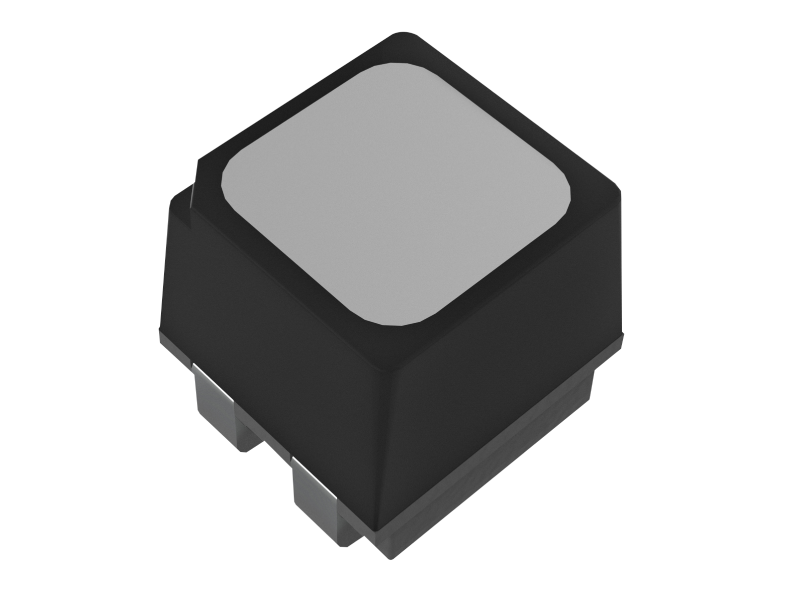
For LED display manufacturers, selecting suitable RGB LED packages is an important part of the panel design process.
Several component characteristics deserve attention.
RGB LED packages generate the red, green and blue light used to create full-color images.
Consistent brightness and color characteristics across LED packages help display manufacturers achieve more uniform screen performance.
This is particularly important for large spherical displays, where audiences may view the surface from many different directions.
The optical characteristics of LED packages influence how light is distributed across the display surface.
A suitable viewing angle helps maintain a consistent visual experience across different audience positions.
For spherical displays, this characteristic deserves attention because the screen does not have a single fixed viewing direction.
LED packages must withstand the operating conditions of the display throughout their service life.
Packaging quality, moisture resistance, ESD protection and manufacturing consistency all contribute to component reliability.
These factors become especially important for outdoor installations and displays that operate for extended periods.
Pixel pitch and LED package size are closely related in display panel design.
A smaller LED package can support a more compact pixel arrangement, depending on the PCB design and overall display architecture.
For fine-pitch spherical displays, manufacturers need to balance resolution, brightness, viewing distance and production requirements when selecting LED components.
As a professional RGB LED supplier, Kinglight provides SMD LED components for LED display manufacturers serving different indoor and outdoor applications.
The selection of suitable LED packages helps display manufacturers develop products that meet the optical and reliability requirements of their projects.
A sphere LED display is a spherical screen made from multiple LED panels arranged around a three-dimensional supporting structure. It presents images and videos across a curved surface, allowing audiences to view content from multiple directions.
A spherical LED screen uses LED panels, a supporting framework, power supplies and a control system. Content is processed and mapped to the sphere’s pixel layout so that images appear correctly across its curved surface.
A sphere LED display has a ball-shaped viewing surface that can present content around the entire sphere. A dome LED display has a hemispherical or partially curved surface, usually designed for audiences viewing from inside or beneath it.
Their structures, viewing positions and content requirements are different.
Yes. Sphere LED displays can be designed for outdoor environments. However, outdoor projects require suitable brightness, weather protection, thermal management and structural support.
The final specifications should match the local climate and installation conditions.
In most cases, yes. Standard rectangular video may appear distorted when displayed directly on a spherical surface.
Content should be adapted to the sphere’s geometry through suitable mapping and processing. This helps maintain the intended image proportions and visual continuity.
Pixel pitch should be selected according to the sphere’s diameter, viewing distance, desired image detail and project budget.
Smaller pixel pitches provide higher pixel density, which can benefit close-viewing applications. However, the final choice should also consider the display’s panel configuration and total resolution.
A sphere LED display combines creative structural design with advanced LED display technology. Its 360-degree viewing surface makes it suitable for applications ranging from shopping malls and museums to exhibitions, entertainment venues and architectural landmarks.
However, achieving a high-quality spherical display requires careful coordination between the supporting structure, LED panel arrangement, pixel mapping, electrical system and content production.
LED components are another important part of this process. Their brightness, color consistency, optical characteristics and packaging reliability all contribute to the final display performance.
For LED display manufacturers, selecting suitable RGB LED components is an important step in developing reliable and visually consistent spherical LED display solutions.

