SMD LED displays are widely used in digital signage, outdoor advertising, rental screens, control rooms, and commercial installations. Their ability to deliver full-color images, high brightness, and flexible screen configurations makes them suitable for a wide range of environments.
But what exactly is an SMD LED display? How does SMD packaging work, and what should buyers consider when selecting one?
This guide explains the technology behind SMD LED displays, explores common LED packages and applications, and compares SMD with COB and MiP technologies. It also covers the key factors that influence display performance and product selection.

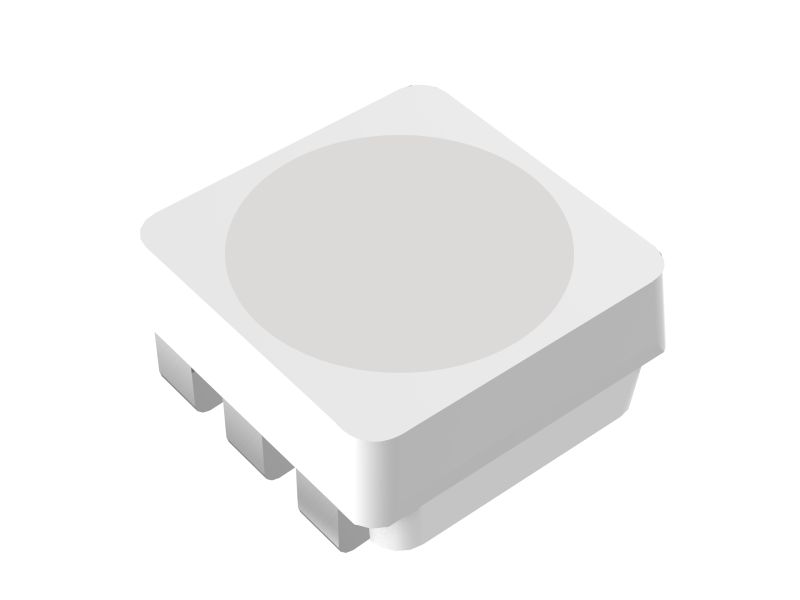
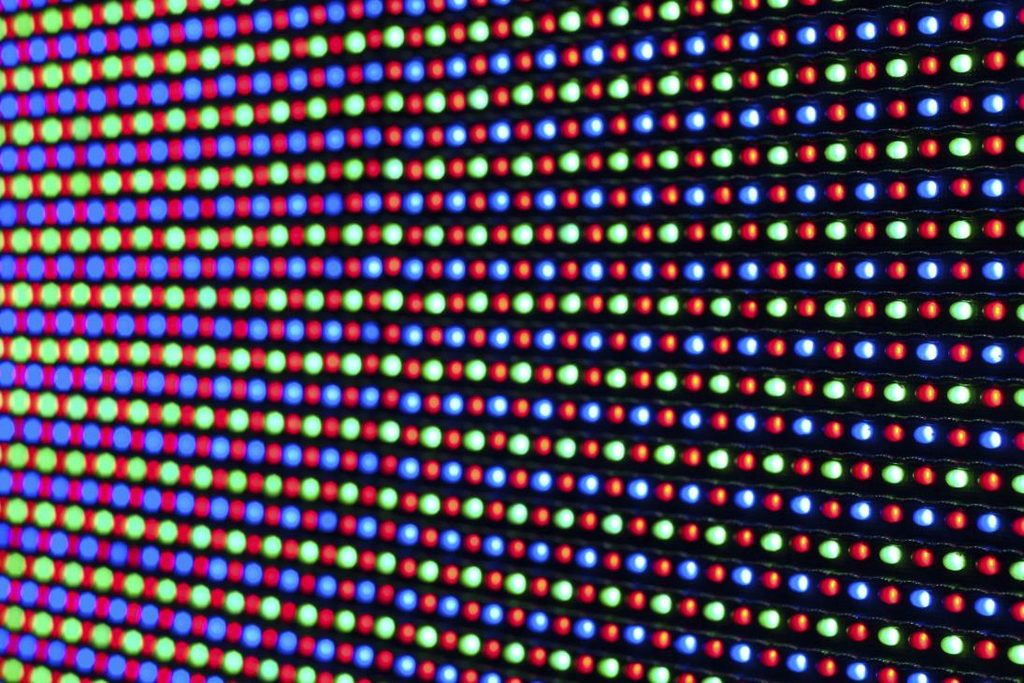
An SMD LED display is a digital screen that uses surface-mount device (SMD) LEDs to produce images and video. Each SMD LED package contains red, green, and blue LED chips in a compact housing. These chips combine their light to create a wide range of colors.
SMD stands for Surface-Mount Device. It refers to an electronic component designed to be mounted directly onto the surface of a printed circuit board (PCB).
In an LED display, SMD LEDs are arranged in a precise pixel matrix. Each pixel contains red, green, and blue light-emitting elements. By controlling the brightness of these elements, the display produces different colors and images.
Unlike traditional through-hole components, SMD LEDs are mounted on the PCB using surface-mount technology (SMT). The process typically involves solder paste printing, component placement, and reflow soldering.
This manufacturing approach supports compact LED packaging and high-density pixel arrangements.
An SMD LED display creates images through the combined operation of its LED pixels, driver ICs, control system, and PCB.
The process can be understood in three steps:
The distance between the centers of two adjacent pixels is called pixel pitch. It is usually measured in millimeters and expressed as P followed by a number.
For example, a P1.5 LED display has a nominal pixel pitch of 1.5 mm. A smaller pixel pitch allows more pixels to fit into the same screen area, increasing pixel density and supporting finer image details at closer viewing distances.
However, pixel pitch alone does not determine display quality. Brightness, grayscale performance, refresh rate, color consistency, viewing conditions, and processing also affect the final image.
SMD LED displays rely on several interconnected components. Understanding their roles helps buyers evaluate display specifications and compare different products.
The LED package contains the light-emitting chips and provides the optical and electrical interface between the chips and the PCB.
Package design affects several performance characteristics, including light output, viewing angle, heat dissipation, and mechanical protection.
Different package sizes and structures support different pixel pitches and applications. However, a larger package does not automatically mean higher brightness or better reliability. The chip configuration, encapsulation materials, thermal design, and operating conditions also matter.
The PCB provides the electrical connections and mounting surface for the LED packages and other electronic components.
During SMT assembly, LED packages and electronic components are placed onto the PCB and soldered in a controlled reflow process.
The accuracy of this process affects pixel alignment, electrical connections, and manufacturing consistency. PCB design also influences signal transmission, thermal performance, and the mechanical stability of the display.
For fine-pitch displays, precise component placement and process control become increasingly important.
Driver ICs control the electrical current supplied to the LED chips. They help regulate pixel brightness and support grayscale reproduction.
The display control system processes incoming video signals and distributes image data to the display panels.
Driver IC specifications, PCB layout, signal integrity, and system configuration all influence performance. Refresh rate, grayscale, and brightness should therefore be evaluated as system-level characteristics rather than determined by the LED package alone.
SMD LED packages come in various sizes and configurations. The package designation often refers to its approximate external dimensions, expressed in tenths of a millimeter.
For example, a 1010 package is approximately 1.0 × 1.0 mm, while a 2121 package is approximately 2.1 × 2.1 mm.
The actual dimensions and internal structures may vary by product and manufacturer.
The following table provides examples of common packages used in LED display applications.
| SMD package | Typical application areas |
| 1010 | Fine-pitch indoor LED displays |
| 1212 | Fine-pitch indoor displays and selected compact-pitch applications |
| 1515 | Indoor fine-pitch displays and some specialized applications |
| 2020 | Indoor LED displays and selected rental applications |
| 2121 | Indoor and outdoor displays, depending on product design |
| 2727 | Outdoor LED displays and applications requiring suitable optical and mechanical performance |
| 3535 | Selected outdoor and specialized LED display applications |
These are general examples, not fixed application limits. The same package size may support different pixel pitches and performance levels depending on the LED design and display architecture.
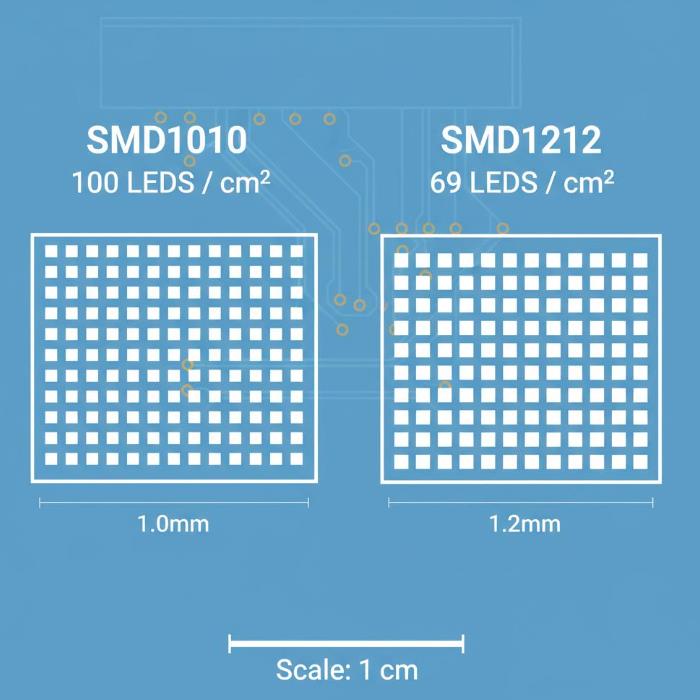
Fine-pitch SMD LEDs support high pixel density and close viewing distances. They are commonly used in meeting rooms, control rooms, broadcast studios, and corporate display installations.
Smaller packages can help designers achieve tighter pixel spacing. However, the minimum practical pixel pitch also depends on PCB layout, soldering precision, optical design, and manufacturing yield.
SMD technology is not limited to conventional large-pitch displays. Advances in chip and packaging design have enabled SMD solutions for increasingly fine pixel pitches, including applications below 1.0 mm.
The suitability of a particular solution depends on its complete design and required performance.
Some SMD LED packages integrate driver IC functionality into the LED package. These designs can reduce the number of external components and simplify certain PCB connections.
For transparent LED displays, integrated-driver solutions may help reduce wiring requirements and support higher transparency, depending on the display architecture.
However, integrated-driver LEDs are not the same as conventional SMD LEDs with separate driver ICs. Buyers should check the package design, control requirements, compatibility, and overall system performance before selecting a solution.
Indoor and outdoor SMD LED displays serve different environments. Their LED packages, brightness requirements, protection structures, and thermal designs must match the intended operating conditions.
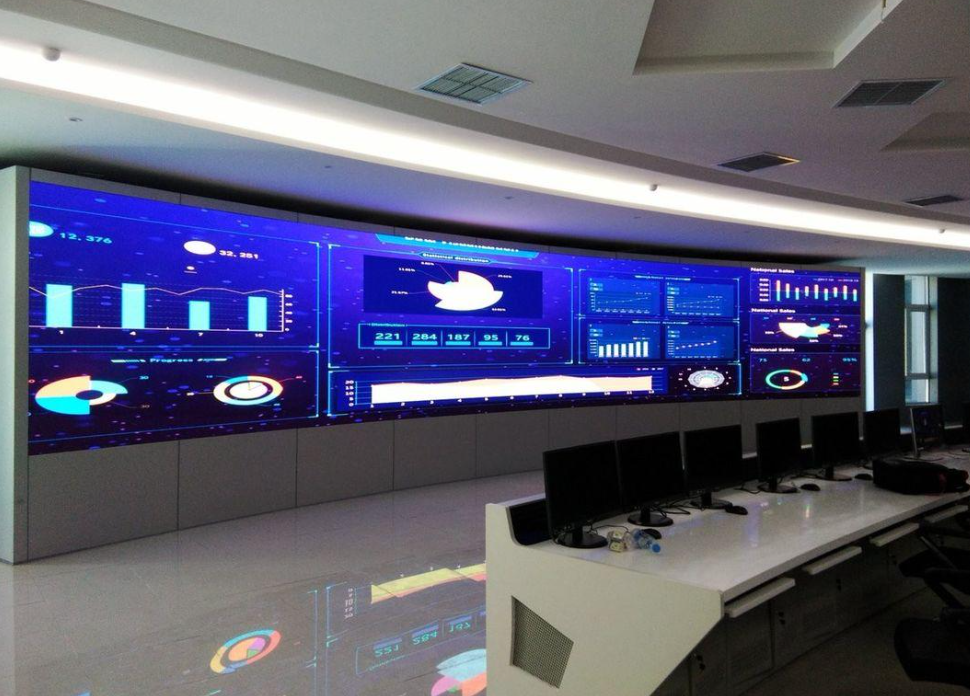
Indoor displays are commonly installed in environments such as conference rooms, shopping malls, retail stores, broadcast studios, and exhibition spaces.
Since viewers may stand close to the screen, pixel pitch is an important consideration. Fine-pitch displays can provide detailed images at short viewing distances.
Typical design priorities include:
Indoor displays generally operate at lower brightness levels than outdoor screens because they do not need to compete with direct sunlight. However, the required brightness depends on ambient lighting, screen size, content, and installation conditions.
For example, a display in a dim control room may require different brightness settings from one installed in a brightly lit shopping mall.
Outdoor displays are designed to remain visible under changing weather and lighting conditions. Common applications include billboards, building facades, stadium screens, transportation hubs, and roadside advertising.
Compared with indoor displays, outdoor models typically require higher brightness and stronger environmental protection.
Important considerations include:
An IP rating indicates the degree of protection provided against the ingress of solids and water under specified test conditions. It should be evaluated for the complete display enclosure and relevant components, not assumed from the LED package alone.
Outdoor performance also depends on installation details, ventilation, maintenance access, and operating temperature.
The key difference is not simply LED brightness. An outdoor display must combine optical performance, environmental protection, thermal management, and mechanical reliability to suit its operating environment.
SMD, COB, and DIP represent different approaches to LED packaging and display integration. Understanding their structural differences helps LED display manufacturers, integrators, and buyers select suitable solutions for different applications.
SMD and DIP use packaged LED components, while COB mounts LED chips directly onto a substrate or PCB before applying protective encapsulation. MiP, meanwhile, uses miniature packaged Micro LED chips and can employ surface-mount processes for display assembly.
These technologies differ in packaging structure, manufacturing processes, pixel density, optical performance, and maintenance requirements.
SMD is a widely used packaging approach for full-color LED displays. Red, green, and blue LED chips are integrated into a compact package, which is then mounted onto a PCB through surface-mount technology (SMT).
This structure supports a broad range of pixel pitches, from conventional LED displays to fine-pitch applications.
Key characteristics include:
SMD technology also continues to evolve through smaller package sizes, improved chip performance, and advances in packaging materials.
These developments enable SMD solutions to serve increasingly fine-pitch applications. The achievable pixel pitch depends on the LED package, PCB layout, assembly precision, and overall display design.
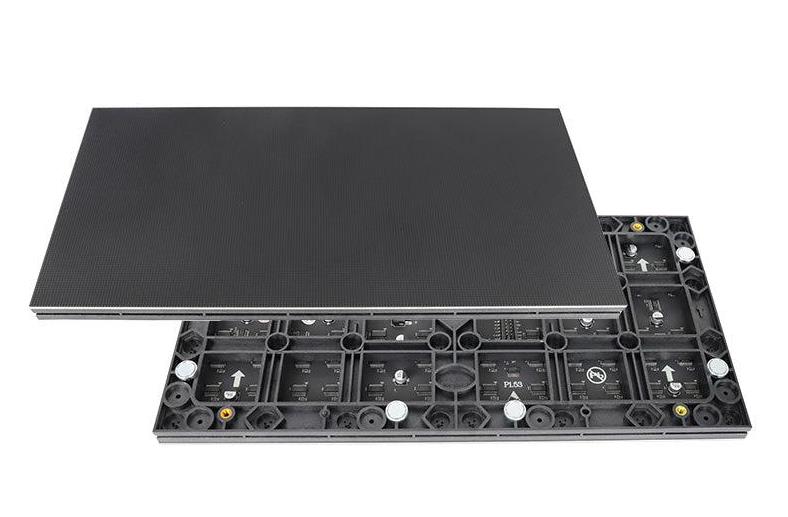
COB stands for Chip on Board. Unlike conventional SMD displays, COB displays mount LED chips directly onto a substrate or PCB rather than packaging each RGB pixel as an individual SMD component first.
The chips are electrically connected and protected through a subsequent encapsulation process.
This approach allows LED chips to be integrated at high density and provides a protective surface over the emitting area.
Key characteristics include:
COB is particularly relevant to applications requiring fine pixel pitch and a protected display surface, such as control rooms, meeting rooms, and high-end indoor display installations.
However, its manufacturing processes, repair methods, and production requirements differ from those of SMD displays. Buyers should evaluate the complete product design and service arrangements before making a selection.
DIP stands for Dual In-line Package. It is a traditional LED packaging method in which LED components have leads that pass through holes in a PCB and are soldered on the opposite side.
In full-color LED displays, red, green, and blue LEDs are commonly arranged as separate light-emitting elements within each pixel.
DIP technology has been used extensively in outdoor LED displays, particularly in applications where high brightness and environmental durability are important.
Its main characteristics include:
Compared with SMD, DIP displays generally have narrower horizontal viewing angles and lower pixel density at comparable display dimensions.
However, actual brightness, viewing angle, and reliability depend on the LED design, optical structure, and complete display system. DIP should not be considered obsolete simply because SMD supports a wider range of fine-pitch applications.
| Feature | SMD | COB | DIP |
| Packaging method | Packaged LEDs mounted on PCB | LED chips mounted directly on substrate or PCB | Through-hole LED packages |
| Pixel density | Conventional to fine-pitch | Fine-pitch and ultra-fine-pitch | Generally conventional or larger-pitch |
| Viewing angle | Generally wide | Depends on optical and encapsulation design | Generally narrower horizontally |
| Surface protection | Depends on package and display design | Protective encapsulation over chip area | Depends on component and display structure |
| Typical applications | Indoor, outdoor, rental, fixed installations | Fine-pitch indoor displays | Selected outdoor and large-format displays |
These are general characteristics rather than absolute limits. Different product designs can produce different results, and buyers should compare actual technical specifications instead of relying only on packaging categories.
Selecting an SMD LED display involves more than comparing pixel pitch or brightness. Buyers should consider the installation environment, viewing distance, image requirements, and long-term operating conditions.
The following factors can help guide the selection process.
Pixel pitch determines the distance between adjacent pixels and directly affects pixel density.
A smaller pitch generally provides higher resolution for a given screen size. It is therefore useful when viewers need to see detailed content from close distances.
A larger pitch may be sufficient for outdoor billboards or other installations where viewers stand farther away.
When selecting pixel pitch, consider:
The goal is to achieve the required image clarity without paying for pixel density that the installation does not need.
Brightness is commonly measured in nits, or candelas per square meter (cd/m²).
A display installed in direct sunlight requires a different brightness level from one used in a dim indoor environment.
However, maximum brightness should not be the only selection criterion. Excessive brightness can increase power consumption and heat generation. It may also reduce viewing comfort in indoor environments.
Buyers should evaluate brightness alongside ambient lighting, contrast, viewing distance, and the intended content.
For outdoor projects, it is also useful to consider how the display maintains visibility under changing daylight conditions.
Refresh rate describes how frequently the display refreshes its image. It is usually expressed in hertz (Hz).
A suitable refresh rate helps reduce visible flicker and supports stable image capture in camera-based applications, such as broadcast studios and virtual production environments.
Grayscale performance determines how smoothly the display reproduces different brightness levels. It is particularly important for dark scenes, subtle gradients, and detailed video content.
Both characteristics depend on the driver IC, control system, display configuration, and operating settings. Buyers should evaluate the complete display system rather than relying on a single component specification.
Color consistency is important when multiple LED panels form a large display.
Variations in LED wavelength, brightness, optical characteristics, and calibration can create visible differences between panels.
A well-controlled manufacturing and calibration process helps achieve consistent colors across the screen.
Viewing angle also affects how the display looks to people standing away from its central viewing position.
For retail environments, control rooms, and large public installations, buyers should consider both horizontal and vertical viewing angles.
The specified viewing angle should be checked against the actual installation layout and required image quality.
Reliability is particularly important for displays used outdoors or in rental applications.
Outdoor displays may experience rain, humidity, temperature changes, ultraviolet exposure, and prolonged high-brightness operation.
Rental displays face different challenges. Frequent transportation, installation, dismantling, and reinstallation can expose panels and LED components to mechanical impact.
Relevant factors include:
For rental applications, the mechanical strength of LED packages and their solder connections is particularly important. Suitable impact resistance can help reduce damage during repeated handling.
For outdoor installations, the protection level of the complete display and its supporting structure should match the actual operating environment.
The initial purchase price is only one part of the cost of an LED display.
Total cost of ownership can include installation, transportation, energy consumption, maintenance, spare parts, and downtime.
For example, a rental display may require lightweight panels and durable LED packages to simplify handling and reduce repair needs.
A fixed outdoor installation may place greater emphasis on weather protection, thermal management, and access for maintenance.
Buyers should compare products based on their intended service life and operating conditions rather than focusing solely on the initial price or maximum technical specifications.
SMD LED displays remain an important technology for digital signage, commercial installations, rental screens, and outdoor advertising.
Their flexibility comes from the combination of compact LED packages, established SMT manufacturing processes, and a broad range of available package sizes and display configurations.
Choosing the right solution requires a clear understanding of pixel pitch, brightness, color performance, environmental protection, and reliability. The best technical configuration depends on the specific application rather than on one specification alone.
As LED packaging continues to evolve, SMD, COB, and MiP technologies will serve different requirements across the display industry. Understanding their characteristics helps display manufacturers, integrators, and buyers make more informed technical decisions.
Kinglight is a professional LED supplier specializing in SMD LEDs for LED display applications. Its product portfolio serves indoor and outdoor LED displays, rental screens, and other specialized display applications.
By focusing on LED packaging technology, product reliability, and application-specific requirements, Kinglight supports LED display manufacturers and industry partners worldwide.