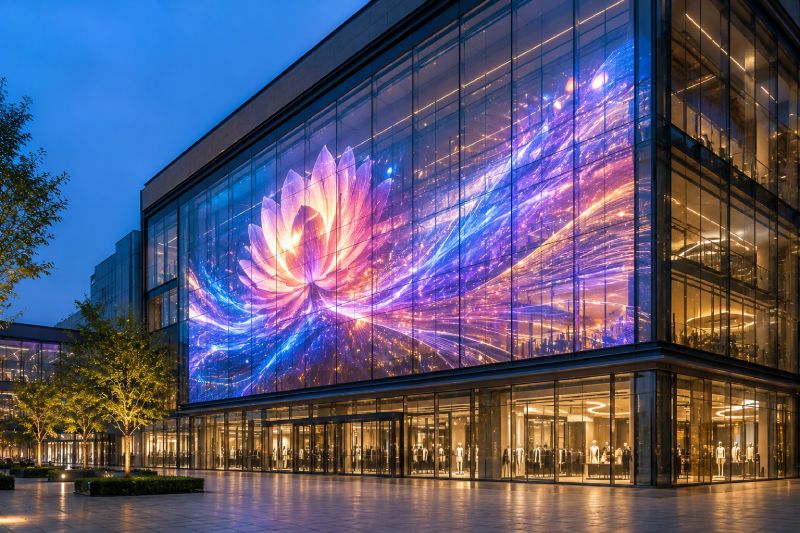
Imagine when you walk in a shopping mall, an LED display is so transparent that you almost neglect it, but vivid and crystal-clear visuals come into your eyes like mirages floating in the air. This is the unique visual appeal of a transparent LED display.
Traditional LED displays have thick cabinets and structural support. These structures take up valuable space and block natural light. This results in insufficient daylight indoors and create a sense of confinement in spaces where visibility is already limited. For public spaces requiring openness, these limitations can be significant design drawbacks.
Transparent LED displays become better options. Their lightweight and see-through design allows them to deliver dynamic visual content while preserving natural light and spatial openness. Transparent LED displays are for sure more valuable solutions for retail storefronts, interior partitions, and glass walls in crowded public facilities such as shopping malls, transition hubs, etc.
According to DATAINTELO, the global transparent LED display market was valued at approximately $3.72 billion in 2025 and is projected to reach $15 billion by 2034, representing a compound annual growth rate (CAGR) of 16.8%. These figures indicate significant growth potential for transparent LED displays in the coming years.

To meet the evolving demand of the market, Kinglight continues to advance LED innovations and develops the new 2222-IC3 driver IC integrated LEDs for transparent LED displays, which offer improved display uniformity and reliability while maintained transparency.
Here in this article, we’ll explain what a driver IC integrated LED is, and explore the advantages of Kinglight 2222-IC3 driver IC integrated LEDs.
Let’s dive in.
Conventional LEDs used in LED displays typically do not integrate a driver IC. Instead, separate driver ICs are mounted on the back of the display. The additional components and wiring can partially block natural light, reducing the overall transparency of the LED display.
A driver IC integrated LED, by contrast, incorporates the driver IC directly into the LED itself. This integration reduces the need for additional wiring and structural components behind the display. As a result, we get a higher transparency on an LED display with thin and lightweight design.
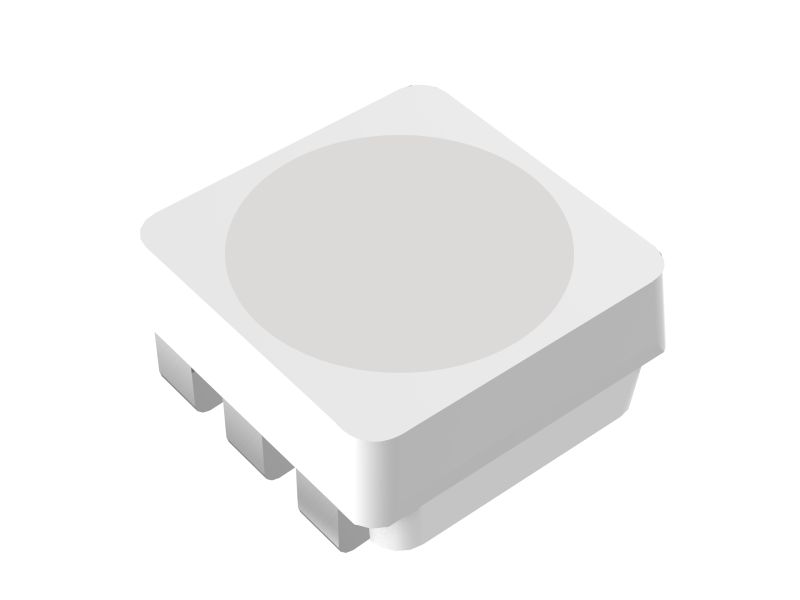
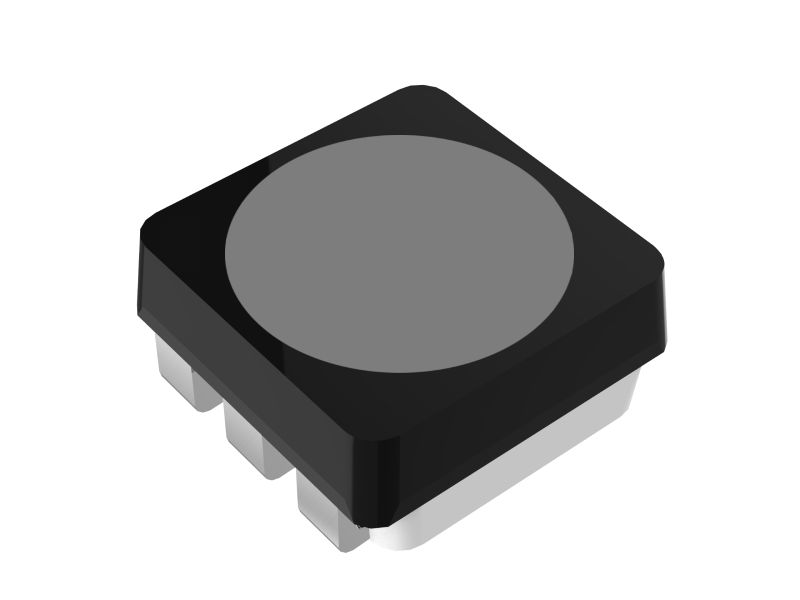
Kinglight 2222-IC3 driver IC integrated LEDs are available in black and white finishes for P4 to P10 transparent LED displays. The black ones are ideal for LED grille displays and mesh LED displays, while the white ones are suitable for LED film displays and glass-mounted LED displays.
To achieve high transparency, transparent LED displays typically use narrower wiring. However, narrower wiring can lead to greater voltage drops toward the end of a long LED chain, increasing the risk of color deviation and reducing display uniformity. Simply lowering the operating current can help reduce voltage loss, but it also reduces overall brightness, making it difficult to balance transparency, brightness and color consistency.
Kinglight 2222-IC3 driver IC integrated LED uses a large-size LED chips to deliver higher brightness at a lower operating current. Display brightness can exceed 6,000 nits, while power consumption can be reduced by approximately 20% compared with conventional LEDs at the same brightness level.
The LED also helps reduce voltage loss toward the end of the chain, effectively addressing color deviation in long-series connections. This allows transparent LED displays to achieve high brightness and consistent image quality while maintaining a high level of transparency.
Compared with the previous-generation driver IC, which supports up to 512 pixels on a single signal chain at a 60 Hz refresh rate, the third-generation driver IC integrated into the 2222-IC3 LED supports a higher signal transmission rate and can cascade up to 1,024 pixels.
The longer cascading capability can reduce the number of control interfaces and cables required when building large transparent LED displays, helping lower overall system costs. It also provides greater design flexibility for applications such as extra-long LED film displays on glass walls and custom-shaped transparent LED displays.
In real-world projects, soldering defects at LED pins can be a common source of failure in transparent LED displays. For example, poor soldering at the VDD or GND pins of a single LED can cause an unstable reference voltage, potentially resulting in continuous flickering across the LEDs that follow it in the same chain. Finding out the faulty pixel can also be time-consuming during maintenance.
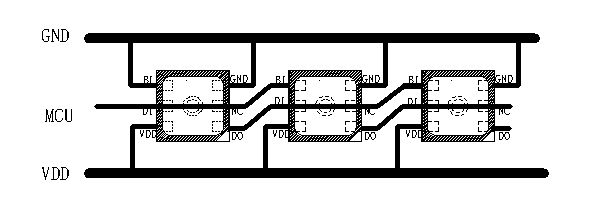
The new-generation driver IC integrated into the Kinglight 2222-IC3 can detect abnormal LED signals and automatically turn off the faulty LED. At the same time, it uses a backup signal path to bypass the failed LED and transmit the signal to the LEDs that follow. This allows the remaining LEDs in the chain to continue operating normally.

In addition, Kinglight 2222-IC3 LEDs also support input and output soldering-defect detection, helping simplify troubleshooting and reduce long-term maintenance costs.
Kinglight 2222-IC3 LED also supports bidirectional signal transmission, allowing control signals to travel in either direction.
For LED display modules built with 2222-IC3 LEDs, this means the controller position can simply be changed when joining adjacent modules, without having to reverse the orientation of the modules themselves. The LEDs can therefore maintain the same orientation, keeping their light-emitting centers aligned along the same line.
This helps avoid subtle image displacement between adjacent modules and enables smoother visual transitions across the entire display.
By contrast, LEDs that support only unidirectional signal transmission require the controller to be positioned on the same side of different modules. To establish the signal connection, one module may need to be rotated, which can shift the position of the LED dies. This results in a subtle horizontal displacement between the images displayed on the upper and lower modules.
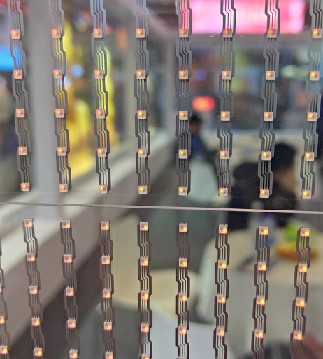
In recent years, transparency, natural lighting and spatial openness becomes important factors in public spaces. Transparent LED displays offer better solutions the evolving demand with its high transparency allowing more natural light and visual openness while providing dynamic content, spatial aesthetics, and of course information telling and commercial advertising.
These unique benefits make the demand of transparent LED displays continue to grow. And LED technologies also evolve meet with the market trend.
Kinglight 2222-IC3 driver IC integrated LEDs are no doubt ideal options for transparent LED displays because of their energy saving, display uniformity and reliability.
According to Kinglight’s R&D team, a flip-chip version of driver IC integrated LED is also developed for P2 to P6 transparent LED displays and will be soon available for mass production. And in the future, Kinglight will continue to expand LED portfolio for the evolving transparent display market.