


In recent years, immersive audiovisual domes have become standout attractions across entertainment, science, and education sectors. These environments merge panoramic visuals with spatial audio to create experiences that surround visitors from all angles. Unlike traditional flat screens, immersive audiovisual domes transform passive viewing into deeply engaging journeys.
Across art, science, and live performance, immersive domes offer unique opportunities for storytelling and audience engagement. In this case study, we explore prominent real-world installations, the technologies that power them, the challenges they face, and why they continue to shape the future of experiential media.
An immersive audiovisual dome is a structure—often hemispherical or spherical—that presents synchronized video and sound across a curved surface. This design envelops the audience in imagery and audio, making viewers feel “inside” the content, not merely observing it.
These domes can be driven by high-resolution LED panels or multi-projector systems. Both solutions aim to maintain seamless visuals across the entire surface and deliver precise spatial sound, ensuring that viewer attention remains fully immersed in the experience.
Around the world, a range of venues demonstrate how immersive domes are used in entertainment, education, and cultural storytelling. Below are several verified examples showcasing different scales, technologies, and use cases.
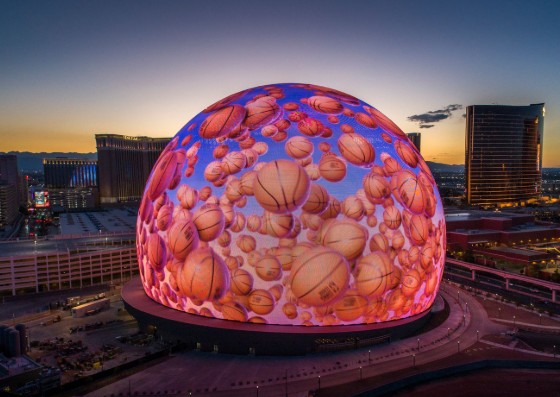
The MSG Sphere in Las Vegas is one of the most ambitious immersive audiovisual venues ever built. Standing 366 feet tall and 516 feet wide, this massive spherical entertainment complex features a 160,000-square-foot wraparound LED screen with extremely high resolution and a powerful sound system with thousands of speaker elements. The venue opened in 2023 and has already hosted major concerts and shows that leverage its immersive capabilities. (thespherevegas.com)
What sets the Sphere apart is its combination of ultra-high-definition visuals and advanced spatial audio. The vast LED surface delivers floor-to-ceiling imagery that fills the audience’s entire field of view, while the audio system brings multi-dimensional sound to every seat. These features make it ideal for concerts, cinematic experiences, and bespoke immersive presentations. (thespherevegas.com)
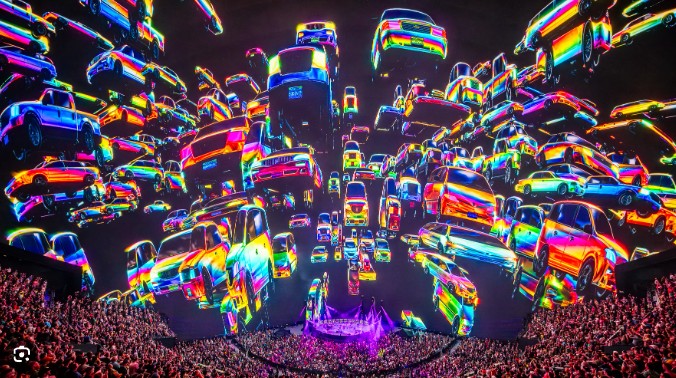
At the Arizona Science Center, the newly reopened Dorrance DOME merges immersive LED technology with educational programming. This 60-foot dome uses an integrated LED system boasting extremely high brightness and clarity—reportedly over 8K resolution across the surface. The dome hosts daily 360° shows combining space, science, art, and storytelling. (azscience.org)
Powered by next-generation immersive playback systems and advanced visualization software, the Dorrance DOME exemplifies how educational institutions are adopting immersive domes to deepen audience understanding while expanding into new programming like concerts and themed events. (azscience.org)
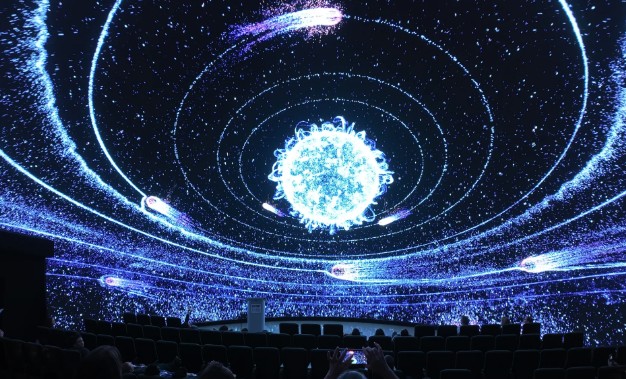
The Omni-Theatre in Singapore is another long-standing example of immersive content delivery. Its 23-metre dome screen originally hosted large-format film projections, and today the venue integrates digital systems allowing high resolution astronomy and science films to be shown to audiences in a fully immerse dome environment. (维基百科)
This theatre has been used for space and science content presentations for decades and highlights how traditional planetarium formats have evolved into immersive audiovisual experiences that engage audiences with both education and entertainment.
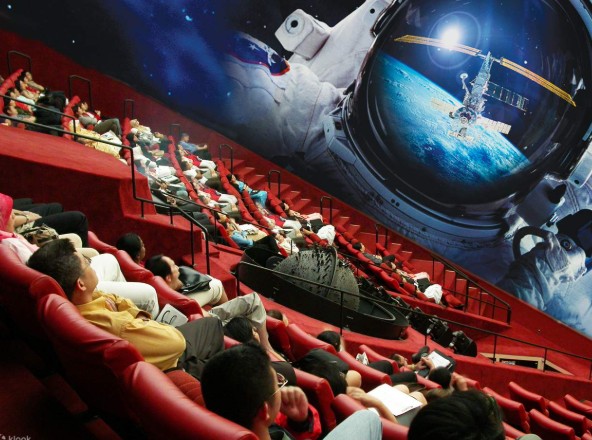
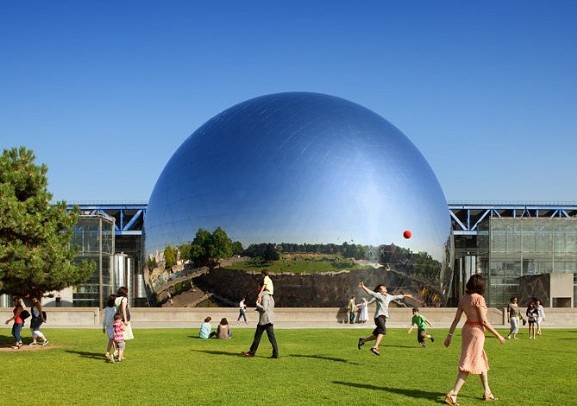
La Géode is a geodesic dome theatre located at the Cité des Sciences et de l’Industrie in Paris. Originally built as a large IMAX dome cinema, it reopened in late 2024 after refurbishment, continuing its legacy as a venue for immersive dome projection experiences combining panoramic visuals and surround sound. (维基百科)
Although its core functions lean toward cinema and educational presentations, La Géode remains a landmark of immersive media spaces and a cultural touchpoint for dome-based viewing in Europe.
The immersive audiovisual dome relies on several essential technologies that work together to create engaging experiences. Each one tackles a core challenge of displaying content over curved surfaces while maintaining clarity and synchronization.
Two main display approaches are in common use:
Both approaches focus on minimizing visual distortion and maximizing immersion. Professional geometric calibration is essential for achieving smooth visuals across curved surfaces. (azscience.org)
Immersion isn’t just visual; sound plays a key role. Most immersive domes employ multi-channel or object-based audio systems. These systems allow sound to be positioned precisely within the space, complementing the visuals and reinforcing the illusion of depth and movement.
For example, large venues like the Sphere utilize distributed audio arrays to ensure consistent sound no matter where audience members sit. (thespherevegas.com)
20Centralized control software ensures that audio, video, lighting, and interactive elements remain synchronized. For interactive and live events, real-time engines may be integrated to adapt content dynamically based on audience interaction or live performance cues.
In museum settings, content scheduling tools and integrated playback systems help educational institutions manage varying types of programming throughout the day.
Despite the appeal of immersive experiences, several challenges arise in planning, operating, and maintaining these installations.
The curved geometry that makes domes immersive also complicates visual calibration. Projection or LED panels must be precisely positioned and calibrated to produce uniform brightness and avoid distortion.
Spatial considerations, such as dome size and seating arrangements, can affect sightlines and audio distribution, demanding careful architectural and acoustic planning.
Integrating multiple display devices, audio systems, and control networks is a complex engineering task. Even small timing discrepancies can disrupt synchronization, diminishing the immersive effect. Systemic testing and professional integration expertise are essential.
Developing high-quality immersive content tailored to dome environments requires expertise in 360° video, 3D graphics, and spatial audio design. This can increase production costs compared to conventional video content.
Immersive audiovisual domes offer several compelling advantages:
Building an immersive audiovisual dome experience requires a thoughtful blend of advanced display technology, spatial audio, content strategy, and engineering expertise. By studying leading global installations—such as the MSG Sphere, Dorrance DOME, Omni-Theatre, and La Géode—organizations can understand how dome environments engage audiences and evolve immersive storytelling.
As technology advances, immersive domes are likely to become even more prominent, enabling new forms of experiential media that blend education, entertainment, and immersive design.

