


A new landmark LED display has arrived in the heart of Poland’s capital. Europe’s largest three-sided 3D LED screen has officially opened in Warsaw, introducing a new destination for digital out-of-home (DOOH) advertising in one of the city’s busiest commercial districts.
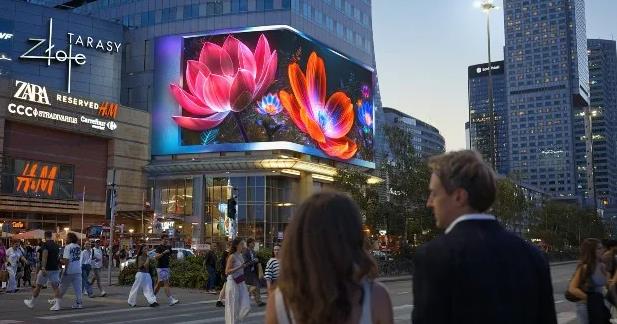
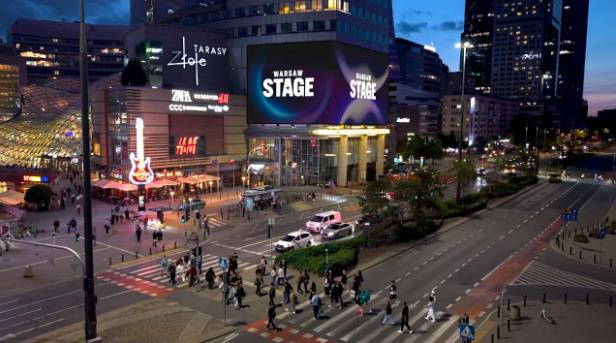
Located beside Warsaw Central Railway Station, the installation covers approximately 800 square metres and has been designed to showcase anamorphic 3D content. The project wraps around three sides of a building, creating a prominent digital façade that can be viewed from multiple directions.
According to the project operator, the installation is intended to support not only commercial advertising but also cultural programmes, public events, and large-scale brand campaigns. This positioning reflects a broader trend in the DOOH industry, where landmark LED displays are increasingly designed as long-term urban media assets rather than conventional advertising screens.
While the size of the display immediately attracts attention, the project is also significant because it highlights how cities continue to integrate large-format LED technology into public spaces. Around the world, landmark installations are becoming part of a city’s identity while creating new opportunities for advertisers, content creators, and media operators.
The new installation occupies one of Warsaw’s most visible urban locations. Positioned next to the city’s central railway station, it benefits from continuous pedestrian and vehicle traffic throughout the day, making it a highly attractive location for premium outdoor advertising.
The display covers around 800 square metres and is built from nearly 1,000 LED cabinets with a combined structural weight of approximately 22 tonnes. Its three-sided design follows the shape of the building, allowing digital content to extend across multiple visible façades.
Unlike many traditional outdoor advertising screens, the project has been introduced as a permanent media destination capable of supporting a wide range of activities. Beyond advertising campaigns, the installation can also host cultural projects, public celebrations, seasonal events, and city-wide communications.
As Warsaw continues to modernise its commercial districts, projects like this demonstrate how digital infrastructure is becoming an increasingly visible part of the urban landscape.
Large LED displays have become common in many major cities. However, not every installation becomes a landmark.
The significance of Europe’s largest three-sided 3D LED screen goes beyond its physical dimensions. Instead, it reflects how the role of premium LED displays continues to evolve within modern cities.
In the past, outdoor LED screens were primarily designed to deliver advertising messages. Today, many landmark installations are expected to contribute to the character of a location while attracting public attention through creative digital content.
This shift is changing the way cities, advertisers, and media operators think about outdoor displays.
Instead of simply filling available building space with digital signage, many projects now aim to create memorable visual experiences. Large-scale displays can become gathering points during public celebrations, sporting events, cultural festivals, or major product launches.
As a result, the display itself becomes part of the experience rather than serving only as the medium for advertising.
This approach also encourages higher-quality creative content. Anamorphic 3D animations, digital art, and immersive visual storytelling often attract audiences who may not normally pay attention to traditional outdoor advertising.
For media owners, this creates additional value by increasing audience engagement. For brands, it offers opportunities to present campaigns in environments that naturally attract attention.
You may also be interested in: top 10 largest LED displays in the world
One of the most notable aspects of the Warsaw project is not its size, but how it has been positioned.
Rather than being promoted as another advertising screen, the installation has been introduced as a media platform.
This distinction reflects an important development across the DOOH industry.
Traditionally, advertisers purchased screen time to display promotional messages. Once the campaign ended, the relationship between the audience and the display also ended.
Today, many premium LED installations are designed to support much broader communication strategies.
A product launch may combine a large-format LED display with live events, public relations activities, influencer collaborations, online videos, and social media campaigns. Instead of acting as a standalone advertising medium, the display becomes one element within a much larger communication ecosystem.
This integrated approach allows brands to connect physical audiences with digital audiences while extending campaign visibility beyond the installation itself.
For media operators, the value of a landmark display is therefore measured not only by audience impressions but also by its ability to support creative storytelling, public engagement, and wider media exposure.
As more cities invest in premium digital infrastructure, this evolution from advertising space to media platform is becoming one of the defining characteristics of modern DOOH advertising.
Advanced display technology is essential for landmark LED projects, but technology alone does not determine success.
Location remains one of the most valuable assets in digital out-of-home advertising.
The Warsaw installation is situated beside the city’s busiest railway station, where large numbers of commuters, office workers, shoppers, and tourists pass through every day. This constant flow of people creates repeated exposure throughout the day while giving advertisers access to diverse audiences.
Many of the world’s most recognisable LED landmarks share this characteristic.
Whether in New York, Tokyo, Seoul, or other major cities, successful landmark displays are typically located in busy commercial districts, transportation hubs, or public gathering spaces where people naturally spend time.
For advertisers, visibility is influenced not only by screen size but also by how the display fits within its surrounding environment.
A well-positioned installation can become part of the city’s daily rhythm, attracting both planned visitors and casual passers-by. Over time, these locations often develop into recognisable urban landmarks that appear regularly in photographs, travel content, and social media posts.
The Warsaw project follows this established approach by combining a prominent location with a large-scale digital display capable of supporting a wide variety of public and commercial activities.
One of the biggest changes in DOOH advertising is how campaigns continue long after they appear on a screen.
In the past, outdoor advertising reached only the people who passed by a specific location. Today, landmark LED displays often become content destinations that generate additional exposure across digital platforms.
When a campaign features creative visuals, especially anamorphic 3D content, people are more likely to stop, take photos, record videos, and share them online. A display that captures attention in person can quickly reach audiences on Instagram, TikTok, YouTube Shorts, LinkedIn, and other social media platforms.
This behaviour has changed how brands evaluate premium outdoor advertising.
Instead of measuring value solely by on-site impressions, advertisers increasingly consider the wider impact of social sharing, media coverage, and user-generated content. A successful campaign may continue to gain visibility long after viewers leave the location.
For this reason, landmark LED displays are becoming important assets within integrated marketing campaigns. They create opportunities to connect physical audiences with digital communities, allowing a single installation to support communication across multiple channels.
As more campaigns are designed with online engagement in mind, the relationship between DOOH advertising and social media continues to grow stronger.
The opening of Europe’s largest three-sided 3D LED screen also reflects a broader global trend.
Over the past decade, many cities have invested in landmark LED displays that serve as highly visible public media platforms. These installations are often located in commercial centres or transportation hubs where they can reach large audiences while contributing to the city’s visual identity.
Some of the world’s best-known examples include the digital billboards of Times Square in New York, the anamorphic LED displays in Tokyo’s Shinjuku district, and the large public LED screens in Seoul’s COEX area. In China, landmark LED projects in cities such as Chengdu and Chongqing have also attracted significant international attention through creative digital content.
Although every project has its own architectural design and operational strategy, they share several common characteristics.
They occupy prominent urban locations.
They support large-scale commercial campaigns alongside public events.
They encourage creative content rather than simple advertising.
Perhaps most importantly, they have become recognisable landmarks that people actively visit, photograph, and share.
The Warsaw installation now joins this growing international network, highlighting how premium LED displays continue to play an increasingly important role in modern urban environments.
Projects like the Warsaw installation offer valuable insight into the direction of the LED display industry.
One clear trend is that the conversation is gradually shifting beyond hardware specifications. Screen size, resolution, brightness, and cabinet design remain important, but they are no longer the only factors that determine the success of a landmark project.
Instead, greater attention is being given to how a display fits into its surrounding environment and how it supports long-term communication goals.
A successful landmark LED display is no longer expected to function only as an advertising medium. It should also enhance the character of a location, support different types of public activities, and provide a flexible platform for creative content throughout the year.
This evolution requires collaboration across the entire LED display ecosystem.
Display manufacturers, LED component suppliers, system integrators, content creators, media operators, architects, and property owners all contribute to the final result. While audiences often focus on the finished display, every successful installation is supported by careful planning and cooperation behind the scenes.
As cities continue to invest in digital infrastructure, future landmark projects are likely to place greater emphasis on integration rather than scale alone. The most successful installations will combine strategic locations, creative content, reliable display technology, and sustainable long-term operation.
Rather than asking which city has the largest screen, the more important question may become how these landmark displays create lasting value for both cities and brands.
The role of LED displays within cities continues to expand.
Beyond advertising, many installations now support public celebrations, cultural festivals, sporting events, tourism promotions, and emergency communications. During major international events, landmark LED displays often become gathering points where residents and visitors share the same experience.
This wider role makes LED displays an increasingly important part of urban digital infrastructure.
As cities become more connected and digitally driven, public display networks can help communicate information quickly while also creating vibrant visual environments that encourage interaction.
For advertisers, this creates opportunities to engage audiences in settings that feel more natural than conventional advertising spaces.
For city planners and property owners, landmark LED displays can contribute to urban renewal projects by introducing new visual experiences into commercial districts.
The Warsaw project reflects this broader evolution. While it is currently recognised for its scale and three-sided design, its long-term significance will depend on how it supports the city, its communities, and the organisations that use it over the years ahead.
The opening of Europe’s largest three-sided 3D LED screen marks another milestone in the continued evolution of digital out-of-home advertising.
Its significance extends beyond the scale of the installation itself. The project demonstrates how landmark LED displays are increasingly being integrated into urban environments as long-term media assets that support advertising, public communication, cultural activities, and city branding.
At the same time, it reflects several broader trends shaping the global LED display industry. Premium locations remain essential. Creative content continues to drive audience engagement. Integrated campaigns are becoming more important than standalone advertisements. And landmark installations are increasingly expected to create value for both cities and brands.
As more urban centres invest in digital infrastructure, projects like the Warsaw installation illustrate how LED displays are evolving from advertising screens into important components of the modern cityscape.
Whether viewed as a new destination for DOOH advertising or as another example of urban digital transformation, the project highlights the growing role of large-format LED displays in connecting public spaces with digital experiences.
A three-sided 3D LED screen is a large LED display installed across three connected building façades. It can present anamorphic content that creates depth and perspective when viewed from specific locations. The three-sided structure follows the shape of the building and provides multiple viewing angles around the installation.
Not necessarily.
The visual quality of anamorphic content depends primarily on creative design, viewing perspective, display quality, and the surrounding architecture. While a three-sided installation offers a larger display area on certain buildings, there is currently no industry evidence showing that it consistently delivers better 3D effects than traditional corner LED displays.
Many cities are investing in landmark LED displays because they support more than commercial advertising. They can also host public events, cultural programmes, tourism campaigns, and city communications while becoming recognisable features within the urban landscape.
Landmark LED displays combine premium locations with high public visibility. They also encourage people to photograph and share creative campaigns on social media, allowing advertisers to extend campaign reach beyond the physical installation.
Anamorphic content is a type of visual design that creates the illusion of three-dimensional depth when viewed from a specific angle. It has become one of the most popular creative formats used on large outdoor LED displays around the world.

