


The rapid development of digital technology has reshaped nearly every aspect of modern life, and education is no exception. In recent years, the rise of smart classrooms has transformed traditional teaching environments into interactive, data-driven learning spaces. At the heart of this transformation lies audiovisual (AV) technology.
From interactive displays and LED walls to intelligent audio systems and cloud-based collaboration tools, audiovisual solutions are redefining how knowledge is delivered and absorbed. This article explores how AV technology enhances education in the smart classroom era and why it has become a cornerstone of modern learning.
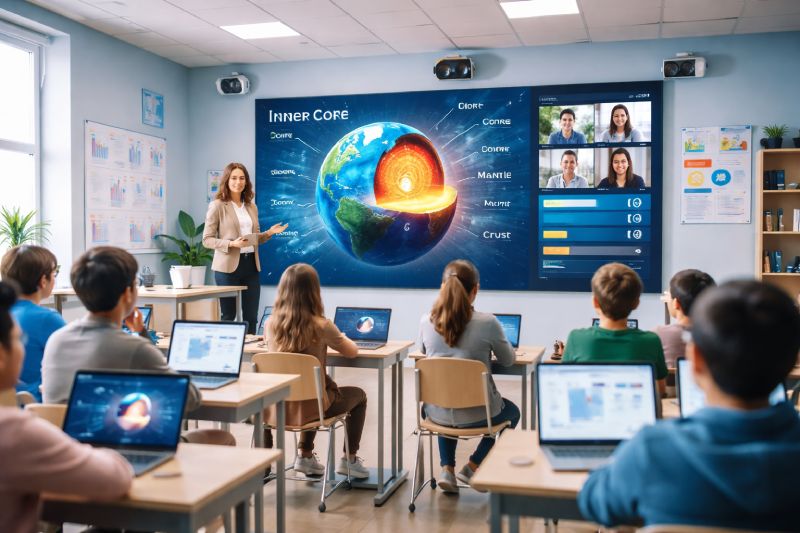
A smart classroom is an advanced learning environment that integrates digital tools, network connectivity, and intelligent systems to support teaching and learning activities.
Unlike traditional classrooms that rely mainly on whiteboards and textbooks, smart classrooms use:
These technologies work together to create a more flexible, engaging, and personalized learning experience.
Audiovisual technology serves as the backbone of smart classrooms. It bridges the gap between content, teachers, and students by delivering information in dynamic and immersive ways.
Advanced display technologies such as interactive flat panels, LED video walls, and projection systems allow educators to present content clearly and vividly.
Key benefits include:
These systems help students visualize complex concepts, from scientific simulations to historical timelines, making learning more intuitive.
Clear sound is essential for effective communication. Smart classrooms are equipped with professional audio solutions, including:
These tools ensure that every student, regardless of seating position, can hear lessons clearly, reducing fatigue and improving comprehension.
Modern AV systems support real-time recording and live streaming of lectures. This enables:
Students can review recorded lessons anytime, which enhances learning continuity and supports self-paced study.
Traditional lecture-based teaching often struggles to maintain student attention. Audiovisual technology introduces multimedia elements that make learning more engaging.
With interactive displays and digital whiteboards, teachers can:
This two-way interaction increases participation and keeps students actively involved in the learning process.
Research shows that combining visual and auditory information improves memory retention. Videos, animations, and simulations help students understand abstract topics more effectively than text alone.
For example:
These tools transform passive learning into experiential learning.
Smart classrooms powered by AV technology also enable personalized instruction.
Many audiovisual platforms integrate with learning management systems (LMS) to track student performance. Teachers can analyze:
Based on this data, educators can adjust teaching strategies to meet individual needs.
AV technology makes classrooms more accessible for diverse learners, including students with disabilities.
Examples include:
This inclusivity promotes equal learning opportunities.
The demand for remote and hybrid learning has grown significantly. Audiovisual technology plays a critical role in supporting these models.
Smart classrooms enable smooth communication between on-site and remote students through:
This ensures consistent learning experiences regardless of location.
With advanced AV systems, schools can connect with international institutions, invite guest speakers, and conduct cross-border projects. This expands students’ global perspectives and cultural awareness.
Investing in audiovisual technology delivers long-term value for schools and universities.
Teachers can prepare, deliver, and reuse digital content more efficiently. Automated systems reduce administrative workload and allow educators to focus on instruction quality.
Modern, technology-equipped classrooms improve a school’s reputation. They demonstrate innovation, professionalism, and commitment to quality education, which attracts students and partners.
Digital content reduces dependence on printed materials. Over time, this lowers operational costs and supports environmental sustainability.
Despite its advantages, implementing AV technology requires careful planning.
Key considerations include:
Institutions should develop long-term strategies to maximize return on investment and ensure smooth operation.
Audiovisual technology has become a driving force behind the evolution of smart classrooms. By enhancing visual clarity, improving audio communication, enabling interactive learning, and supporting personalized education, AV solutions significantly elevate teaching and learning outcomes.As digital transformation continues, educational institutions that embrace advanced audiovisual systems will be better positioned to deliver high-quality, future-ready education. In the smart classroom era, audiovisual technology is no longer optional—it is essential.

