


The healthcare industry is undergoing a profound digital transformation. Among the technologies driving this change, audiovisual in healthcare plays a central role. From remote consultations to patient education and hospital communication, audiovisual solutions are reshaping how care is delivered, experienced, and managed.
Rather than serving as a supporting tool, audiovisual technology has become a core component of modern healthcare systems. Its impact spans clinical efficiency, patient engagement, and overall care quality.
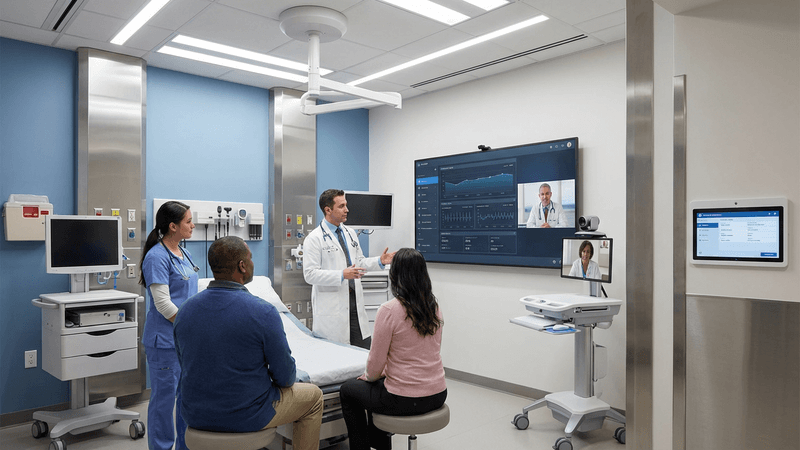
Audiovisual systems combine video, audio, and digital display technologies to improve communication and information delivery. In healthcare environments, clarity and accuracy are critical. Visual and audio tools help bridge gaps between medical staff, patients, and caregivers.
Today, audiovisual in healthcare is widely used in hospitals, clinics, research centers, and even home care settings. These systems support faster decision-making, better understanding, and more human-centered care.
Telemedicine is one of the most visible applications of audiovisual technology in healthcare. High-quality video and audio enable doctors and patients to connect without being in the same location.
Through secure video consultations, patients can receive medical advice, follow-up care, and chronic disease management from their homes. This approach reduces travel time, lowers costs, and improves access for people in remote or underserved areas.
Reliable audiovisual systems are essential for telemedicine. Clear images and stable audio ensure accurate diagnosis and effective communication, making audiovisual in healthcare a foundation of remote care services.
Patient engagement is closely linked to health outcomes. When patients understand their conditions and treatment plans, they are more likely to follow medical advice. Audiovisual tools make complex information easier to understand.
Digital displays, educational videos, and interactive screens are increasingly used in waiting areas, patient rooms, and outpatient clinics. These tools explain procedures, promote healthy behaviors, and reduce anxiety before treatment.
By presenting information in a visual and structured way, audiovisual in healthcare supports informed decision-making and builds trust between patients and healthcare providers.
Effective communication among medical staff is critical in fast-paced healthcare environments. Audiovisual systems support real-time collaboration, training, and information sharing.
Examples include:
These applications improve workflow efficiency and reduce the risk of miscommunication, especially in large hospitals.
Healthcare professionals require continuous training to keep up with new procedures and technologies. Audiovisual solutions enable remote training sessions, recorded lectures, and live demonstrations.
Simulation rooms equipped with advanced audiovisual systems allow medical staff to practice skills in realistic environments. This improves learning outcomes while maintaining patient safety.
In this context, audiovisual in healthcare contributes not only to patient care but also to professional development.
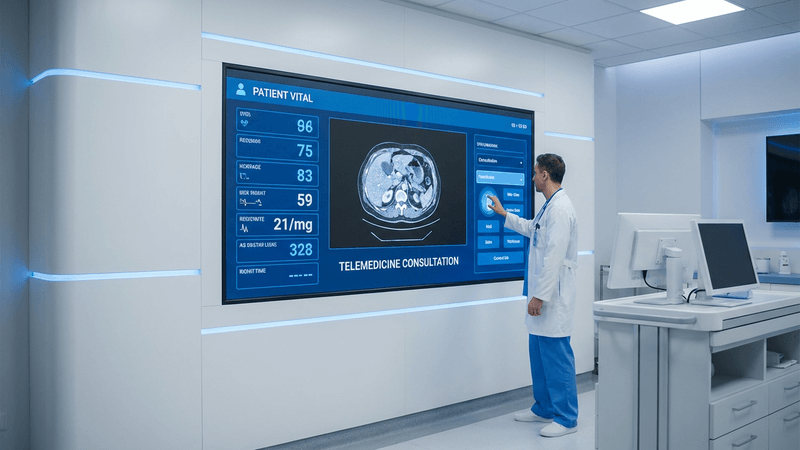
As healthcare systems continue to digitalize, the role of audiovisual technology will expand further. Integration with data platforms, artificial intelligence, and smart hospital infrastructure will create more connected and responsive care environments.
Future applications may include more immersive patient education, advanced remote diagnostics, and fully integrated command centers for hospital operations.
What remains constant is the core value of audiovisual in healthcare: improving communication, understanding, and human connection in medical settings.
From telemedicine to patient engagement and staff collaboration, audiovisual in healthcare has become an essential part of modern medical services. By enhancing communication and accessibility, audiovisual solutions help healthcare providers deliver better care while improving the patient experience.
As technology evolves, healthcare organizations that invest in clear, reliable, and user-friendly audiovisual systems will be better positioned to meet the growing demands of patients and professionals alike.

