


The world’s longest LED gallery has officially opened in Gorizia, Italy, transforming a previously ordinary pedestrian passage into a landmark immersive digital art destination. Stretching across 100 metres, this large-scale installation demonstrates how immersive LED display technology is reshaping public spaces, cultural venues, and urban regeneration projects worldwide.
Rather than serving as a simple visual attraction, the project sets a new benchmark for how LED displays can function as architectural media, blending art, technology, and spatial experience into a single, uninterrupted visual journey.
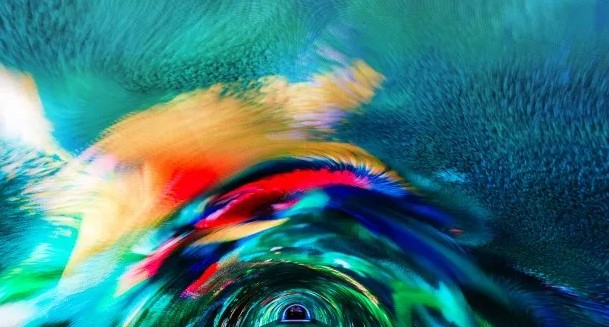
Located inside the historic Galleria Bombi, the project forms part of a broader urban renewal initiative. What was once a functional transit corridor has been reimagined as a multisensory digital environment, inviting visitors to engage with content rather than simply pass through space.
At the heart of this transformation is the world’s longest LED gallery, a curved LED display measuring approximately 100 metres in length and 9.25 metres in width. With a total resolution of 40,000 × 3,700 pixels—equivalent to nearly 148 million pixels—the installation fully envelops viewers, creating a continuous visual narrative from end to end.
This approach highlights a growing trend in public architecture: LED displays are no longer added elements, but core design components that define how spaces are experienced.
Achieving immersion at this scale requires far more than simply increasing screen size. The success of the world’s longest LED gallery relies on a carefully engineered immersive LED display strategy.
A pixel pitch of 2.5 mm was selected to balance image detail and viewing distance, ensuring clarity without visual fatigue in a pedestrian environment. The curved structure further enhances immersion by reducing visual discontinuity and drawing viewers into the content, rather than positioning the display as a flat surface to be observed from afar.
Compared with projection or traditional signage, immersive LED displays offer superior brightness stability, color consistency, and long-term operational reliability—key factors for installations designed to run continuously in public spaces.
Behind the visual impact of the world’s longest LED gallery lies a complex large-scale LED installation engineered for durability and performance.
The system incorporates thousands of LED cabinets and boards, many treated with GOB (Glue on Board) technology and nano-coating to enhance resistance to moisture, dust, and physical contact. These protective measures are especially important in high-traffic environments where screens are exposed to constant public interaction.
Signal distribution and system management are equally critical. The infrastructure integrates fibre converters, extensive CAT6 and optical fibre cabling, and multiple professional workstations handling dozens of synchronized 4K video signals. This architecture ensures stable operation across the full 100-metre span, maintaining image uniformity and synchronization without visible latency or distortion.
Such engineering requirements illustrate how ultra-long LED displays push the industry toward higher standards in system integration, component consistency, and long-term reliability.
The inaugural content for the gallery was created by a globally recognized digital artist, aligning the installation with Gorizia’s role as a European Capital of Culture. This collaboration underscores an important shift: LED displays are increasingly becoming platforms for digital art rather than purely commercial or informational tools.
For artists and curators, immersive LED environments offer unprecedented creative freedom. For cities and institutions, they provide a dynamic medium capable of evolving over time, hosting changing content without physical reconstruction.
The world’s longest LED gallery is more than a record-setting installation—it reflects broader changes across the LED display industry.
First, cultural and public spaces are emerging as high-value application scenarios, demanding premium display performance and long service life. Second, immersive LED display design is becoming a defining factor in how audiences experience digital content, particularly in non-commercial environments. Finally, large-scale LED installations are raising expectations for reliability, environmental protection, and system-level integration.
As cities, museums, and cultural institutions seek new ways to engage audiences, projects like this point to a future where LED displays serve as immersive architectural elements—shaping space, storytelling, and human interaction on a monumental scale.

