


Out-of-home advertising has long been a cornerstone of brand building, leveraging large-format digital screens in public spaces to capture mass audience attention. Traditional static billboards and early digital DOOH deliver strong visual impact, yet they are held back by rigid manual workflows, limited targeting capabilities and vague performance tracking.
Today, Programmatic Digital Out-of-Home (pDOOH) is rewriting the rules for outdoor marketing. By combining automated ad trading, big data analytics and real-time delivery technology, pDOOH turns conventional DOOH from a broad-reach channel into a precise, flexible and fully measurable marketing tool. It takes the unmissable visibility of outdoor media and pairs it with the data agility of digital advertising — creating huge opportunities for brands and media owners across the globe.
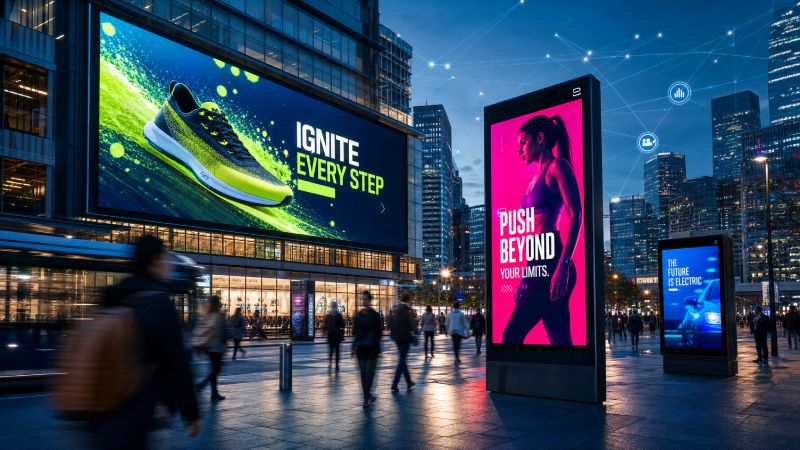
pDOOH stands for Programmatic Digital Out-of-Home. In simple terms, it is the process of automatically buying, selling and serving ads on connected public digital screens, rather than relying on manual negotiations, paper contracts or fixed long-term bookings.
These screens cover nearly every corner of people’s daily lives: highway billboards, bus shelters, transit hubs, retail malls, office elevators, gyms, restaurants, airports and even electric vehicle charging stations. What makes pDOOH revolutionary is not the hardware itself, but the intelligent system behind content delivery. Every ad placement is governed by preset rules, audience data and real-world conditions, enabling brands to reach the right people, at the right time and in the right place.
To better understand its value, we can divide the evolution of outdoor advertising into three stages:
Traditional OOH follows a one-to-many model, casting a wide net over general audiences. pDOOH upgrades this to a one-to-select-many model: brands can filter crowds precisely and deliver tailored messages to high-potential groups.
| Comparison Point | Traditional OOH | Standard DOOH | pDOOH |
| Purchasing Method | Manual negotiation & long contracts | Manual booking + insertion orders | Automated trading via DSP & SSP |
| Content Control | Permanent static content | Scheduled content changes | Real-time dynamic creative updates |
| Targeting Ability | No precise targeting | Basic location targeting | Demographics, time, weather, geofencing & behaviors |
| Budget & Schedule | Fixed term & fixed cost | Limited schedule adjustment | On-demand budget shift & short campaign flights |
| Performance Measurement | Only estimated reach | Basic exposure reports | Full data tracking, footfall & conversion attribution |
The entire pDOOH ecosystem runs on two core platforms: Demand-Side Platform (DSP) for advertisers and Supply-Side Platform (SSP) for media owners. The full workflow is completed in milliseconds:
Advertisers define targeting rules, budget, preferred locations, time slots and creative requirements on a DSP. Rules can include demographics, geofenced zones, time of day or weather triggers.
The DSP connects to SSPs that aggregate screen inventory worldwide. It automatically bids on available ad slots that match the campaign criteria.
Once a bid wins, the approved creative is instantly displayed on the selected digital screens.
The system collects real-time data on exposures and audience activity. Marketers can adjust creatives, budgets or targeting rules at any time without renegotiating contracts.
This streamlined workflow cuts down tedious manual work and gives brands full control over every campaign detail.
There are three mainstream ways to purchase pDOOH inventory, fitting different campaign goals and inventory demands:
Open Real-Time Bidding (Open RTB)
Public auction for general inventory. Advertisers bid in real time for available ad slots, ideal for short-term tests and broad audience coverage.
Private Marketplace (PMP)
Invitation-only deals for high-quality, exclusive screen resources. Media owners offer priority access to selected buyers, perfect for premium brand campaigns.
Programmatic Guarantee
Pre-negotiated fixed inventory deals. Buyers lock in specific screens and volumes in advance, combining the stability of traditional bookings with programmatic operational efficiency.
Ads can be triggered by real-life scenarios: weather, rush hours, local sports events or nearby store activities. A beverage brand can push cold drink ads on hot days and warm drink promotions when it rains. Retailers can launch flash sale ads within geofenced areas around physical stores.
No more being tied to weeks-long fixed campaigns. Teams can launch short-term promotions, rotate multiple creatives and reallocate budgets to high-performing screens instantly.
Beyond basic impression counts, pDOOH tracks brand recall, online click-throughs and offline store visits via footfall attribution. Every marketing investment can be quantified with clear data.
pDOOH works seamlessly with social media, mobile ads and connected TV. Offline outdoor exposure can guide audiences to online interaction, forming a closed-loop marketing system.
Unsold ad slots can be automatically traded on programmatic platforms, turning leftover resources into extra revenue.
Publishers can set pricing, audience filters and delivery rules, and manage all screen resources on one unified platform.
Access detailed performance data of each screen, so they can optimize inventory layout and attract more high-value advertisers.
pDOOH is a versatile channel suitable for businesses across nearly all industries:
To illustrate how pDOOH capabilities translate into tangible marketing results, let’s explore successful campaigns deployed by leading brands across different sectors. These examples showcase common strategies, creative applications and business outcomes in real marketing scenarios.
Background:
Guinness, the iconic stout beer brand, rolled out a context-aware pDOOH campaign across multiple European cities to boost on-premise consumption in bars and pubs.
Core Tactics:
The brand built ads fully triggered by real-time weather data via pDOOH platforms. When local weather turned sunny and warm, screens displayed relaxed, social drinking creatives. When cold, rainy or windy weather arrived, ads encouraged audiences to visit nearby bars for a warm pint of Guinness. All placements were targeted at street furniture, transit screens and areas within walking distance of licensed venues.
Campaign Outcome:
The weather-linked dynamic ads significantly improved audience relevance. Bar foot traffic within targeted zones rose noticeably, and the campaign became a classic reference for contextual pDOOH marketing across the global ad tech industry. This case is widely covered by DOOH and programmatic media outlets.
Background:
IKEA adopted pDOOH as part of its omnichannel local marketing strategy across Europe and North America, aiming to drive in-store visits for physical retail locations.
Core Tactics:
The brand used geofencing technology to set targeted zones around every IKEA store. pDOOH screens in surrounding residential areas, main roads and shopping districts automatically served store promotion ads, new furniture collection showcases and limited in-store offers.
The team adjusted ad frequency and creative content based on peak shopping hours and weekend traffic patterns. The campaign was managed entirely through standard DSP workflows for pDOOH.
Campaign Outcome:
Independent media analytics confirmed a clear lift in store visits from audiences exposed to nearby pDOOH ads. IKEA continues to use programmatic DOOH as a regular local activation channel for new product launches and seasonal sales.
Background:
MLB used nationwide pDOOH inventory in the United States to drive live stadium attendance and game-day engagement for regular-season matches.
Core Tactics:
Campaign rules were set with multiple layers of targeting: ad delivery activated on game days only, within specific time windows before kickoff. Screens near stadiums, downtown areas and major transit lines showed real-time team previews, ticket promotions and fan activity content. The brand also rotated creatives dynamically according to home teams and ongoing game schedules.
Campaign Outcome:
pDOOH successfully built pre-game hype and drove last-minute ticket purchases and walk-in audiences. The campaign proved that pDOOH is highly effective for time-sensitive, large-scale live events, and it has been replicated by many other professional sports leagues in North America.
Data is the core power of pDOOH, and all targeting relies on aggregated, anonymized public data — no individual user tracking, cookies or personal device IDs are required. This design fully complies with global privacy regulations, which makes pDOOH a low-risk choice for cross-border campaigns.
Common metrics to evaluate pDOOH performance include:
With supporting tools like visual sensors, QR codes and geofencing technology, marketers can measure every link of the campaign accurately.
As connected screens and ad tech continue to develop, pDOOH will see three major trends in the next few years:
More new scenarios such as shared mobility devices, community smart screens and outdoor retail terminals will join the pDOOH inventory network.
Artificial intelligence will automatically match creatives with audiences and scenarios, realizing fully unattended intelligent delivery.
The data connection between pDOOH, mobile, social and CTV will become tighter, helping brands build a complete omnichannel data system.
If you are new to pDOOH, follow these practical suggestions for a smooth start:
pDOOH has bridged the gap between traditional outdoor advertising and digital precision marketing. It retains the strong visual impact and high exposure of OOH, while solving long-standing pain points including inflexible operation, inaccurate targeting and unmeasurable effects.
For modern marketers, pDOOH is no longer an optional niche channel, but a standard part of omnichannel strategies. Whether you are a large brand expanding globally or a local business chasing offline traffic, programmatic DOOH can bring more efficiency and returns to your outdoor advertising. As the industry keeps evolving, pDOOH will continue to unlock greater potential for real-world brand communication.

