


Want stunning, crystal-clear event visuals without overpaying or settling for poor display quality? Rental LED displays have quickly become the top choice for temporary events. They outperform projectors, LCD walls and fixed screens in flexibility, sharpness and on-site visual impact.
However, many event planners and AV buyers struggle with confusing specs, unclear brightness standards and opaque rental pricing. Most people either overspend on unnecessary high-end features or pick low-quality screens that ruin their event experience.
This complete rental LED guide explains every key detail in simple terms. You will learn practical spec selection rules, real-scene matching skills, budget-saving strategies and common pitfalls to avoid. After reading, you can confidently book the ideal LED screen and maximize your event visual value.
.
The event industry relies heavily on visual effects. Great visuals boost audience engagement and build a professional brand impression. Fixed LED screens target long-term installation. Standard LCD walls suffer from visible splicing gaps. In contrast, rental LED screens are built exclusively for temporary and repeated event use.
They feature lightweight, lock-and-go cabinets that support fast assembly and disassembly. They also resist drops and collisions for frequent transport and reuse. Rental LEDs deliver seamless, gapless HD visuals for corporate galas, exhibitions, concerts, sports ceremonies and wedding events. They eliminate blurred projections and light washout issues. Most importantly, they save huge costs on permanent installation and long-term maintenance.
Many first-time buyers confuse rental LED screens with fixed LED screens. The two look similar visually, but they serve completely different design purposes. Understanding their core differences helps you avoid wrong equipment choices and unnecessary costs.
Fixed LED screens are designed for long-term, stable 24/7 operation. They suit fixed locations such as malls, airports and office buildings. Manufacturers prioritize long service life and static display stability. These screens use heavy cabinets and require complex installation. They cannot withstand frequent disassembly and transportation.
Rental LED screens focus entirely on flexible deployment and reusability. They adopt lightweight die-cast aluminum cabinets with precise quick-lock structures. Teams can splice flat, seamless screens in minutes. Every module passes strict anti-drop and anti-vibration tests for complex on-site conditions. Simply put, fixed screens prioritize long-term stability, while rental screens prioritize fast setup and repeated use.
Technical specs decide display quality, on-site stability and your final rental budget. You do not need professional engineering knowledge. You only need to master these practical indicators to avoid inferior screens and over-specification waste.
Pixel pitch means the distance between adjacent LED beads. It is the core spec that controls screen resolution and clarity. A smaller pitch delivers sharper close-up visuals but comes with a higher rental price.
Follow this cost-effective industry rule for event rentals. Choose P1.9, P2.5 or P2.976 for indoor events with 3–10m viewing distances. Choose P3.91 or P4.81 for outdoor events with 8–30m viewing distances. You do not need ultra-fine pitch for standard events. Reasonable pitch matching offers the best budget-to-quality balance.
Screen brightness determines content visibility under different ambient light. Low brightness causes washed-out, blurry images. Excessively high brightness leads to visual glare and energy waste.
Indoor rental screens use 800–1500 nits for soft indoor lighting. This range ensures clear visuals without dazzling the audience. Outdoor rental screens require 4500–7000 nits. High brightness guarantees visible content even under direct sunlight. Premium models support automatic brightness adjustment for day-and-night light changes.
Live streaming and video recording demand reliable refresh rate and gray scale. A high refresh rate removes scanning lines, screen flickers and black stripes during camera shooting. It ensures smooth, professional event footage.
Qualified rental LEDs feature a 3840Hz+ high refresh rate and 16-bit high gray scale. They present rich layered colors in dark scenes and delicate transitions in bright scenes. No color distortion occurs during HD live broadcasting. This configuration fits concerts, press conferences and high-end brand events perfectly.
The IP rating shows a screen’s dustproof and waterproof performance. It directly affects event safety and operational stability. Indoor rental screens adopt IP30–IP40 ratings. They resist daily dust and minor collisions for indoor venues. Outdoor rental screens require a full IP65 rating. This grade provides complete dustproof, rainproof and splashproof protection against outdoor weather changes.
Professional rental LED screens use die-cast aluminum alloy cabinets. These cabinets are lightweight, ultra-flat and structurally stable. Unlike traditional iron cabinets, die-cast aluminum frames resist deformation after repeated disassembly and transport. They guarantee seamless splicing and consistent color performance for every event.
Different event types require different LED screen specs and layouts. This section shares targeted selection tips to help you match the right screen for your exact scenario.
Indoor use cases include corporate meetings, product launches, exhibitions, weddings and indoor stage shows. The most recommended models are P1.9, P2.5 and P2.976 indoor rental screens. Focus on color accuracy, seamless splicing, silent heat dissipation and flicker-free shooting. Indoor venues have soft lighting and close audience distances. Delicate, stable display effects greatly improve brand professionalism.
Outdoor scenarios cover street roadshows, open-air concerts, sports meets and opening ceremonies. We recommend P3.91 and P4.81 waterproof outdoor rental screens. Prioritize high brightness, IP65 weather resistance and windproof structures. Outdoor light and weather conditions are unstable. Strong environmental adaptability ensures continuous and stable screen performance.
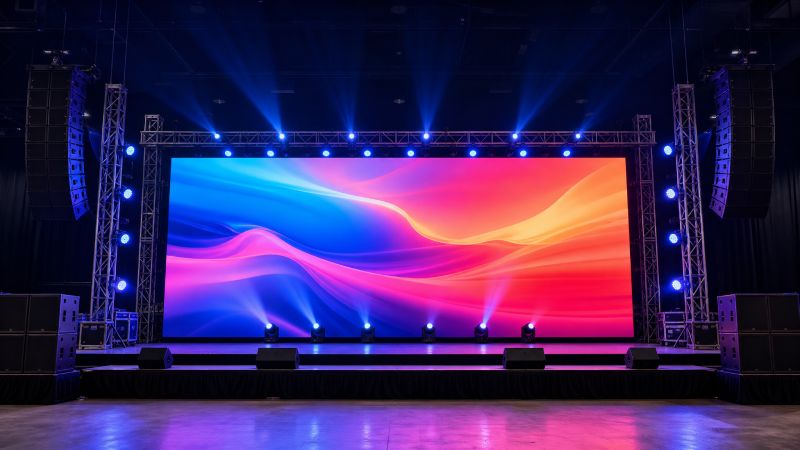
For creative stage designs, rental LEDs support flexible custom splicing. You can choose curved screens, arc screens, floor screens and hanging lift screens. These non-standard shapes break flat display limits. They create immersive, dynamic visual effects for fashion shows, star concerts and creative brand campaigns.
A qualified LED display solution includes more than just screen panels. Complete accessories and stable control systems ensure trouble-free on-site operation. Most sudden event failures come from neglected auxiliary equipment.
Premium rental screens adopt mature Novastar and Brompton control systems. These systems support mainstream signal inputs such as HDMI, DP and SDI. They enable real-time signal switching, split-screen display, subtitle overlay and remote debugging. Built-in screen monitoring functions quickly locate and fix abnormal issues to keep events running smoothly.
Standard rental packages include splicing trusses, hanging brackets, ground supports, professional distribution boxes, HD signal cables and heat dissipation tools. Full accessory sets speed up on-site installation. They also stabilize power supply and signal transmission to avoid screen shaking, disconnection and overheating failures.
Unclear pricing and hidden fees are the biggest pain points in LED rental services. A clear cost structure helps you avoid overcharging and control your event budget wisely.
Total rental costs consist of several clear items. They include screen rental fees (calculated by square meter and rental days), accessory usage fees, installation and dismantling labor fees, transportation fees and on-site technical service fees. Event overtime will generate extra charges. Most suppliers charge a refundable equipment deposit to cover accidental damage risks.
Pixel pitch is the largest pricing factor. Small-pitch high-definition screens carry higher rental premiums. Screen size, indoor or outdoor type, venue construction difficulty and custom shapes also change final quotes. Single-day rentals have higher unit prices. Multi-day continuous rentals usually enjoy obvious discounts.
First, match pixel pitch with actual viewing distance to avoid over-specification. Second, choose all-in-one rental packages to avoid separate accessory charges. Third, confirm venue conditions in advance to prevent temporary adjustment fees. Finally, sign detailed contracts to eliminate hidden costs completely.
Standardized workflows ensure zero-error event execution. A complete rental process covers demand confirmation, solution customization, on-site deployment and post-event dismantling.
Follow this standard rental workflow. First, confirm your event type, venue size, viewing distance, screen size and rental cycle. Second, get a customized solution and formal quote. Third, sign the contract and reserve equipment. Fourth, test equipment and content before the event. Fifth, complete on-site installation and real-time technical support. Sixth, dismantle equipment and finish settlement after the event.
Avoid these common on-site risks. Insufficient brightness causes blurry outdoor visuals. Poor splicing creates visible screen seams. Unstable power leads to sudden black screens. Uncalibrated colors cause overall color deviation. Professional rental teams effectively prevent all these technical failures.
Supplier quality directly determines your event effect. Reliable vendors provide stable equipment and fast on-site support. Unprofessional teams may cause unnecessary event accidents.
Check supplier experience and real event cases first. Verify their ability to handle different event scenarios. Second, confirm equipment status. Regularly maintained screens deliver more stable performance. Third, select vendors with transparent pricing and formal contracts. Fourth, ensure 24/7 on-site technical support and emergency response. Finally, confirm spare part reserves and equipment insurance for risk protection.

Below are the most common questions from event planners and LED rental clients:
Q1: What is the most cost-effective pixel pitch for general events?
A: P2.976 works best for most indoor corporate events and exhibitions. P3.91 offers the ideal balance of clarity and cost for outdoor events. Reserve P1.9 only for high-end close-up shooting scenarios.
Q2: How do I choose the right LED screen size for my venue?
A: Base the screen width on your main viewing distance. A screen width of one-third to one-fifth of the viewing distance delivers the most comfortable visual experience for all audiences.
Q3: Can outdoor rental LED screens work in rainy and windy weather?
A: Standard IP65 outdoor screens resist light rain and strong wind. For extreme weather, professional teams will add reinforcement and shelter measures to guarantee safe operation.
Q4: Will rental LED screens flicker during live streaming?
A: Screens below 1920Hz often produce flickers and scanning lines. Choose 3840Hz+ high-refresh screens to achieve flicker-free live broadcasting.
Q5: Does the rental fee include installation and technical services?
A: Standard quotes cover one-time installation, dismantling and basic on-site technical support. Overtime service, cross-city transport and special venue construction incur extra fees, which you should confirm before signing the contract.
Rental LED displays remain the best visual solution for modern temporary events. A successful rental depends on reasonable spec matching, budget control and reliable vendor service. Blindly chasing top-tier specs or choosing ultra-low-cost equipment will harm your event quality. Always stick to scenario matching, moderate configuration, transparent pricing and professional support.
Use this final checklist before confirming your rental order. Confirm indoor or outdoor usage. Match pixel pitch with viewing distance. Set a reasonable screen size. Check full supporting equipment and control systems. Verify all-inclusive pricing with no hidden fees. Confirm on-site technical support. Sign a standardized formal contract.
With this complete buying guide, you can select, rent and deploy LED screens confidently for any event. You will achieve outstanding visual effects while keeping your budget fully controlled.

