AOTO has delivered a full-function LED virtual production studio to Hong Kong Baptist University (HKBU). The turnkey virtual production ecosystem transforms the university’s media education. It bridges academic coursework and real-world industry production workflows for film and immersive content creation.
Most campus media facilities rely on separate LED screens or standalone XR stages. In contrast, AOTO’s solution adopts an all-in-one design. It unifies XR production, virtual production workflows, motion capture, robot camera control, camera tracking, real-time rendering and virtual lighting sync in one streamlined pipeline. This integrated setup supports efficient, end-to-end digital content creation for teaching and project production.
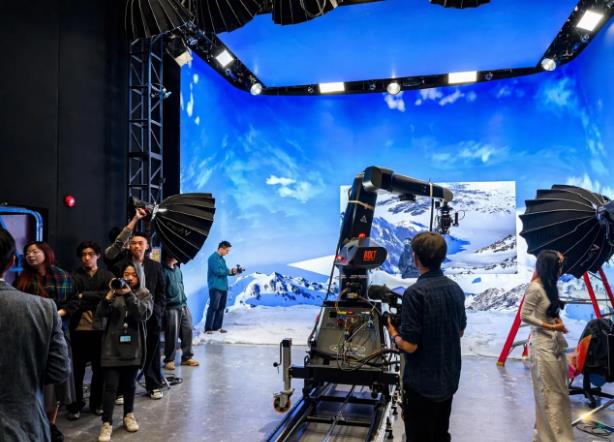
The HKBU project features two purpose-built studios with tailored LED configurations. Each space serves distinct virtual production needs, ensuring flexible and high-quality visual output.
The XR studio deploys AOTO RM2.3 LED walls and IF2.6V4X LED floor systems, paired with a Disguise workflow system. It supports instant mode switching between XR extension and virtual production. This studio fits virtual broadcasting, live event production and immersive content development for student practice and academic projects.
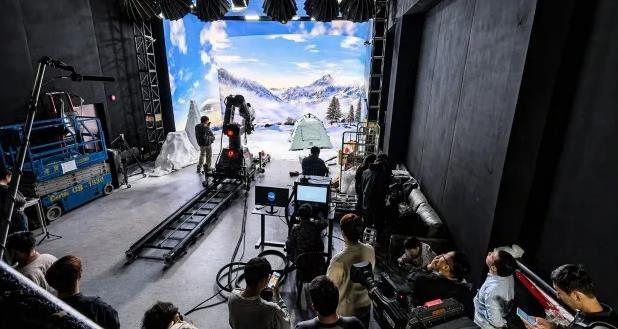
The dedicated VP studio adopts AOTO RM1.5 precision LED walls, M3.7H ceiling LED panels and RM1.5C curved LED arrays. Powered by a multi-render-node architecture, the system handles complex camera movements and cinematic in-camera VFX. It delivers high-fidelity imagery and stable real-time scene synchronization for professional-level virtual production.
This project required sophisticated cross-platform system integration. It connects multiple rendering engines, tracking modules and display processors in one synchronized system.
AOTO’s engineering team resolved key technical pain points on site. These include multi-device synchronization, multi-node image stitching and pixel-level LED calibration. The optimized system ensures consistent colour performance, smooth frame output and reliable long-term operation for teaching and creation.
A standout feature is the Art-Net-based virtual lighting workflow. It links physical studio lights with virtual environment changes in real time. When virtual sunlight angles, weather effects or scene timing update, physical lighting fixtures adjust automatically. This seamless fusion helps actors and physical props blend naturally into digital scenes, greatly improving production realism.
AOTO’s delivery extends far beyond hardware installation. The team provided systematic technical training and hands-on workshops for HKBU teachers and students after project handover.
Participants operated a complete industrial-grade LED virtual production studio workflow in practical sessions. They mastered standard XR and VP production processes widely used in film, broadcast and commercial media industries. The training helps students build practical, industry-aligned competencies for future media careers.
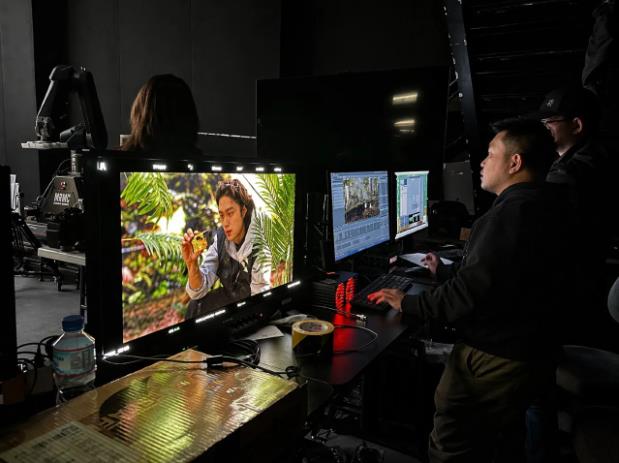
The HKBU cooperation marks a meaningful upgrade for contemporary film and media education. Traditional campus training focuses on separate equipment operation. This new LED virtual production studio brings a full professional production environment into the classroom.
It enables university teaching to keep pace with cutting-edge virtual production trends. It also cultivates innovative talents who can adapt to modern immersive media creation. Meanwhile, the project sets a solid benchmark for applying commercial-grade LED virtual production systems in higher education scenarios.
As virtual production becomes mainstream in the global media industry, a professional LED virtual production studio has become essential for high-standard media education. AOTO’s integrated solution empowers HKBU with advanced hardware, stable system integration and industry-standard training. It continuously drives the integration of virtual production technology and academic teaching, nurturing next-generation creative media professionals.