


When people first hear the term “carbon fiber LED display,” the reaction is often the same: isn’t carbon fiber something mainly used in racing cars, aerospace equipment, or high-end sports gear?
That assumption is understandable. For many years, LED display cabinets were almost entirely associated with aluminum or steel structures. Weight reduction was important, but it was usually treated as a secondary consideration compared with brightness, stability, and installation cost.
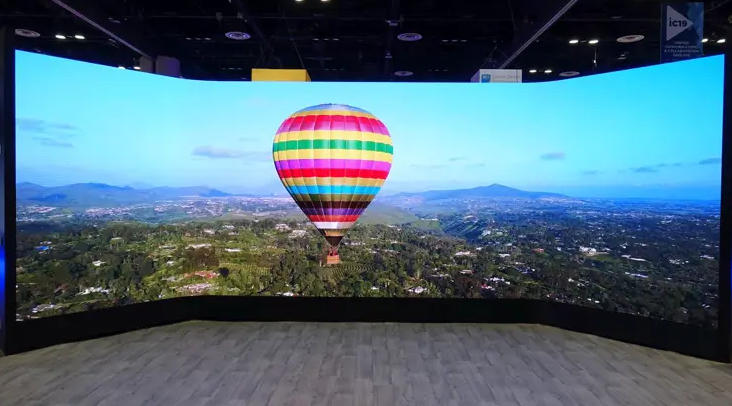
However, as LED screens continue to grow larger, thinner, and more creatively integrated into architectural and stage environments, the industry has started facing a very practical challenge: traditional cabinet materials are becoming a limitation in certain projects.
A massive hanging LED wall inside a concert venue, for example, may place enormous pressure on truss systems and rigging structures. Touring productions often need to transport hundreds of square meters of LED screens between cities within tight schedules. Virtual production studios want lighter structures that are easier to assemble and modify. Even installation crews themselves increasingly prefer lighter cabinets that reduce labor intensity during setup.
This is where carbon fiber LED displays began attracting attention.
Instead of simply pursuing thinner or brighter screens, manufacturers started exploring how advanced materials could fundamentally change the weight-to-strength ratio of LED display cabinets. Carbon fiber quickly became one of the most discussed directions.
Today, carbon fiber LED displays are no longer just experimental concepts. Several leading LED display brands have already introduced lightweight product lines using carbon fiber or hybrid lightweight structural technologies for rental, touring, and high-end installation markets.
So what exactly is a carbon fiber LED display, and why is the industry paying so much attention to it?
For years, the LED display industry focused heavily on visual performance.
Manufacturers competed on brightness, contrast ratio, pixel pitch, refresh rate, and color reproduction. While those specifications still matter enormously today, the physical structure of LED cabinets has become increasingly important as applications evolve.
Modern LED projects are very different from the fixed outdoor billboards of the past.
Today’s market includes:
In these scenarios, cabinet weight directly affects transportation costs, installation difficulty, safety requirements, and even project feasibility.
For example, a touring production may move an LED system between multiple cities within a single month. Every kilogram matters during transportation, loading, unloading, and rigging.
Similarly, a large suspended LED ceiling installation may require additional structural reinforcement if the display system becomes too heavy. In some venues, excessive weight can even limit screen size or installation possibilities.
Installation crews also understand this challenge very well.
A lighter cabinet does not just reduce freight expenses. It can significantly improve installation efficiency and reduce physical strain during assembly. Over time, these operational advantages become financially meaningful for rental companies and event operators.
Because of this, lightweight design has gradually evolved from a “nice feature” into a serious engineering objective.
Carbon fiber became part of this conversation because it offers an unusual combination of properties:
Those characteristics make it highly attractive for advanced LED cabinet design.
A carbon fiber LED display is an LED screen system that uses carbon fiber materials within the cabinet structure to reduce overall weight while maintaining structural strength.
In most cases, the carbon fiber is not replacing every part of the cabinet. Instead, manufacturers often use carbon fiber strategically in specific structural areas where weight reduction can provide the greatest benefit.
Some products use fully carbon fiber rear covers or frames, while others combine carbon fiber with aluminum alloy or magnesium alloy hybrid structures.
The goal is relatively straightforward:
Reduce cabinet weight without compromising stability, flatness, or durability.
This is especially important for rental LED displays, touring systems, and suspended installations where structural load becomes a major consideration.
To better understand why carbon fiber attracts attention, it helps to compare it with traditional cabinet materials.
| Material | Weight | Structural Rigidity | Corrosion Resistance | Manufacturing Cost |
| Steel | Heavy | Very High | Moderate | Low |
| Aluminum Alloy | Moderate | High | Good | Moderate |
| Magnesium Alloy | Light | Moderate to High | Good | Higher |
| Carbon Fiber | Very Light | Extremely High | Excellent | High |
Carbon fiber is widely recognized for its exceptional strength-to-weight ratio.
That is one reason it has long been used in industries such as aerospace, motorsports, and high-performance sporting equipment. In LED display applications, those same advantages can help manufacturers reduce cabinet weight dramatically while maintaining sufficient rigidity for large-scale screen structures.
Of course, carbon fiber is not a universal solution.
The material itself is more expensive than traditional aluminum structures, and manufacturing complexity can also increase. This is why carbon fiber LED displays are currently more common in premium applications rather than entry-level fixed installations.
Still, for certain projects, the benefits can outweigh the additional cost.
The growing interest in carbon fiber LED displays is not just about marketing language or futuristic aesthetics.
In real-world applications, lightweight structural design can solve practical operational problems.
The most obvious advantage of carbon fiber LED displays is weight reduction.
Depending on the cabinet design, some lightweight systems can reduce overall cabinet weight significantly compared with traditional aluminum cabinets.
For rental companies, this matters more than many people initially realize.
A project involving hundreds of LED cabinets can create enormous cumulative transportation weight. Reducing even a few kilograms per cabinet can substantially lower logistics pressure over time.
This becomes especially important for:
Lighter cabinets can also simplify handling during setup and dismantling.
Anyone who has worked around large LED screen installations understands how physically demanding the process can become.
Even with modern quick-lock systems and modular designs, moving large numbers of cabinets still requires significant labor.
Carbon fiber cabinets help reduce installation fatigue and improve operational efficiency.
In some touring environments, faster installation directly translates into lower labor costs and tighter scheduling flexibility.
For venues with complicated rigging conditions, lighter structures may also reduce the burden placed on hanging systems and supporting trusses.
One common misconception is that lighter cabinets automatically mean weaker cabinets.
In reality, carbon fiber is known for excellent structural rigidity.
When properly engineered, carbon fiber structures can maintain excellent flatness and stability even while reducing weight.
This matters because LED displays require precise alignment.
Poor structural rigidity can create visible panel inconsistencies, especially in large-format video walls where seamless visual performance is critical.
For high-end stage productions or XR virtual production environments, maintaining screen flatness is extremely important.
The rental LED market is one of the biggest drivers behind lightweight cabinet innovation.
Touring productions frequently transport LED systems across cities, countries, and continents. The operational pressure involved in these projects encourages manufacturers to optimize every aspect of cabinet efficiency.
Carbon fiber LED displays are particularly attractive for:
In these environments, faster setup and lower transportation weight can deliver measurable long-term operational value.
Large suspended LED displays place considerable stress on rigging systems.
As screen sizes continue increasing, weight reduction becomes increasingly important for safety and structural planning.
Lighter cabinets can help:
This is especially relevant for large curved screens, suspended ceilings, and immersive display environments.
Not every LED project requires carbon fiber technology.
For many conventional fixed installations, traditional aluminum cabinets remain perfectly suitable and cost-effective.
However, carbon fiber LED displays become far more attractive in projects where weight, transportation efficiency, or structural flexibility are major concerns.
Touring productions are among the most demanding environments in the LED industry.
Displays are constantly assembled, dismantled, transported, and reconfigured.
In these scenarios, reducing cabinet weight can improve:
That is why lightweight LED cabinet technologies are increasingly associated with high-end touring systems.
Virtual production environments have introduced new demands for LED display systems.
Studios often need large curved LED walls with extremely precise alignment and structural consistency.
At the same time, production environments may require ongoing modifications or layout adjustments.
Lighter cabinet systems can simplify these processes while maintaining the rigidity necessary for high-quality camera performance.
Trade shows and exhibitions frequently involve temporary setups under strict scheduling constraints.
A lighter display system can reduce setup complexity and improve logistical efficiency during short event windows.
For international exhibitions, transportation savings may also become significant over repeated deployments.
Center-hung displays in sports venues and suspended LED ceiling structures represent another important application area.
As screen dimensions grow larger, reducing structural load becomes increasingly valuable.
Carbon fiber cabinets may help make ambitious installation concepts more practical from an engineering perspective.
Although carbon fiber LED displays sound highly attractive on paper, the technology also introduces several engineering and manufacturing challenges.
This is one reason why carbon fiber cabinets are still relatively uncommon compared with traditional aluminum structures.
Carbon fiber materials are not as easy to process as conventional aluminum.
The production process often involves more specialized manufacturing techniques, stricter structural tolerances, and higher material costs.
For LED display manufacturers, this means:
As a result, lightweight carbon fiber products are usually positioned within premium market segments.
Heat dissipation remains extremely important in LED display systems.
Traditional aluminum cabinets naturally offer strong thermal conductivity, which helps transfer heat efficiently.
Carbon fiber behaves differently.
Because of this, manufacturers must carefully optimize cabinet structures, airflow paths, and thermal management systems when integrating carbon fiber components.
This becomes particularly important in:
Not every project benefits equally from carbon fiber.
For many fixed indoor installations, standard aluminum cabinets remain highly practical and cost-efficient.
The value of carbon fiber becomes more obvious in projects where:
This is why carbon fiber adoption is currently concentrated more heavily in premium rental and advanced production environments.
Even manufacturers that are not fully adopting carbon fiber today are clearly moving toward lighter structural concepts.
In many ways, carbon fiber has already influenced how the industry thinks about cabinet engineering.
The conversation is no longer simply about building stronger cabinets.
Instead, manufacturers increasingly focus on achieving:
As a result, hybrid cabinet structures are becoming increasingly common.
Some manufacturers combine:
The objective is to balance:
This broader shift suggests that the future of LED displays may involve more advanced materials engineering than the industry traditionally relied upon.
Another reason carbon fiber technology is attracting attention is the growing popularity of creative LED installations.
Modern LED projects are no longer limited to flat rectangular video walls.
Today’s installations increasingly include:
These designs often place unique demands on cabinet structures.
Reducing weight can significantly improve engineering flexibility when creating complex suspended or curved installations.
For example, a lighter cabinet system may:
In many cases, lightweight engineering directly expands what designers and integrators are able to build.
This is one reason carbon fiber technologies are frequently associated with premium creative LED projects.
A lot of LED display manufacturers have already developed their carbon fiber LED displays, such as ROE’s carbon series, Planar’s CarbonLight LED displays, etc.
Different brands position these products differently depending on their target markets.
Some focus on touring productions, while others emphasize high-end rental, XR applications, or creative installations.
ROE names its carbon fiber LED displays as Carbon series, with CB in the front of the their name IDs, for example CB3 series meant for 3.75mm pixel pitches, CB5 for 5.77mm pixel pitch, and CB8 for 8.33mm pixel pitch.
These products weigh only 13.9kg per panel and are widely applied in:
Meanwhile, ROE also provides air frames for the panels for further strengthened toughness. Along with ROE’s LED processing platforms, these products present impeccable visuals.
Want to know more about the product, you can click here and jump to the product page.
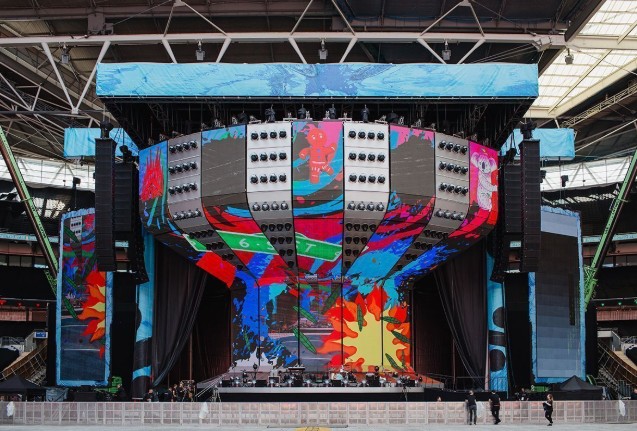
Planar trade marked its carbon fiber LED displays as CarbonLight, providing versatile solutions from hanging signs and flooring to curved domes and camera-ready video walls for virtual production.
Planar CarbonLight includes CLI series for indoor applications, CLI Flex series for bendable indoor displays, and CLM series for mesh LED displays.
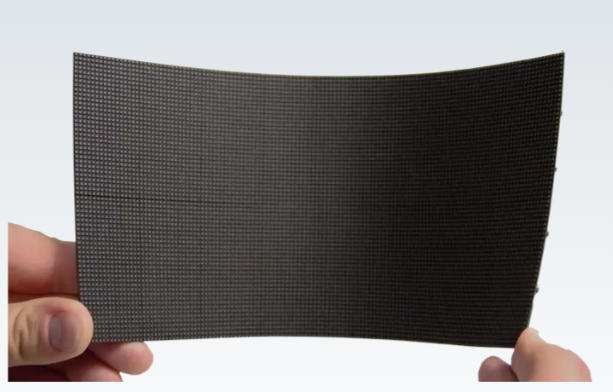
Product page: https://www.planar.com/products/led-video-walls/carbonlight/
Gloshine also calls its carbon fiber LED panels as Carbon series. These panels have carbon fiber and magnesium alloy frames, and measures only 68mm in thickness. Meanwhile, the modular design integrates receiving cards, power supply, hub card into 1 unit for high stability and fast replacement. Also, these panels are anti-static.
Know more about it: https://gloshine.com/jp/products/1088.html
Above are some popular brands that provide carbon fiber LED displays. Of course, there are far more than that on the market. If interested, you can google it and find more.
This is probably one of the most practical questions buyers ask.
Carbon fiber materials are more expensive than traditional aluminum structures. Manufacturing processes can also become more complicated.
As a result, carbon fiber LED displays are typically positioned within higher-end market segments.
For some projects, that additional cost may not be necessary.
A standard fixed indoor display installed permanently inside a retail store, for example, may not benefit enough from carbon fiber construction to justify the price difference.
However, the equation changes significantly in operationally demanding environments.
For touring companies, rental providers, and large event operators, lighter cabinets may help reduce:
Over repeated deployments, those efficiencies may partially offset the higher upfront investment.
There is also the issue of creative flexibility.
Some complex hanging structures or immersive installations may simply become easier to execute when cabinet weight decreases.
In that sense, carbon fiber is not just about reducing kilograms.
It can expand design possibilities.
The LED display industry is clearly moving toward lighter, thinner, and more structurally advanced cabinet systems.
As demand grows for:
lightweight engineering will likely become even more important.
Carbon fiber may not completely replace aluminum cabinets across the entire LED market anytime soon.
Cost considerations still matter heavily, especially for mainstream installations.
However, in premium rental, touring, and advanced production environments, carbon fiber and hybrid lightweight cabinet technologies are already becoming increasingly influential.
The industry’s direction is becoming clear.
Future LED displays will not compete solely on brightness or pixel pitch. Structural intelligence, material engineering, installation efficiency, and transportation optimization are rapidly becoming part of the conversation as well.
And in that evolving landscape, carbon fiber LED displays represent one of the most interesting developments currently shaping the next generation of LED screen design.
Carbon fiber LED displays are attracting attention because they address real operational challenges facing the modern LED industry.
As installations become larger and production environments become more demanding, lightweight structural engineering is no longer just a premium feature. In many applications, it is becoming a practical necessity.
While carbon fiber technology is still primarily associated with high-end rental, touring, and virtual production systems, its influence is already visible across the broader LED display market.
For manufacturers, rental companies, system integrators, and event operators, the shift toward lighter cabinet design reflects a much larger industry trend: the future of LED displays will be shaped not only by visual performance, but also by smarter structural engineering.
And that is exactly why carbon fiber LED displays continue generating so much industry interest today.
Carbon fiber LED displays can offer impressive advantages, but selecting the right system still requires careful evaluation.
In many cases, buyers become interested in lightweight cabinets after hearing about reduced transportation costs or easier installation. While those benefits are real, purchasing decisions should involve a broader technical assessment.
The first question should always be:
What type of project is the display being used for?
For example:
Understanding the operational environment helps determine whether carbon fiber technology provides meaningful value.
The more frequently an LED system is transported, the more valuable weight reduction becomes.
For rental companies operating across multiple cities or countries, cabinet weight affects:
Over time, those operational savings may become significant.
In suspended installations, structural load calculations are extremely important.
Lighter cabinets may reduce:
For very large hanging LED structures, this can become a major engineering advantage.
Buyers should also evaluate long-term maintenance practicality.
A lightweight cabinet still needs to maintain:
This is especially important in high-frequency rental environments.
Not all lightweight cabinets are engineered equally.
In practice, the overall cabinet design matters just as much as the material itself.
Several long-term industry trends suggest that lightweight cabinet technologies will continue gaining importance.
One major factor is the growth of immersive display environments.
Modern projects increasingly demand:
As display complexity increases, excessive structural weight becomes more problematic.
At the same time, the event and rental industries continue prioritizing operational efficiency.
Faster installation, lower transportation costs, and easier deployment all contribute directly to profitability.
Environmental considerations may also influence future cabinet development.
Reducing transportation weight can potentially lower fuel consumption and logistical impact during large-scale touring operations.
While sustainability is still a developing discussion within the LED display industry, lightweight engineering may eventually become part of that conversation as well.
Another important trend is the growing overlap between LED displays and architectural design.
Modern LED installations increasingly function as integrated spatial elements rather than standalone screens.
Architects and designers now expect displays to:
Lighter cabinet systems naturally provide more flexibility in these scenarios.
Carbon fiber LED displays represent far more than a simple material upgrade.
They reflect a broader shift in how the LED industry approaches cabinet engineering, transportation efficiency, installation workflow, and structural design.
For years, discussions around LED technology focused primarily on visual specifications such as brightness, contrast, and pixel pitch. Those factors remain essential, but the industry is now clearly entering a phase where structural intelligence matters just as much.
As projects become larger, more immersive, and more creatively ambitious, lightweight cabinet technologies will likely play an increasingly important role.
Carbon fiber may not become the standard material for every LED display application. Cost and manufacturing complexity still limit widespread adoption.
However, within premium rental systems, touring productions, virtual production studios, and large suspended installations, carbon fiber technologies are already influencing the direction of next-generation LED display design.
And perhaps most importantly, the rise of carbon fiber LED displays demonstrates something bigger about the industry itself.
The future of LED screens is no longer just about making displays brighter.
It is about making them smarter, lighter, more adaptable, and easier to integrate into increasingly complex visual environments.

