


The rapid evolution of network infrastructure has fundamentally reshaped the professional audiovisual industry. Today, AV-over-IP protocols are replacing traditional point-to-point signal distribution, enabling scalable, software-defined, and highly flexible AV architectures. From corporate campuses and smart classrooms to broadcast studios and immersive venues, AV-over-IP has become the backbone of modern signal transport.
But not all AV-over-IP technologies are equal. Different protocols were engineered with different performance priorities—latency, determinism, compression efficiency, interoperability, or ease of deployment.
This article provides a structured comparison of the most influential AV-over-IP protocols: Dante, NDI, AVB, and emerging alternatives—analyzing their technical foundations, strengths, limitations, and ideal use cases.
AV-over-IP protocols are standardized (or proprietary) methods for transmitting audio, video, and control signals over Ethernet networks rather than dedicated AV cabling (HDMI, SDI, XLR, etc.).
Core characteristics include:
The shift toward AV-over-IP protocols mirrors broader IT convergence trends, where AV infrastructure integrates seamlessly with enterprise networks.
Developed by Audinate, Dante (Digital Audio Network Through Ethernet) is arguably the most widely adopted professional audio-over-IP solution.
Dante dominates environments where deterministic, high-quality audio transmission is mission-critical.
Originally developed by NewTek (now part of Vizrt), NDI (Network Device Interface) is a high-efficiency, low-latency video-over-IP protocol.
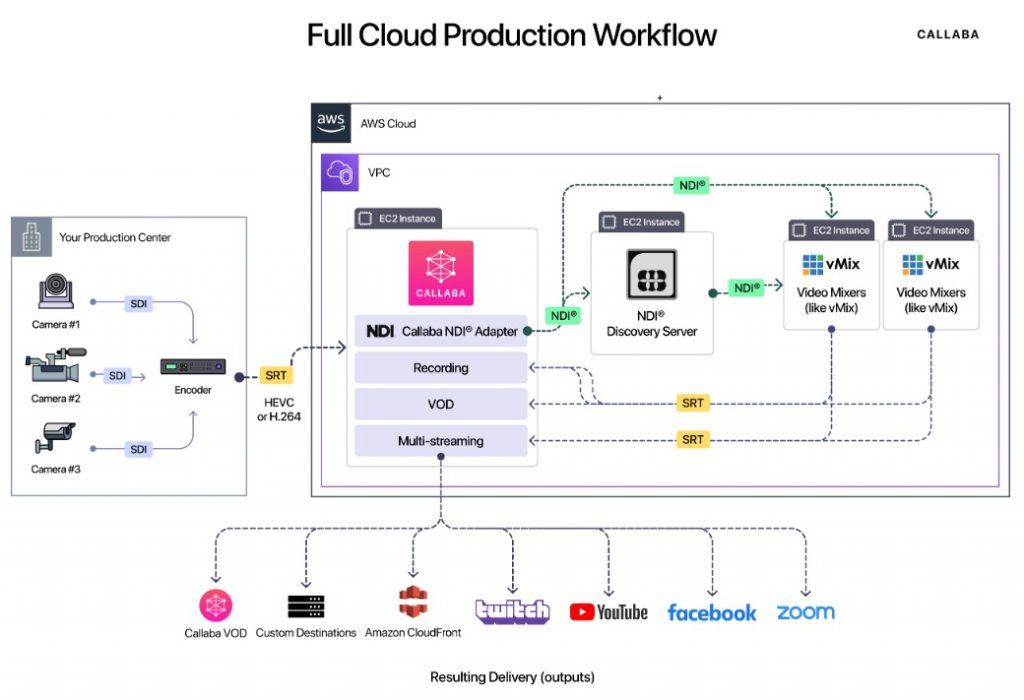
NDI excels in flexible, software-driven production environments where cost and ease of integration are priorities.
AVB is not a single protocol but a suite of IEEE standards designed to enable time-sensitive networking (TSN) for audio and video.
AVB appeals to integrators who prioritize predictable, guaranteed performance over network flexibility.
The AV-over-IP protocols landscape extends beyond Dante, NDI, and AVB.
Each solution serves a distinct architectural philosophy—from broadcast-grade uncompressed workflows to cost-sensitive corporate installations.
| Protocol | Primary Focus | Latency | Compression | Hardware Requirement | Scalability |
| Dante | Audio | Very Low | Uncompressed | Standard Switches | High |
| NDI | Video | Low | Compressed | Standard Gigabit | High |
| AVB | Audio/Video | Deterministic | Uncompressed | AVB Switch Required | Moderate |
| ST 2110 | Broadcast A/V | Ultra-Low | Uncompressed | Enterprise Network | Very High |
| SDVoE | 4K/8K Video | Zero Frame | Uncompressed | 10GbE | High |
Selecting the right AV-over-IP protocols depends on several technical factors:
There is no universally superior protocol—only context-appropriate design decisions.
As IT and AV continue converging, the industry is moving toward:
Future AV-over-IP protocols will likely emphasize open standards, higher bandwidth efficiency, and deeper cloud integration.
For system integrators, consultants, and technology planners, mastering the nuances of these protocols is no longer optional—it is foundational to designing next-generation AV infrastructure.
The transition to AV-over-IP protocols represents more than a technological upgrade—it marks a structural shift in how audiovisual systems are designed, deployed, and scaled.
Whether prioritizing deterministic audio networking (Dante), flexible production workflows (NDI), time-sensitive precision (AVB), or broadcast-grade transport (ST 2110), understanding protocol architecture is essential for informed system design.
In a network-defined AV world, protocol selection is strategy.

