


Pixel uniformity is one of the most critical factors in determining the visual quality of an LED display. Whether for indoor command centers, broadcast studios, retail signage, or large-scale outdoor screens, consistent brightness and color across every pixel directly impact user perception.
At the heart of this performance lies the SMD (Surface-Mounted Device) LED. The quality, consistency, and manufacturing precision of SMD LEDs largely determine how uniform a display appears. This article explains how SMD LEDs influence pixel uniformity, the main technical factors involved, and what display manufacturers should consider when selecting LED components.
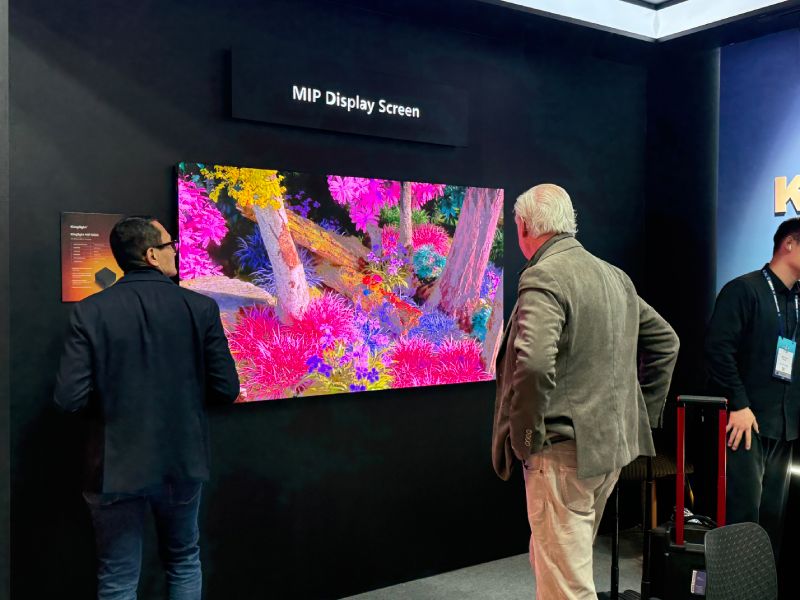
Pixel uniformity refers to how evenly brightness, color, and contrast are distributed across the entire screen. A display with good uniformity shows:
Poor pixel uniformity often results in visual defects such as:
In most cases, these issues originate at the LED component level—specifically from inconsistencies in SMD LEDs.
Each SMD LED produces light at a specific luminous intensity (measured in millicandela, mcd). During manufacturing, slight variations occur due to:
If LEDs with different brightness levels are mixed on the same module, uneven illumination becomes visible.
To control this, manufacturers use brightness binning, classifying LEDs into narrow intensity ranges.
High-quality SMD LEDs typically offer:
Better binning means fewer visible brightness jumps between pixels.
Over time, LEDs gradually lose brightness. Low-quality SMD LEDs often degrade unevenly, causing:
High-reliability LEDs use optimized chip structures and packaging materials to ensure uniform aging, preserving pixel consistency for years.
Each SMD LED pixel consists of red, green, and blue chips. Their peak wavelengths determine color accuracy:
If wavelength variation is too large, color shifts occur between pixels.
Professional LED manufacturers apply chromaticity binning based on CIE color coordinates.
High-quality SMD LEDs provide:
This ensures uniform white balance and smooth color gradients.
Color output changes with temperature. Poor thermal design causes:
Advanced SMD LEDs integrate optimized heat dissipation structures, helping maintain stable color performance under high brightness.
SMD LEDs rely on transparent materials such as:
Low-grade encapsulation may lead to:
All of these reduce brightness consistency and color stability.
The optical lens determines how light spreads from each pixel. Inconsistent lens geometry causes:
Precision-molded lenses ensure uniform light diffusion across the display surface.
Inside an SMD LED, RGB chips must be precisely positioned. Misalignment leads to:
High-end manufacturing uses automated alignment systems to maintain micron-level accuracy.
Even with high-quality LEDs, calibration is essential. However, better SMD LEDs make calibration more effective and long-lasting.
Displays using premium SMD LEDs achieve:
This reduces production time and improves yield.
Low-consistency LEDs drift faster, requiring frequent recalibration. High-uniformity SMD LEDs provide:
For rental, broadcast, and control-room applications, this stability is especially valuable.
When selecting SMD LEDs for LED display manufacturing, consider the following technical indicators:
| Parameter | Recommended Level |
| Brightness Bin Width | Narrow (≤10%) |
| Wavelength Tolerance | Tight (Low Δλ) |
| Color Deviation | Low Δu’v’ |
| Degradation Rate | <5%/10,000 hrs |
| Thermal Resistance | Low Rθ |
Reliable suppliers usually provide:
This data is critical for ensuring long-term uniformity.
In commercial and mission-critical environments, pixel uniformity is not optional. It directly affects:
Displays built with low-grade LEDs may appear acceptable at first, but often deteriorate quickly, increasing replacement and maintenance costs.
By contrast, high-quality SMD LEDs deliver:
Pixel uniformity is fundamentally determined by the quality of SMD LEDs. From brightness binning and wavelength stability to packaging precision and aging behavior, every technical detail influences how consistent a display looks over time.
For LED display manufacturers and integrators, investing in high-performance SMD LEDs is not just a component choice—it is a strategic decision that defines product reliability, visual excellence, and brand competitiveness.In an increasingly demanding display market, superior pixel uniformity starts with superior SMD LEDs.

