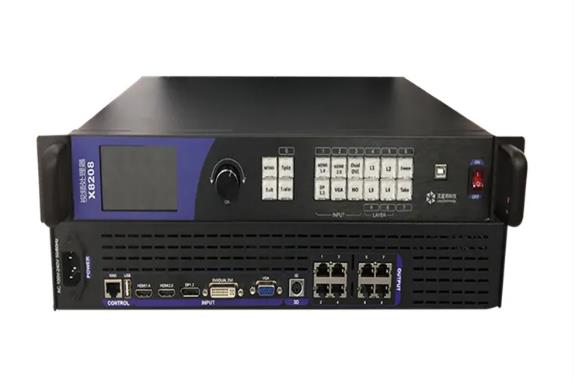
Whether you’re building a giant outdoor billboard, designing an immersive XR virtual production stage, or installing an LED video wall in a control room, one component plays a critical role behind the scenes—the LED video processor.
Modern LED displays are capable of remarkable brightness, contrast, refresh rates, and color performance. However, even the highest-quality LED panels cannot deliver their full potential without an equally capable video processing system. An LED video processor bridges the gap between the incoming video source and the LED display, ensuring that every frame is scaled, synchronized, calibrated, and delivered with exceptional accuracy.
Today’s professional AV market offers dozens of video processors from manufacturers around the world. Some are designed for live events requiring ultra-low latency and seamless switching, while others focus on broadcast studios, corporate installations, sports venues, or high-end virtual production.
Among these brands, companies such as NovaStar, Brompton Technology, Colorlight, and Megapixel VR have become industry benchmarks, each serving different segments of the market with distinct technical strengths.
This guide explores the world’s leading LED video processor brands, explains how they differ, and provides practical advice for selecting the right processor for various applications.
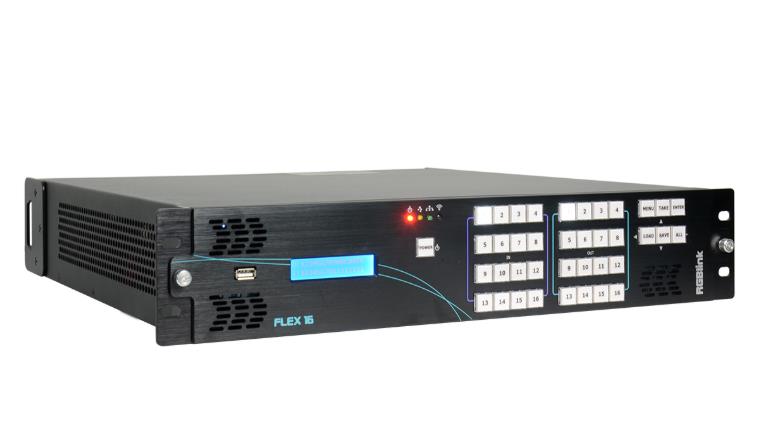
An LED video processor is a dedicated hardware device that receives video signals from one or more sources, processes those signals in real time, and outputs optimized image data to an LED display control system.
Unlike a conventional display connected directly to a computer through HDMI or DisplayPort, an LED display consists of thousands—or even millions—of individual LEDs that must be precisely controlled. Before video content reaches those LEDs, it undergoes multiple processing stages to ensure the image fits the display’s resolution, aspect ratio, brightness characteristics, and synchronization requirements.
Typical functions of an LED video processor include:
In professional installations, these capabilities are essential for delivering consistent image quality across large-format LED displays.
Many newcomers assume that the video processor sends images directly to the LED modules. In reality, professional LED display systems involve several specialized components working together.
A typical signal flow looks like this:
Video Source → LED Video Processor → Sending Card → Receiving Card → LED Modules
Each device has a distinct role.
The source may be:
These devices generate standard video signals such as HDMI, DisplayPort, SDI, or IP-based streams.
The processor receives incoming video signals and prepares them for LED display.
Its responsibilities include:
Think of it as the “brain” that prepares video before it enters the LED control system.
After processing, the image data is transmitted to a sending card.
The sending card converts processed video into a format that can be distributed across the LED display network.
It communicates with receiving cards through Ethernet cables or optical fiber.
Modern systems may use multiple sending cards simultaneously to drive very large LED installations.
Receiving cards are installed inside the LED cabinets.
Each receiving card controls a specific group of LED modules by decoding incoming image data and distributing pixel information accordingly.
Large LED walls may contain dozens—or even hundreds—of receiving cards operating simultaneously.
Finally, the processed pixel data reaches the LED modules, where every RGB LED package reproduces the assigned color and brightness values.
At this stage, the quality of the LED packages themselves becomes equally important. Factors such as brightness consistency, color uniformity, viewing angle, and long-term reliability directly influence how accurately the processor’s output is reproduced on the screen.
In other words, even the most advanced video processor cannot compensate for inconsistent LED hardware.
One of the most common misconceptions is treating the LED video processor and the sending card as the same device.
Although some modern products integrate both functions into a single unit, their responsibilities remain fundamentally different.
| Feature | LED Video Processor | Sending Card |
| Primary Role | Process video signals | Transmit processed image data |
| Image Scaling | ✔ | ✖ |
| HDR Processing | ✔ | ✖ |
| Multi-window Display | ✔ | ✖ |
| Source Switching | ✔ | ✖ |
| Color Processing | ✔ | Limited |
| Controls LED Cabinets | Indirectly | Directly |
| Typical Outputs | Ethernet / Fiber | Ethernet / Fiber |
Many integrated products—such as the NovaStar VX Series or Colorlight X Series—combine these functions into one chassis, simplifying installation while reducing equipment count.
However, understanding the distinction remains important when designing or troubleshooting complex LED display systems.
An LED display is only as good as the video signal driving it.
Without proper processing, even premium LED panels can suffer from scaling artifacts, mismatched colors, poor synchronization, or visible tearing.
Professional video processors solve these challenges by optimizing the entire signal before it reaches the display.
Video content rarely matches the native resolution of an LED wall.
For example:
A processor automatically scales images while maintaining sharpness and aspect ratio.
Live events often require instant transitions between:
Professional processors perform these switches without visible black frames or signal interruptions.
Color consistency is critical for:
Advanced processors provide:
These features help maintain consistent image quality across the entire display.
In applications such as esports, live concerts, broadcast studios, and XR virtual production, even a few milliseconds of delay can become noticeable.
Modern high-end processors reduce latency to only a few frames—or even less—ensuring smooth synchronization between cameras, performers, and on-screen visuals.
Mission-critical environments—including broadcast centers, transportation hubs, sports stadiums, and command-and-control rooms—cannot afford unexpected downtime.
Many professional processors therefore support redundant power supplies, backup signal paths, and automatic fail over mechanisms to keep content visible even if a hardware component or input source fails.
With dozens of manufacturers offering LED control solutions, choosing the right video processor can be challenging. Some brands focus on live events and touring, while others specialize in broadcast studios, virtual production, corporate AV, or large-scale digital signage.
The following brands have established strong reputations in the global professional LED display market. Rather than ranking them solely by popularity, this guide examines their strengths, typical applications, and ideal users to help you make an informed decision.
Note: The brands below are listed alphabetically within their respective market segments, not as an absolute ranking. The “best” processor ultimately depends on the application’s requirements, budget, and workflow.
Founded in London, Brompton Technology has become one of the most respected names in high-end LED processing. While its overall shipment volume is considerably smaller than some competitors, Brompton dominates premium applications where image fidelity, synchronization, and color accuracy are critical.
Today, many leading virtual production studios, broadcast facilities, and concert tours rely on Brompton’s Tessera platform.
Brompton’s reputation is built on image quality rather than product quantity.
Key technologies include:
Among these, ShutterSync has become particularly valuable for virtual production, allowing LED refresh timing to be optimized for different camera shutter angles and frame rates. This significantly reduces scan-line artifacts and improves image consistency during filming.
Brompton is widely used in:
For organizations building LED environments for filmmaking or high-end live production, Brompton remains one of the industry’s benchmark solutions.
Colorlight has evolved into one of the world’s leading LED control system providers, with products deployed across commercial displays, command centers, transportation hubs, sports venues, and rental installations.
Compared with Brompton, Colorlight offers a broader range of products covering both entry-level and professional markets.
Colorlight processors offer:
The company has also expanded its software ecosystem, enabling centralized management for complex LED installations.
Colorlight is commonly selected for:
Although considerably younger than many competitors, Megapixel VR has quickly established itself as one of the most innovative companies in LED processing for virtual production.
Rather than competing across every market segment, the company focuses almost exclusively on next-generation imaging technologies for filmmaking and immersive environments.
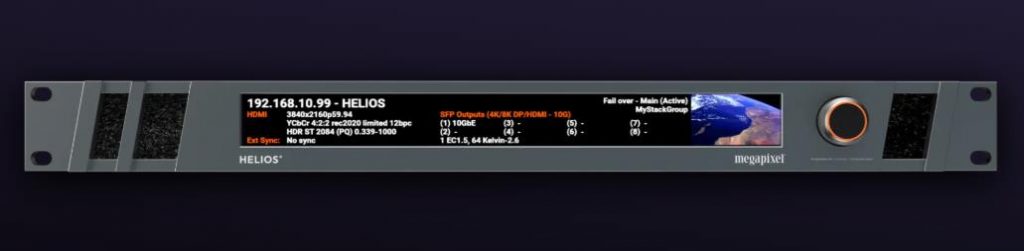
Megapixel emphasizes:
Its architecture is designed to accommodate demanding workflows involving multiple cameras, real-time rendering engines, and complex LED volumes.
For organizations focused on virtual production rather than conventional digital signage, Megapixel has become one of the industry’s most influential technology providers.
NovaStar is widely recognized as the global market leader in LED display control systems. Its processors are used in thousands of projects every year, ranging from small indoor displays to some of the world’s largest LED installations.
The company’s extensive ecosystem—including processors, sending cards, receiving cards, calibration software, and cloud management tools—has helped make NovaStar the default choice for many LED display manufacturers and system integrators.
NovaStar provides one of the industry’s most comprehensive product portfolios.
Its processors support:
The introduction of the COEX platform further strengthens NovaStar’s position in high-end applications by combining image quality improvements with simplified system architecture.
NovaStar processors are widely deployed in:
Because of its broad product range, selecting the most appropriate model requires careful evaluation of project requirements. Entry-level processors and flagship systems target very different applications.
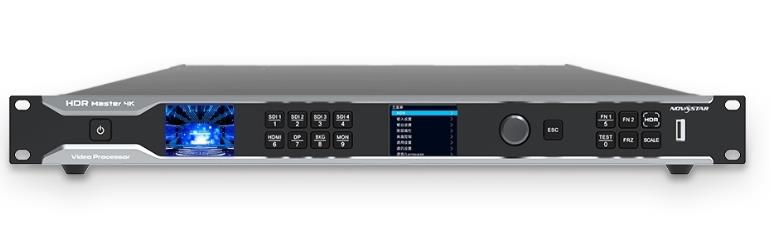
RGBlink occupies a unique position between LED processing and professional AV production. Its products combine switching, presentation, streaming, and display control functions within integrated platforms.
This makes RGBlink particularly attractive for hybrid events and live streaming applications.
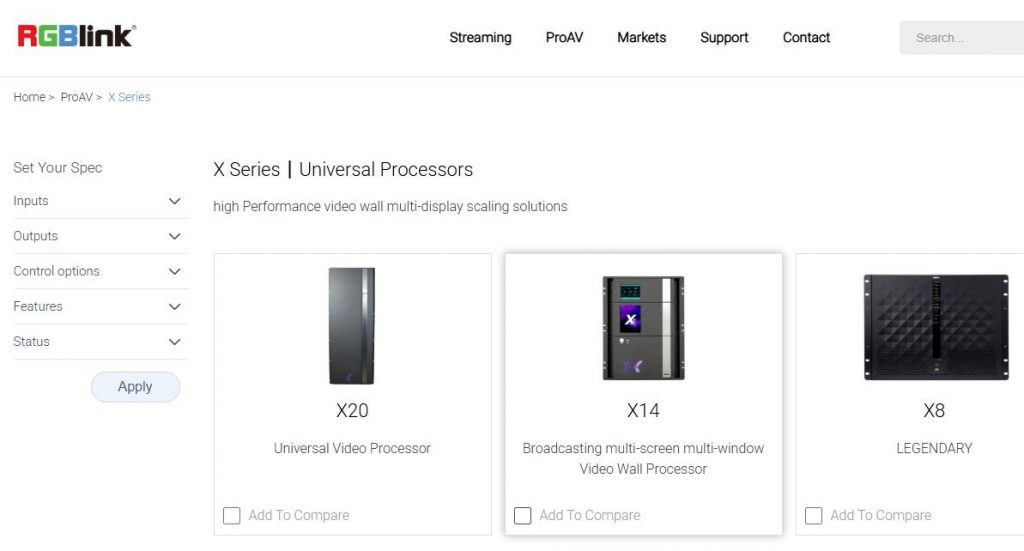
While highly capable for live production, RGBlink is generally selected for integrated AV workflows rather than projects where ultra-high-end LED image processing is the primary requirement.
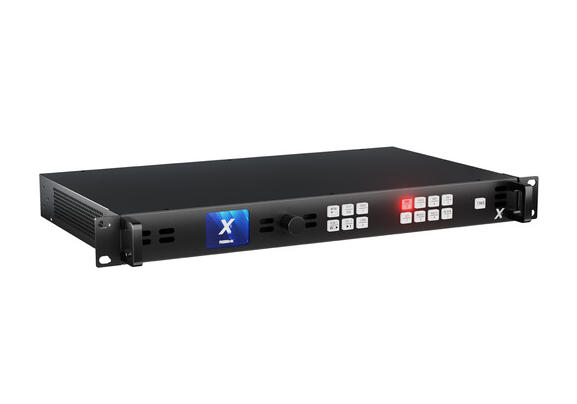
Magnimage has steadily expanded its presence in overseas rental and fixed-installation markets by offering reliable processors with competitive pricing.
Its products are frequently found in medium-sized live events, conference venues, and commercial LED projects where dependable performance and straightforward operation are priorities.
Strengths include:
VDWALL is one of the pioneers of China’s professional LED video processor industry.
Its processors became particularly popular during the early expansion of rental LED displays, helping establish many of the processing functions that are now considered standard across the industry.
Representative products include:
Although newer competitors have introduced more advanced architectures, VDWALL products remain widely used in existing installations due to their stability and familiarity.
LINSN played a significant role during the early development of China’s LED display control industry.
Many international LED display manufacturers adopted LINSN control systems throughout the 2010s, contributing to the brand’s broad installed base.
Today, LINSN continues to provide solutions for:
Huidu focuses primarily on entry-level and mid-range LED control solutions.
The company is particularly well known for asynchronous control systems used in advertising displays, shop signs, transportation information boards, and other commercial applications.
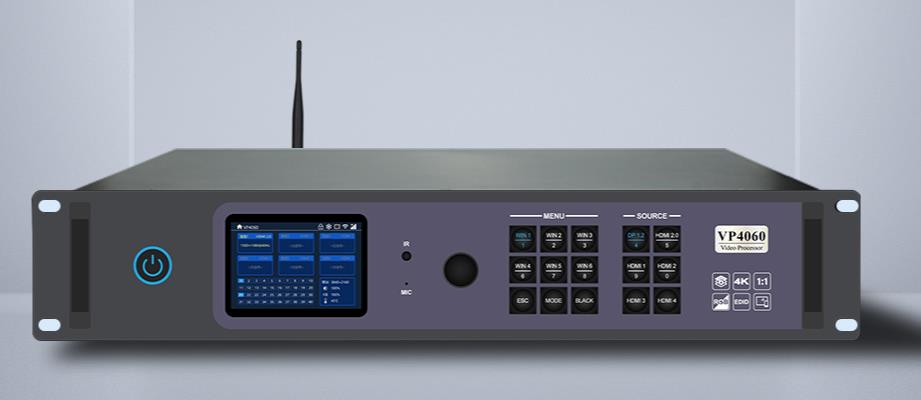
Its processors emphasize:
For projects that do not require complex live video processing, Huidu remains a practical choice.
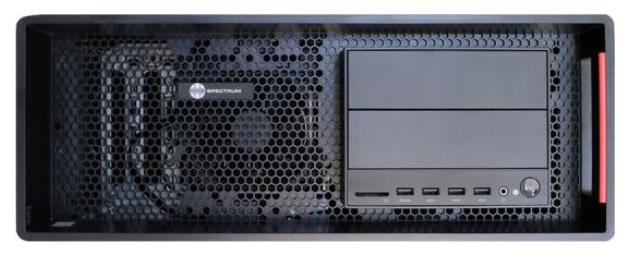
Unlike most brands in this guide, RGB Spectrum originated in the command-and-control industry rather than the LED display sector.
Its expertise lies in mission-critical visualization systems for government, military, utilities, transportation, and emergency operation centers.
RGB Spectrum processors prioritize:
Although RGB Spectrum products can drive LED video walls, they are not typically selected for touring productions, XR stages, or entertainment applications.
One common misconception is that there is a single “best” LED video processor. In reality, each manufacturer has developed its strengths around different workflows and industries.
For example:
Instead of asking “Which processor is the best?”, a more useful question is:
“Which processor is best suited to my application?”
The answer depends on factors such as display resolution, latency requirements, synchronization needs, workflow complexity, and budget—not simply on brand recognition.
Selecting an LED video processor is no longer simply a matter of choosing the brand with the biggest market share. Modern LED display projects vary significantly in scale, complexity, and performance requirements. A processor that excels in a virtual production studio may be unnecessary—or even unsuitable—for a retail digital signage network.
The best choice depends on understanding your application’s technical demands rather than focusing solely on product specifications or marketing claims.
This section explains the most important factors to consider before investing in an LED video processor and recommends suitable solutions for different application scenarios.
The first specification to examine is how much image data the processor can handle.
Processing capacity determines the maximum resolution and number of pixels that can be displayed without compromising performance.
For example:
| LED Wall Resolution | Typical Processor Requirement |
| Full HD (1920×1080) | Entry-level processor |
| 4K UHD (3840×2160) | Mid-range processor |
| 8K Display | High-end processor |
| Multiple 4K Displays | Enterprise-grade processor |
Large stadium displays or multi-screen installations often require processors capable of handling tens of millions of pixels simultaneously.
Tip: Don’t select a processor based only on today’s requirements. Consider future display expansion and leave adequate processing headroom.
Different projects use different video sources.
A processor should support the interfaces required by your production workflow.
Common inputs include:
For example:
The broader the input compatibility, the more flexible the system becomes.
High Dynamic Range (HDR) has become increasingly important for premium LED displays.
Compared with Standard Dynamic Range (SDR), HDR provides:
Processors supporting HDR10 or HLG can significantly improve image realism, especially when paired with high-performance LED displays.
HDR is particularly valuable in:
A processor’s job extends beyond transmitting pixels—it also helps maintain accurate color reproduction.
Professional processors often provide:
These functions become increasingly important as display size grows. Even small inconsistencies in brightness or color between cabinets become highly visible on large LED walls.
It’s also worth remembering that processing accuracy alone cannot guarantee excellent visual performance. The LED display itself—including the quality of the LED packages, driver ICs, and calibration procedures—plays an equally important role in achieving consistent color and brightness.
Latency measures the delay between the video source and the displayed image.
Different applications tolerate different latency levels.
| Application | Typical Requirement |
| Digital Signage | Moderate |
| Conference Rooms | Moderate |
| Sports Broadcasting | Low |
| Live Concerts | Very Low |
| Esports | Extremely Low |
| XR Virtual Production | Ultra-Low |
In virtual production, excessive latency can cause visible synchronization issues between physical camera movement and the virtual background, making low-latency processing a critical requirement.
Genlock enables multiple devices—including cameras, media servers, lighting systems, and LED processors—to operate from the same timing reference.
Without synchronization, issues such as frame tearing, flickering, or rolling artifacts may occur.
Genlock is essential for:
For standard digital signage or retail applications, however, Genlock is usually unnecessary.
Downtime can be extremely costly during live broadcasts, concerts, or mission-critical operations.
Professional processors often include redundancy features such as:
These features help ensure continuous operation even if part of the system experiences a failure.
Modern processors are no longer configured only through front-panel buttons.
Today’s systems often include powerful software for:
A mature software ecosystem can significantly reduce commissioning time and simplify long-term maintenance, particularly for large-scale deployments.
Rather than searching for a universally “best” processor, it is more practical to match the processor’s strengths to the intended application.
Rental LED systems are frequently assembled and dismantled, requiring equipment that is reliable, easy to configure, and capable of handling frequent signal changes.
Typical priorities include:
Recommended brands:
Virtual production represents one of the most demanding LED applications.
In addition to exceptional image quality, processors must synchronize precisely with cameras and rendering engines.
Key requirements include:
Recommended brands:
Large sports venues require processors capable of driving enormous displays while maintaining smooth motion and high reliability.
Important features include:
Recommended brands:
Outdoor advertising networks emphasize stability rather than advanced production features.
Important considerations include:
Recommended brands:
Corporate environments often prioritize simplicity and compatibility.
Useful features include:
Recommended brands:
Control rooms differ significantly from entertainment venues. They often display multiple data sources simultaneously and operate continuously.
Important capabilities include:
Recommended brands:
Many purchasing decisions focus heavily on price or specifications while overlooking operational requirements. Avoiding these common mistakes can save significant time and cost later.
A processor may support 4K resolution, but that does not necessarily mean it offers sufficient HDR performance, synchronization features, or input flexibility for your project.
Projects often grow over time. Selecting a processor with no capacity for additional displays or higher resolutions may lead to costly upgrades later.
Always verify compatibility with:
A technically powerful processor is of limited value if it cannot integrate smoothly into the overall system.
Not every installation requires Genlock, advanced HDR workflows, or cinematic color calibration.
Conversely, professional broadcast or XR environments should avoid entry-level processors that lack these essential capabilities.
Even the world’s most advanced LED video processor cannot compensate for limitations elsewhere in the system.
Final image quality depends on the combined performance of multiple components, including:
Among these, LED packages directly influence brightness consistency, color uniformity, viewing angle, contrast, and long-term reliability. A high-performance processor can preserve image quality throughout the signal chain, but the display hardware ultimately determines how faithfully that processed image is reproduced.
For this reason, many system integrators evaluate both the processing platform and the LED components together when designing premium display solutions.
While every project has unique requirements, comparing leading brands side by side can help narrow your options. The table below summarizes each manufacturer’s primary strengths, target applications, and market positioning.
| Brand | Country | Best For | HDR | Genlock | XR / VP | Rental | Fixed Install | Control Room | Market Position |
| NovaStar | China | All-around professional LED applications | ✔ | ✔* | ✔ | ★★★★★ | ★★★★★ | ★★★★☆ | Global market leader |
| Brompton Technology | UK | Virtual Production & Premium Live Events | ★★★★★ | ✔ | ★★★★★ | ★★★★★ | ★★★★☆ | ★★☆☆☆ | High-end industry benchmark |
| Colorlight | China | Commercial displays & sports venues | ✔ | ✔* | ★★★★☆ | ★★★★☆ | ★★★★★ | ★★★★☆ | Global professional brand |
| Megapixel VR | Canada | XR & Film Production | ★★★★★ | ✔ | ★★★★★ | ★★★☆☆ | ★★☆☆☆ | ★☆☆☆☆ | Virtual production specialist |
| RGBlink | China | Live production & corporate AV | ✔ | Limited | ★★★☆☆ | ★★★★☆ | ★★★★☆ | ★★★☆☆ | Professional AV workflow |
| Magnimage | China | Rental & Event Production | ✔ | Limited | ★★★☆☆ | ★★★★☆ | ★★★☆☆ | ★★☆☆☆ | Value-oriented professional |
| VDWALL | China | Rental & Commercial Projects | Limited | No | ★★☆☆☆ | ★★★★☆ | ★★★☆☆ | ★★☆☆☆ | Mature industry brand |
| LINSN | China | Commercial LED Displays | Limited | No | ★☆☆☆☆ | ★★★☆☆ | ★★★★☆ | ★★☆☆☆ | Established control solution |
| Huidu | China | Entry-level Commercial Displays | Limited | No | ★☆☆☆☆ | ★★☆☆☆ | ★★★★☆ | ★☆☆☆☆ | Cost-effective commercial |
| RGB Spectrum | USA | Mission-Critical Control Rooms | ✔ | ✔ | ★☆☆☆☆ | ★☆☆☆☆ | ★★★★☆ | ★★★★★ | Visualization specialist |
Note: Product capabilities vary by model. Always verify the specifications of the processor you intend to purchase rather than assuming every product within a brand offers identical features.
There is no universal “best” LED video processor. Instead, the ideal solution depends on the specific requirements of your project.
| If your project is… | Consider… |
| Outdoor Digital Billboard | NovaStar, Colorlight |
| Rental LED Display | NovaStar, Brompton, Magnimage |
| Sports Stadium | NovaStar, Colorlight |
| Corporate Meeting Room | RGBlink, Colorlight |
| Broadcast Studio | Brompton, Colorlight |
| Film & Virtual Production | Brompton, Megapixel VR |
| Control Room | RGB Spectrum, Barco |
| Museum & Exhibition | NovaStar, Colorlight |
| Retail Display | NovaStar, Huidu |
| Large Multi-screen Installation | NovaStar, Colorlight |
One practical takeaway is that selecting the processor should come after defining the project goals, display resolution, content sources, latency requirements, and operational workflow—not before.
A video processor prepares and optimizes incoming video signals by handling tasks such as scaling, switching, HDR processing, and color adjustment. A sending card then distributes the processed image data to the receiving cards installed inside the LED display cabinets.
Many modern devices combine both functions in a single chassis, but they still perform two distinct roles.
Not necessarily.
Small digital signage displays using asynchronous controllers may not require a dedicated processor. However, almost all professional LED displays used for live events, broadcasting, sports venues, conference centers, and virtual production benefit from—or require—a dedicated LED video processor.
Yes.
Most professional processors support multiple outputs and can drive several LED displays simultaneously.
Depending on the processor, these displays can operate as:
The maximum number depends on the processor’s output capacity and pixel loading limits.
For high-end virtual production, Brompton Technology and Megapixel VR are widely recognized for their advanced synchronization, HDR performance, and camera-friendly processing.
NovaStar’s COEX platform has also gained increasing adoption in virtual production projects, offering an alternative for users seeking a broader LED control ecosystem.
Both companies produce highly capable professional LED control systems.
In general:
The better choice depends on project requirements, existing equipment, technical support availability, and user familiarity.
No.
Although Brompton is closely associated with virtual production, its processors are also widely used for:
Its strength lies in applications where image quality and synchronization are critical.
Only to a limited extent.
A professional processor can optimize incoming signals, improve color accuracy, and reduce latency, but it cannot fully compensate for limitations in the LED display itself.
Factors such as:
also have a significant impact on the final image.
Professional processors are generally designed for continuous operation and often remain in service for many years.
Their practical lifespan depends on:
In many installations, processors continue operating reliably for five to ten years or longer, although organizations may upgrade sooner to gain access to new features such as HDR, higher resolutions, or improved synchronization.
As LED display technology continues to evolve, the role of the video processor has become increasingly important. Higher resolutions, HDR workflows, virtual production, and immersive display environments all demand greater processing power, lower latency, and more sophisticated image management than ever before.
Manufacturers such as NovaStar, Brompton Technology, Colorlight, and Megapixel VR have each developed solutions tailored to different segments of the market. Rather than competing directly in every application, they excel in areas aligned with their respective strengths—from digital signage and rental displays to broadcast studios and cinematic virtual production.
However, choosing the right processor is only one part of building an exceptional LED display system.
A professional LED installation is the result of every component in the signal chain working together—from the media source and video processor to the sending cards, receiving cards, driver ICs, power systems, cabinets, and ultimately the LED packages themselves.
High-quality LED packages play a particularly important role in translating processed image data into consistent brightness, accurate colors, wide viewing angles, and long-term reliability. Even the most advanced processor can only perform as well as the display hardware allows.
For system integrators, display manufacturers, and project owners, the most successful installations are those that balance signal processing excellence with high-quality LED components, ensuring that every stage of the display pipeline contributes to the final visual experience.