


In today’s experience-driven market, standard displays are no longer enough to capture attention. Businesses are increasingly turning to custom LED displays to create immersive, visually striking environments that align perfectly with their space and brand identity.
From curved retail installations to large-scale outdoor media façades, customization allows LED technology to go far beyond traditional rectangular screens. But what exactly defines a custom LED display, and how do you approach designing one effectively? This guide breaks down everything you need to know—from design principles to cost factors and real-world applications.
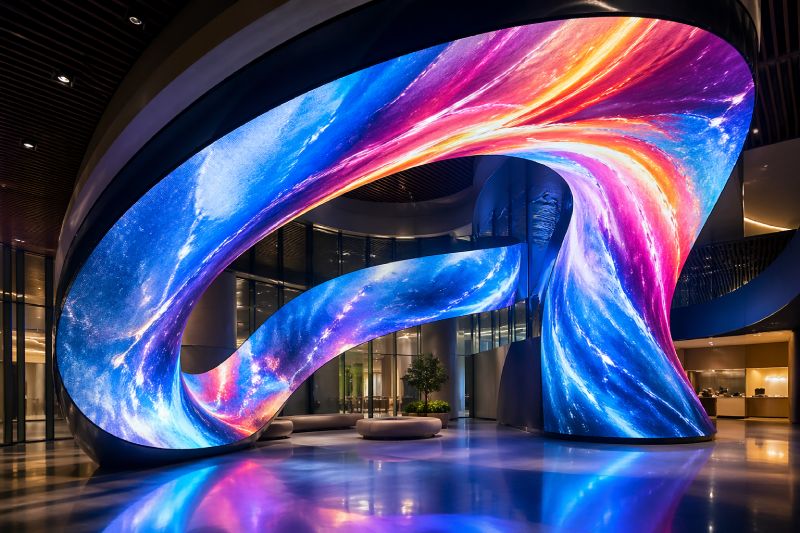
To better understand its value, it’s important to first clarify what makes a custom LED display different from conventional solutions.
A custom LED display is a screen specifically designed and engineered to meet unique project requirements, rather than following standard sizes or configurations.
Unlike off-the-shelf LED screens, custom solutions offer flexibility in:
At its core, customization is about adapting the display to the environment—not the other way around.
Before diving into technical details, it’s worth looking at the practical advantages that make customization increasingly popular across industries.
Custom LED displays are tailored to match architectural constraints, making them ideal for unconventional layouts such as columns, ceilings, or curved walls.
Unique shapes and seamless integration dramatically increase visual engagement, especially in high-traffic environments.
Custom designs enable brands to create signature visual experiences that stand out and reinforce brand recognition.
From suspended structures to floor-integrated displays, customization opens up installation possibilities that standard screens cannot achieve.
Custom LED displays come in various forms, each designed to solve specific spatial or creative challenges.
Designed to wrap around structures or create panoramic viewing experiences, commonly used in retail and exhibitions.
360-degree displays often installed around pillars or in open spaces for maximum visibility.
Custom-cut modules allow for creative forms such as waves, polygons, or artistic installations.
Maintain visibility behind the screen while displaying dynamic content—ideal for storefronts.
Engineered for durability and interactivity, widely used in immersive environments and entertainment venues.
To fully appreciate their flexibility, it helps to explore how custom LED displays are applied across different industries.
Custom LED displays are widely used in flagship stores to create immersive shopping experiences. Tailored designs help brands communicate identity while maximizing spatial impact.
From concerts to virtual production (XR), customized LED backdrops enable dynamic storytelling and flexible stage design.
In outdoor advertising, custom-shaped LED displays help brands break away from traditional billboards and capture attention in crowded urban environments.
Large-scale, precisely configured video walls ensure optimal visibility and information management.
Creative LED installations enhance storytelling by blending digital content with physical space.
Designing a custom LED display involves a structured process that balances creativity with technical feasibility.
Start by analyzing the physical space, viewing distance, lighting conditions, and structural constraints.
Pixel pitch determines resolution and viewing clarity. Smaller pitch is ideal for close viewing, while larger pitch suits long-distance applications.
Based on the environment, decide whether the display will be flat, curved, or uniquely shaped.
This is a critical step. The quality of LED pixels directly affects brightness, color consistency, and long-term reliability—especially in custom designs where uniformity is more challenging.
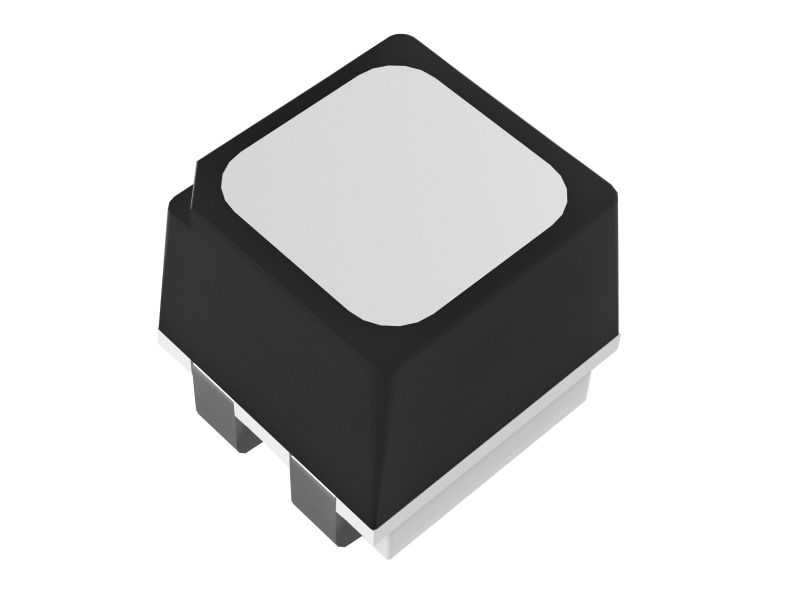
Ensure compatibility between hardware and content delivery systems for seamless playback and control.
Custom designs often require specialized installation methods and maintenance strategies, which should be considered early in the process.
Understanding the cost structure is essential for making informed investment decisions in custom LED projects.
Several variables influence the overall cost of a custom LED display:
While custom displays typically cost more than standard solutions, they deliver significantly higher value in terms of impact and differentiation.
At this stage, it becomes useful to compare custom solutions with standard options to better understand their respective advantages.
| Factor | Custom LED Display | Standard LED Display |
| Flexibility | High | Limited |
| Design Options | Unlimited | Fixed formats |
| Cost | Higher | Lower |
| Visual Impact | Strong | Moderate |
| Application Range | Broad | Limited |
Custom LED displays are ideal for projects that demand uniqueness and high engagement, while standard displays are better suited for straightforward, cost-sensitive applications.
Beyond design and cost, the success of a project largely depends on selecting the right supplier.
Key factors to consider include:
In particular, the performance of LED pixels plays a decisive role in ensuring color uniformity, brightness consistency, and long-term durability—especially in complex custom configurations.
As LED technology continues to evolve, customization is becoming a defining trend rather than a niche option.
Custom LED displays are redefining how digital content interacts with physical space. By combining creative design with robust engineering and high-quality core components, businesses can deliver truly impactful visual experiences and gain a competitive edge in an increasingly dynamic market.

