Panasonic Projector & Display Corporation and HIVE Media Control have released a joint white paper exploring how distributed media architecture could reduce infrastructure costs for immersive AV installations by up to 80%.
Titled The Future of Immersive Deployments: Why Distributed Architecture is the Next Evolution of Immersive Experiences, the white paper examines an alternative to traditional centralized media server systems. It focuses on how integrating media playback into compatible projectors and displays can simplify system design, reduce equipment requirements and lower installation costs.
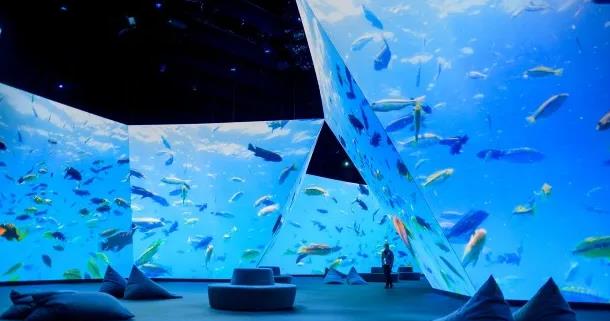
Large immersive installations often use multiple projectors or displays to create seamless visual environments. These systems need reliable media playback, signal distribution and synchronization.
Traditionally, a centralized media server manages content playback and sends video signals to individual display devices. As installations become larger, the supporting infrastructure can also become more complex.
This setup often requires dedicated equipment rooms, server racks, extensive fiber connections and additional cooling systems. Installation and maintenance also require specialized technical support.
As a result, the cost of an immersive AV project goes beyond the projectors and displays themselves. The infrastructure needed to operate them can account for a significant part of the overall investment.
To address these challenges, Panasonic and HIVE highlight distributed media architecture as an alternative to centralized playback systems.
Instead of relying on a central server to process and distribute all video content, this approach places media playback capabilities directly inside compatible projectors and displays.
The solution uses HIVE’s BeeBlade media engines, which are designed around the Intel Smart Display Module (Intel SDM) standard. When installed in compatible devices, each BeeBlade acts as an independent playback node.
The devices connect through a standard IP network. HIVE’s BeeSync technology keeps playback synchronized across multiple nodes, allowing them to work together to create large, continuous visual environments.
This approach reduces the need for external media servers and complex signal distribution infrastructure. It can also make installations easier to expand, as additional playback nodes can be added when required.
One of the key findings in the white paper is the potential reduction in infrastructure and media playback costs.
According to the figures presented by Panasonic and HIVE, the savings can vary depending on the project:
The companies also highlight lower power consumption, reduced cooling requirements and simpler installation as additional benefits.
However, actual savings depend on the existing system, project requirements and equipment configuration. The figures refer to media playback and related infrastructure costs, rather than the total budget of an entire immersive project.
The white paper draws on existing installations to demonstrate the application of distributed media architecture.
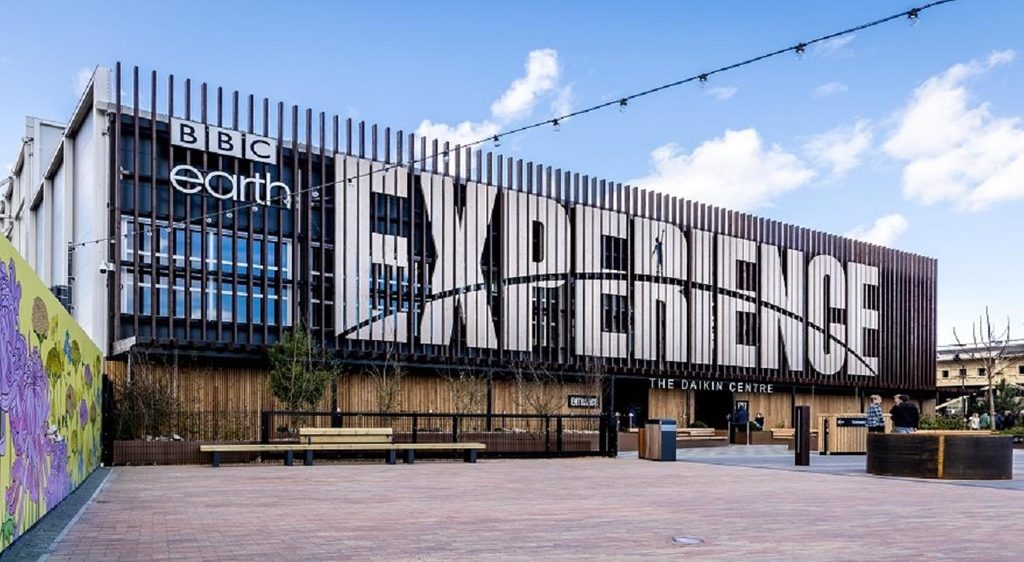
Two examples include the BBC Earth Experience in Melbourne, Australia, and the National Museum of Qatar.
These projects illustrate how multiple projection devices can work together to deliver immersive visual content across large spaces. Such installations require reliable synchronization and efficient media management, making playback architecture an important part of system design.
The examples also highlight the value of scalable systems in museums, exhibitions and visitor attractions, where content and display requirements may change over time.
As immersive exhibitions and large-scale visual experiences continue to develop, system designers must consider more than image quality and display performance.
The infrastructure behind each installation also affects project budgets, deployment complexity and long-term operating costs.
Distributed media architecture offers another way to approach these challenges. By bringing playback closer to the display devices, it can reduce supporting equipment and create more flexible system designs.
For AV integrators and venue operators, this development highlights the growing importance of efficient system architecture in immersive projects. It also shows how improvements in media playback technology can help make large-scale visual experiences more practical and cost-effective.
The complete white paper, The Future of Immersive Deployments, is available from Panasonic’s official website.