


An interactive LED installation at IMEX America 2026 gave visitors an opportunity to do more than watch digital content. They could actually talk to the characters appearing on the screen.
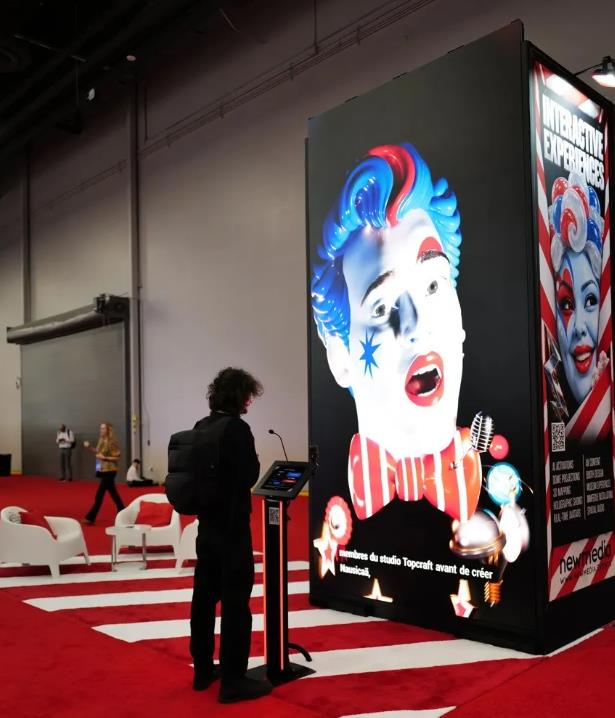
Developed by NewMedia Creative Technology Studio, the AI HOST installation combined a large-format LED display, conversational artificial intelligence (AI), real-time facial animation and voice interaction. The project demonstrated how AI-driven LED characters can turn a conventional exhibition display into an interactive experience.
Held in Las Vegas, Nevada, from October 13 to 15, 2026, IMEX America brought together professionals from the global meetings, events and incentive travel industries. The installation offered a practical example of how interactive digital experiences can attract visitors and encourage direct participation at large-scale events.
The AI HOST installation featured a vertically oriented LED display measuring 1.83 meters wide and 3.66 meters high. The screen was built using AOTO RM1.5E LED panels and powered by Brompton processing.
The display system featured a brightness of 1,500 nits and a refresh rate of 7,680 Hz, providing the visual performance required for an indoor exhibition environment and smooth on-screen character presentation.
Rather than playing conventional promotional videos, the LED screen displayed animated digital characters capable of responding to visitors’ questions. Four different characters were available, each designed around a distinct interaction style.
Visitors first selected a character through an iPad touchscreen interface, entered their names and then started a conversation using an Audio-Technica PRO49QL gooseneck microphone. A JBL stereo audio system reproduced the characters’ responses, while their facial expressions and lip movements were animated in sync with the generated speech.
This combination of visual and audio interaction made the LED display an active part of the visitor experience rather than simply a background advertising surface.
Creating a convincing conversation between a visitor and an animated character requires more than displaying a pre-recorded video. The system must understand spoken input, generate an appropriate response and coordinate the character’s voice and facial movements.
For AI HOST, Unreal Engine 5 was used to produce real-time facial animation and lip-sync at a specified frame rate of 60 fps.
Meanwhile, AI processing was handled by NewMedia’s dedicated infrastructure in a data center in Spain. The software workflow connected several stages:
One important feature of this workflow was its ability to begin delivering a response before the entire answer had been generated. This helped reduce perceived waiting time and made conversations feel more natural.
According to NewMedia, the median response time between a visitor finishing speaking and the character beginning its reply was approximately 2.6 seconds.
The installation also incorporated an offline fallback, including prerecorded responses and animations as well as smaller AI models capable of running locally. This provided an alternative when internet connectivity was interrupted during the event.
AI HOST featured four distinct digital personalities, each providing a different reason for visitors to engage.
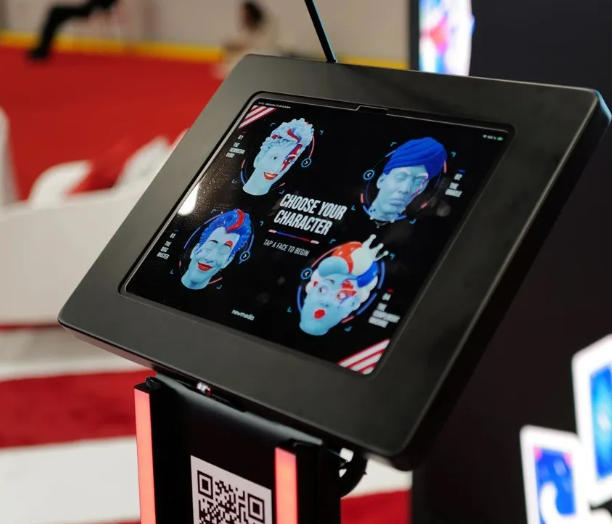
NewMedia Guru acted as a virtual company representative, answering questions about NewMedia and the events industry.
The Quiz Master invited visitors to choose their preferred quiz topics and difficulty levels, turning the interaction into a personalized game.
The Compliment Machine focused on lighthearted conversations and positive messages, offering visitors an entertaining and friendly exchange.
The Oracle provided fictional predictions and playful responses, creating a more imaginative interaction.
These different roles demonstrated how AI-driven LED characters can be adapted to different communication objectives. Depending on the event or brand, a digital character could serve as an information assistant, an interactive game host or an entertainment feature.
The installation also supported multilingual conversations, allowing visitors to interact in English and 25 other languages. Live subtitles accompanied spoken responses, helping make the experience accessible to an international audience.
The installation attracted considerable participation throughout the four-day event period, including Smart Monday and the three main exhibition days.
According to NewMedia’s system records:
The number of conversations exceeded the number of individual participants because some visitors interacted with more than one character or returned for additional exchanges.
These figures provide a useful indication of how interactive LED installations can encourage audience participation at exhibitions. Instead of simply attracting attention through visual content, the installation gave visitors a direct reason to approach the display and take part.
The AI HOST project illustrates how LED displays can become part of a more interactive communication environment.
Traditional exhibition LED screens are primarily used to present promotional videos, product information and branded visual content. By combining conversational AI with animated digital characters, the display can take on a more active role in communicating with visitors.
For example, similar AI-driven LED characters could be developed for:
The effectiveness of these applications depends on more than the AI software itself. Display quality, visual smoothness, audio capture, response speed and the overall interaction design all contribute to the experience.
As AI technology continues to develop, integrating conversational capabilities with large-format LED displays may create more opportunities for interactive digital installations across commercial and public environments.
The IMEX America project offers a practical example of this direction, showing how LED display technology can move beyond passive content presentation and become a platform for real-time audience interaction.

