


If you’re researching how to choose an LED display, you’ve probably noticed that manufacturers promote an endless list of specifications. Smaller pixel pitches, ultra-high refresh rates, nano coatings, seamless designs, and Micro LED technologies all compete for attention.
The challenge is that not every specification delivers meaningful value in real-world applications.
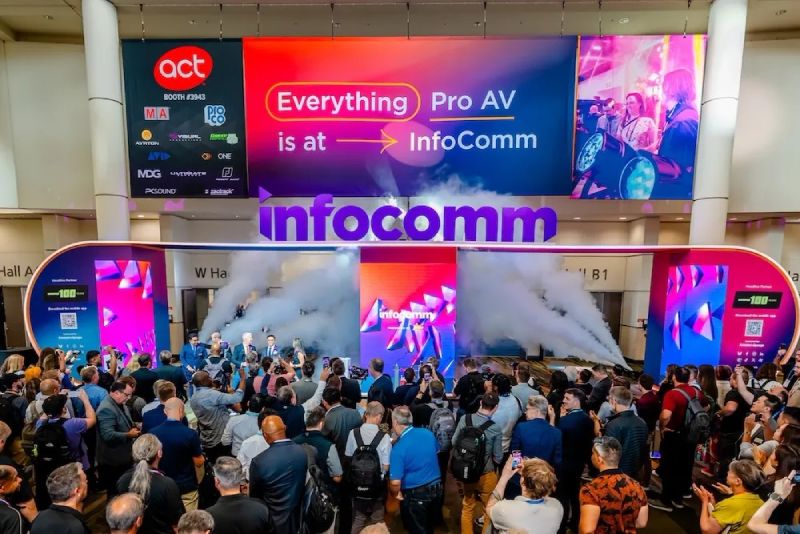
Following InfoComm 2026, one trend became increasingly clear: LED display marketing is becoming more complex. New concepts and technical terms appear every year, and many vendors emphasize specific features as essential advantages. While some of these technologies have legitimate applications, they are not always necessary for most projects.
As a result, buyers often end up paying for performance improvements that provide little or no visible benefit in their actual installation environment.
The key to choosing the right LED display is not selecting the product with the longest specification sheet. Instead, it is understanding which features truly affect your project and which ones add cost without creating measurable value.
Here are five commonly promoted LED display specifications that deserve closer examination before making a purchasing decision.
When discussing how to choose an LED display, pixel pitch is often the first specification buyers encounter.
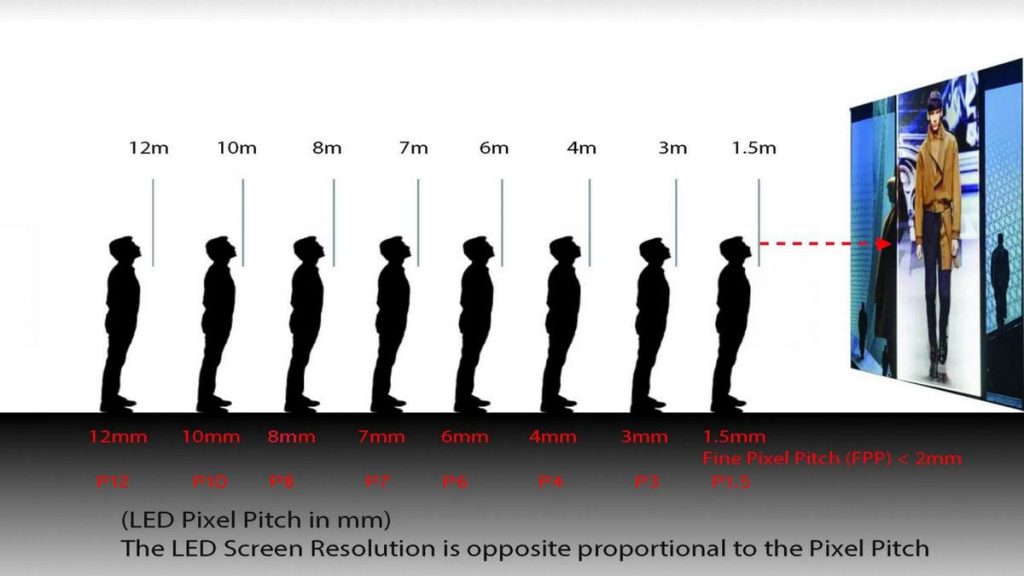
Over the past few years, manufacturers have introduced increasingly smaller pixel pitches, including P0.9, P0.7, P0.6, and even P0.4 LED displays. While these advancements are impressive from a technological standpoint, there is an important reality to consider: human vision has practical limits.
In many indoor applications, viewers simply cannot perceive the difference between extremely fine pixel pitches.
For example:
Under these conditions, the visual difference between a P0.9 and a P0.7 LED display is often negligible for most viewers. However, the cost difference can easily reach 30% to 50%.
A commonly used guideline is:
Recommended Pixel Pitch = Viewing Distance (mm) ÷ 500
This formula provides a practical starting point for selecting an appropriate pixel pitch while maintaining excellent image quality.
Instead of allocating budget toward a pixel pitch that exceeds actual requirements, many organizations achieve better results by investing in:
In many cases, these factors have a greater impact on the overall viewing experience than reducing pixel pitch by a fraction of a millimeter.
Refresh rate has become another major marketing battleground within the LED display industry.
There is no question that higher refresh rates improve camera performance by reducing scan lines and flickering during video capture. Moving from 1920Hz to 3840Hz can significantly enhance broadcast-quality production and professional filming environments.
However, many manufacturers now promote refresh rates of 7680Hz or even higher as a major selling point.
For most commercial applications, the practical benefits are limited.
Once a display reaches approximately 1920Hz, visible flickering is already eliminated for normal human viewing. At 3840Hz, most professional filming and broadcasting requirements can be satisfied comfortably.
Beyond that point, the return on investment often decreases dramatically.
Higher refresh rates can increase:
Unless your project specifically involves:
an ultra-high refresh rate may provide little additional value.
The best refresh rate is not necessarily the highest one available. It is the one that aligns with your actual usage scenario.
Nano coating technology has become one of the most discussed features in modern COB LED displays.
Manufacturers often highlight its ability to provide protection against:
These benefits are real. However, they do not automatically make nano coating essential for every installation.
Consider a typical corporate conference room.
Most indoor meeting spaces operate within stable temperature and humidity conditions. Compared with outdoor or semi-outdoor environments, these locations face far fewer environmental challenges.
In such situations, advanced protective coatings may offer little practical benefit.
There are also trade-offs to consider.
Certain coating technologies can influence:
When evaluating LED display specifications, buyers should first assess environmental conditions and then select the appropriate protection level.
Just as excessive brightness can waste energy, excessive protection can increase costs without delivering meaningful advantages.
The goal is not maximum protection. The goal is appropriate protection.
Another popular marketing message focuses on narrower bezels, smaller gaps, and even so-called “zero-gap” LED displays.
While these claims sound attractive, they often oversimplify the realities of LED display construction.
Every LED display is assembled from modules or cabinets. Because of this physical structure, achieving a truly seamless display is extremely difficult.
Fortunately, modern manufacturing technology has already reduced visible seams to levels that are virtually imperceptible in most commercial applications.
For conference rooms, retail environments, exhibition halls, command centers, and corporate installations, today’s premium LED displays already provide an excellent visual experience.
The greater concern should be installation precision and long-term stability.
Pursuing the smallest possible seam can sometimes increase dependence on:
Over years of operation, factors such as reliability, serviceability, and structural stability often matter far more than microscopic differences in seam width.
A display that remains stable and easy to maintain will usually deliver more value than one designed primarily to achieve a marketing headline.
Micro LED remained one of the hottest topics at InfoComm 2026.
The technology promises remarkable image quality, especially in ultra-fine pixel pitch applications. Unsurprisingly, many buyers are eager to explore its potential.
However, organizations planning projects today should focus on a different question:
What technology can be reliably delivered, installed, and supported right now?
For projects with near-term deployment schedules, maturity often matters more than innovation.
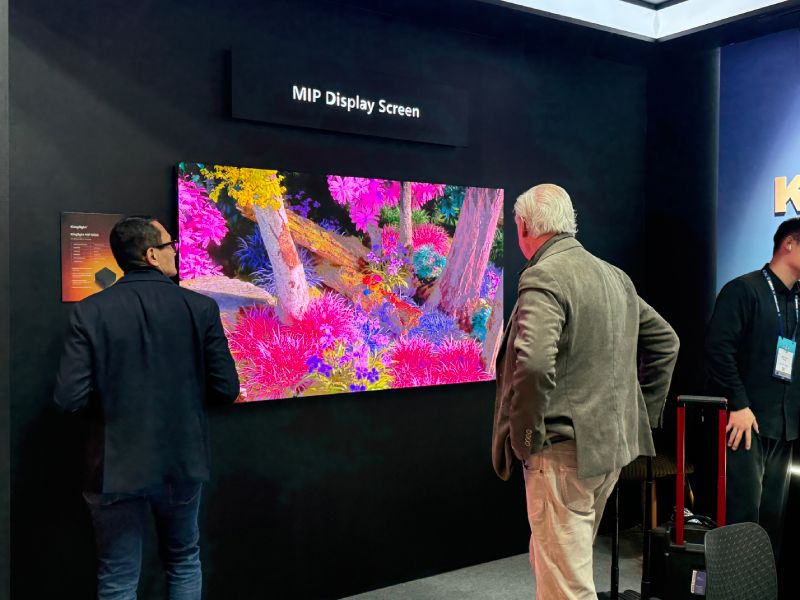
At the current stage of market development, many MIP and COB LED display solutions with pixel pitches of P0.7 and above have already demonstrated:
In contrast, some next-generation Micro LED products still face challenges related to:
Future breakthroughs will undoubtedly continue. However, purchasing decisions should be based on present realities rather than future expectations.
In many situations, investing in a mature, field-proven solution delivers greater business value than adopting a technology that has not yet achieved widespread commercial validation.
The most important factor is matching the display specifications to the application’s actual requirements. Viewing distance, installation environment, content type, and budget should guide the decision-making process.
A practical guideline is to divide the viewing distance in millimeters by 500. This helps identify a pixel pitch that balances image quality and cost-effectiveness.
For most commercial applications, no. Refresh rates above 3840Hz typically provide limited additional benefits unless the display is used for specialized filming or broadcast environments.
No. Nano coating is most valuable in demanding environments where moisture, dust, or physical contact are concerns. Many indoor installations do not require this level of protection.
That depends on your project requirements and budget. Mature COB and MIP solutions currently offer excellent performance and reliability for many applications, while some advanced Micro LED technologies are still developing toward broader commercial adoption.
Understanding how to choose an LED display requires more than comparing technical specifications.
The most successful LED display projects are not defined by the highest refresh rate, the smallest pixel pitch, or the latest technology buzzword. They are defined by how effectively the display serves its intended purpose.
A great LED display creates value where it matters most. It delivers an excellent visual experience for viewers, supports operational goals, and provides a strong return on investment.
Before committing to premium specifications, ask a simple question:
Will this feature improve the actual performance of my project, or am I simply paying for a number on a specification sheet?
The answer can help you make a smarter, more cost-effective LED display investment.

