


At CinemaCon 2026, Samsung Electronics introduced a new 14-meter version of its Onyx cinema LED display, marking a strategic expansion of its direct-view cinema technology into Premium Large Format (PLF) auditoriums. The move reflects a broader industry shift, as exhibitors increasingly prioritize large-scale, high-impact viewing environments to compete with the growing sophistication of home entertainment.
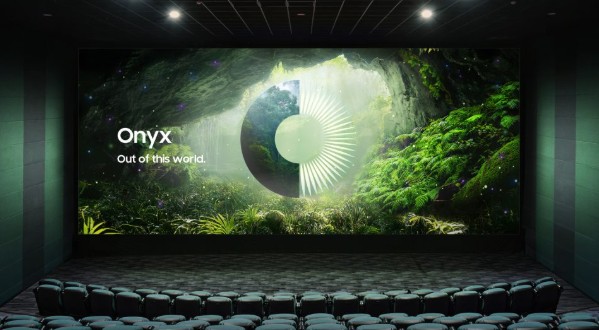
The newly announced 14-meter screen is positioned between Samsung’s existing 10-meter and smaller boutique-focused models, but it is clearly engineered for bigger ambitions. Designed specifically for premium auditoriums, the display allows cinema operators to optimize seating layouts while delivering a more immersive visual field.
Unlike conventional projection systems, which often struggle to maintain brightness and uniformity at larger sizes, Samsung Onyx Cinema LED maintains consistent image quality across the entire surface. This becomes particularly critical in PLF environments, where audience expectations for clarity, brightness, and contrast are significantly higher.
To support its expanded format, Samsung has optimized the display with a 3mm pixel pitch—striking a balance between resolution density and large-screen viewing distances. The system supports up to 4K resolution at 120Hz, ensuring smooth motion rendering and detailed imagery, even in fast-paced scenes.
One of the most notable features is its modular scalability. The 14-meter format can be extended up to 20 meters by adding LED cabinets along the edges, enabling cinema operators to create near floor-to-ceiling visual environments without sacrificing image consistency. This modular approach not only enhances flexibility in auditorium design but also future-proofs installations as demand evolves.
Samsung’s Onyx platform has been steadily gaining traction since its debut as the world’s first DCI-certified cinema LED display. Compared to traditional projection standards, the technology delivers significantly higher brightness levels—reaching up to 300 nits—alongside true black representation enabled by an effectively infinite contrast ratio.
The result is a viewing experience that is less dependent on ambient conditions and more consistent across different seating positions. Additionally, support for both scope (2.39:1) and flat (1.85:1) aspect ratios ensures compatibility with a wide range of cinematic content formats.
While premium movie presentations remain the primary application, the Onyx LED platform is increasingly being positioned as a multi-purpose display solution. Its high brightness and color performance make it suitable for alternative content such as live sports broadcasts, concerts, esports tournaments, and corporate events.
This diversification is particularly relevant for cinema operators seeking to maximize venue utilization and generate additional revenue streams. Unlike projection-based systems, LED displays maintain visual integrity regardless of content type or ambient lighting conditions, making them more adaptable for varied programming.
Samsung’s continued investment in cinema LED is supported by a growing number of high-profile installations worldwide. One notable example is the deployment of Onyx screens at Pathé’s premium cinema complex in Rabat, Morocco, where multiple auditoriums have been equipped with different screen sizes tailored to their specific layouts.
Such projects highlight how exhibitors are leveraging LED technology not only to enhance visual performance but also to differentiate their venues in an increasingly competitive entertainment landscape.
The introduction of the 14-meter Onyx display underscores a broader trend: cinemas are evolving from simple screening venues into immersive destinations. As audiences demand experiences that cannot be replicated at home, technologies like direct-view LED are becoming central to that transformation.
By scaling its Onyx lineup to meet the needs of larger auditoriums, Samsung Electronics is reinforcing its position at the forefront of this shift—where screen technology plays a defining role in the future of theatrical exhibition.

